







Swedish Neoclassical Table
A Swedish neoclassical table brings restrained architectural proportion and pale painted finishes into a modern interior.
Swedish Neoclassical Table
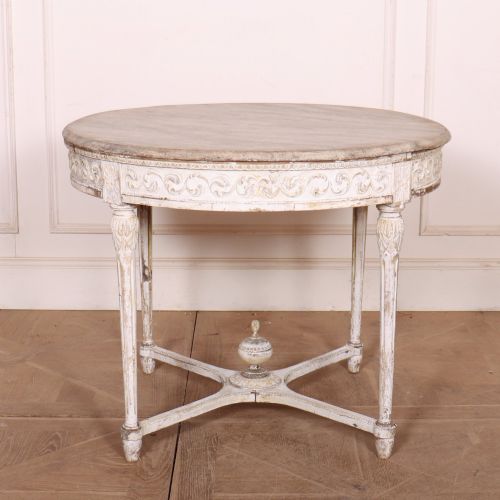
When you search for a swedish neoclassical table, you encounter architectural forms influenced by classical antiquity, spanning console tables, side tables, and writing desks from the eighteenth through to the early twentieth century. The version you are most likely to meet on this page is a painted side table or console originating from the nineteenth century, often bearing the lighter tones associated with Gustavian design.
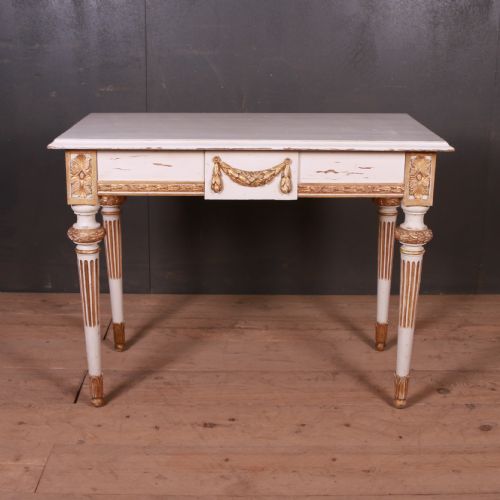
These pieces bring formal symmetry and restrained ornamentation to domestic spaces, frequently pairing geometric tabletops with tapered legs or pedestal bases. Alongside dedicated tables, the listings include related forms such as occasional stands and writing desks that share the same neoclassical vocabulary.
How they were made
Carpenters typically constructed these tables from pine and other available woods, shaping timber for structural stability before applying decorative finishes. Surfaces received layers of paint, sometimes incorporating gesso to build up crisp mouldings and classical motifs.
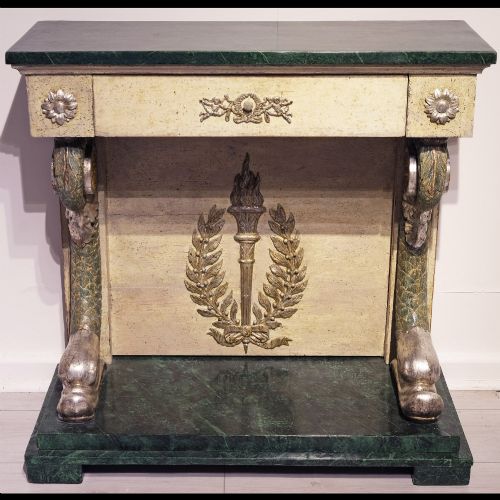
Details such as brass fittings and marble tops appear on select pieces, adding textural contrast to the painted wood bodies. Craftspeople relied on traditional joinery to unite frames and tabletops, ensuring durability alongside refined exterior proportions.
Swedish Neoclassical Table Retail Price Guide 2026
Typical asking prices for swedish neoclassical table among the pieces listed under this phrase on Sellingantiques today, from the lower quarter to the upper quarter. They describe what is for sale here now, not the wider market.
Several tables come with matching mirrors, proving that eighteenth-century interior decorators also hated furniture that didn't coordinate.
What varies in quality
The distinction between standard and exceptional pieces rests in the crispness of the carved detail and the integrity of the surface finish. Tables retaining original decorative paintwork demonstrate a higher degree of authenticity than those subjected to later refinishing.
Proportion and structural balance also separate simpler provincial items from more sophisticated urban workshop production. The handling of neoclassical motifs, from fluted legs to subtle gilt highlights, reveals the underlying competence of the maker.
The Swedish Neoclassical Table Glossary
- Gustavian
- The Swedish interpretation of neoclassical design, championed under King Gustav III and characterised by restrained symmetry and pale finishes. This style dominates much of the painted furniture produced in Scandinavia.
- Demi-Lune
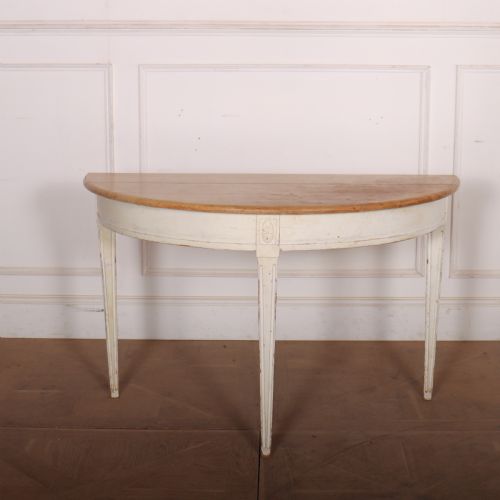
- A half-moon shape commonly utilised for console tables designed to sit flush against a wall. Such tables frequently feature painted wooden tops and tapering legs.
- Gesso
- A plaster-like mixture applied to wood surfaces to prepare them for painting or gilding. It allows craftsmen to create sharp relief mouldings on table frames and architectural elements.
- Console Table
- A table supported by wall brackets or console legs, traditionally positioned beneath mirrors or against drawing room walls. These forms often display pronounced neoclassical symmetry.
Swedish Neoclassical Table: Frequently Asked Questions
Where should I place a console table?
These tables traditionally anchor hallway spaces or sit beneath large wall mirrors in reception rooms, utilising their shallow profiles to fit narrow areas.
Their architectural silhouettes also suit living spaces where a restrained surface for lamps or decorative objects is required.
How do I care for painted wood?
Maintain painted surfaces by dusting with a soft, dry cloth and avoiding harsh chemical cleaners that can degrade historic finishes.
Keep pieces away from direct heat sources and strong sunlight to prevent timber movement and paint fading.
What defines the Gustavian style?
Gustavian design adapts French neoclassical motifs through a distinctly Scandinavian lens, favouring lighter proportions and pale monochromatic paint palettes.
Furniture from this tradition emphasises functional elegance and orderly symmetry over heavy ornamentation.
Are these tables suitable for daily use?
Sturdy pine construction and solid joinery make these tables robust enough for everyday placement in modern homes.
Protecting delicate surfaces with coasters or mats preserves the original paintwork during routine use.