




Antique Pier Set
An antique pier set brings together a console table and matching wall mirror designed to fit the narrow wall space between windows.
Antique Pier Set
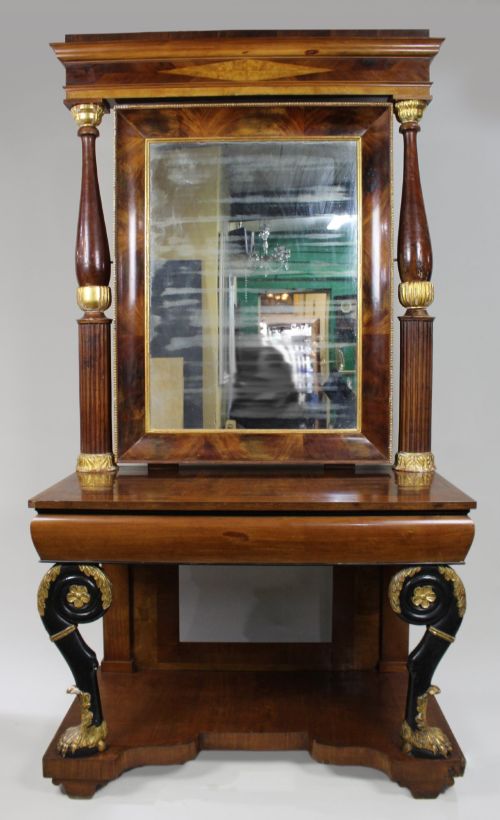
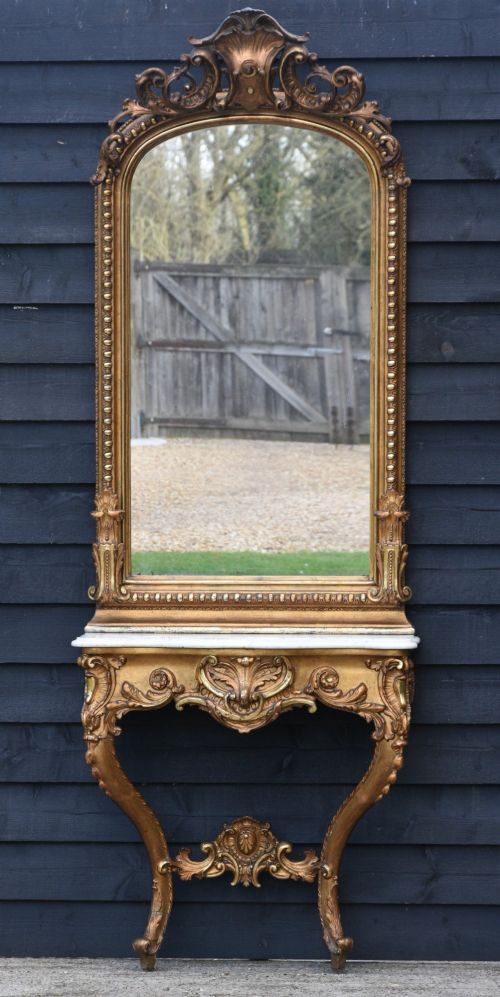
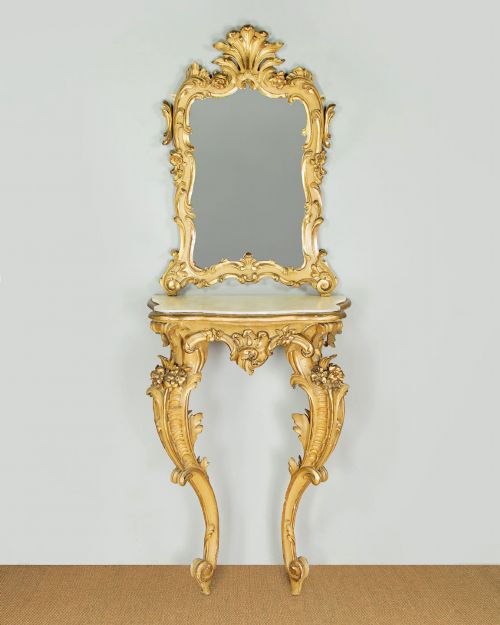
When you search for an antique pier set, you encounter matched combinations of console tables and wall mirrors, frequently created as a unified arrangement for domestic interiors. The surviving examples on this page span the nineteenth century and the early decades of the twentieth century, reflecting the periods when such furniture occupied prominent places in formal rooms.
The console tables in these sets often feature marble tops, resting on bases shaped in wood, walnut, or gesso. They are paired with tall pier mirrors, sometimes incorporating shelves or trumeau styling, designed to reflect light between windows and enhance the proportions of a reception room.
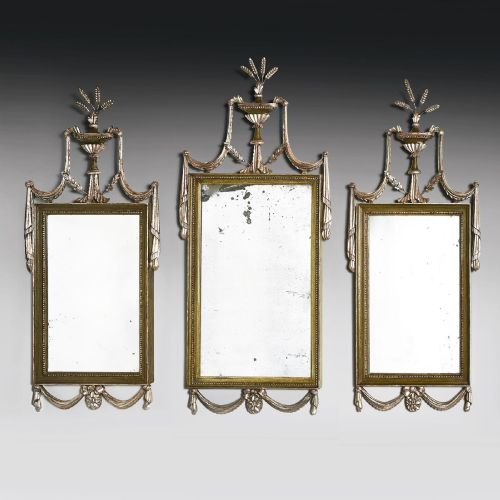
Stylistic influences range widely across these pieces, with French Rococo revival, Neoclassical, Biedermeier, and George I revival designs appearing among the records. A buyer is most likely to meet heavily gilded giltwood frames and carved wooden consoles, alongside walnut and painted finishes originating from French, Italian, Swedish, and English workshops.
How they were made
Makers shaped these sets using traditional joinery and carving techniques applied to woods such as walnut, alongside applied gesso built up to receive gilding or paint. Giltwood and silver leaf finishes required skilled application of thin metal leaf over prepared grounds on carved wooden frames.
Console tables frequently incorporate fitted marble slabs inset into the wooden framework to provide a durable and decorative surface. Mirror glass, often original to the piece, is paired with large wooden or gesso frames designed to support the weight and maintain structural rigidity.
Antique Pier Set Retail Price Guide 2026
Typical asking prices for pier set among the pieces listed under this phrase on Sellingantiques today, from the lower quarter to the upper quarter. They describe what is for sale here now, not the wider market.
Some pier mirrors include an integrated lower shelf, providing a convenient ledge for small decorative objects beneath the reflective glass.
What varies in quality
The standard of carving and the crispness of the gesso detail distinguish finer examples from simpler production. Pier sets featuring deeply hand-carved ornamentation and well-matched marble tops demonstrate superior craftsmanship compared to plain or mechanically shaped alternatives.
The cohesion between the console table and its companion mirror determines the overall integrity of the set. Pieces that share identical decorative motifs, finishes, and proportional scale maintain greater visual harmony than those assembled from mismatched components over time.
Gillows Of Lancaster
The Antique Pier Set Glossary
- Pier mirror
- A tall wall mirror specifically designed to hang on the narrow pier of wall between two windows. This placement maximises available daylight within a room.
- Console table
- A table supported against a wall by consoles or brackets, frequently topped with marble. It often pairs directly with a matching pier mirror.
- Giltwood
- Timber, usually carved wood or gesso, coated with gold leaf. It creates a reflective, decorative surface characteristic of formal period furniture.
- Trumeau
- A decorative wall panel or mirror frame, often painted or carved in the French manner. It integrates architectural framing with pictorial or mirrored elements.
- Biedermeier
- A Central European style of furniture from the nineteenth century prioritising clean lines and utility over excessive ornamentation. It utilises domestic wood grains.
Antique Pier Set: Frequently Asked Questions
What is an antique pier set?
An antique pier set combines a console table and a matching wall mirror, designed to occupy the narrow wall section between two windows.
These pieces were produced to create a balanced decorative arrangement in reception rooms, often reflecting light and adding a sense of space.
Where were pier sets placed?
They were positioned on the pier of wall situated between adjacent windows in formal nineteenth-century drawing rooms and parlours.
This placement allowed the mirror to capture and multiply natural light across the interior space.
How do I date a pier set?
Dating relies on identifying the prevailing stylistic vocabulary, such as Rococo revival, Neoclassical, or Biedermeier, alongside construction methods and materials.
Examining the mirror glass, framing techniques, and marble types helps place the set within the nineteenth or early twentieth century.
Are the table and mirror original to each other?
Original sets share matching wood types, gilding styles, carved motifs, and proportional dimensions that indicate they were conceived together.
Evidence of uniform wear and identical finishing techniques further supports the integrity of the matched pair.