
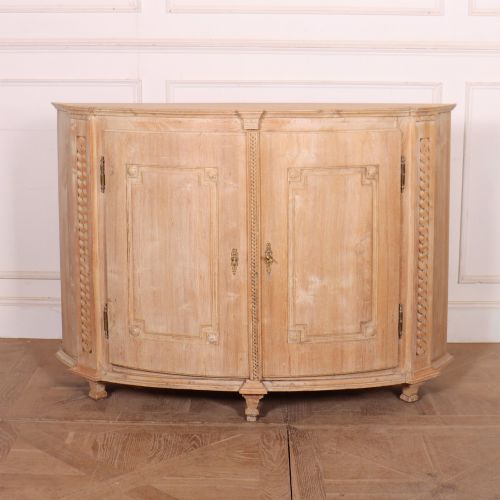
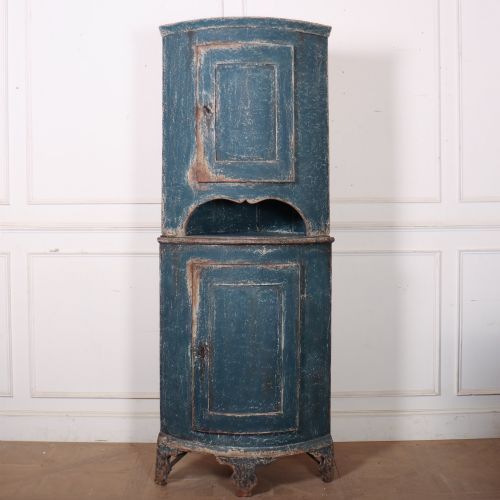
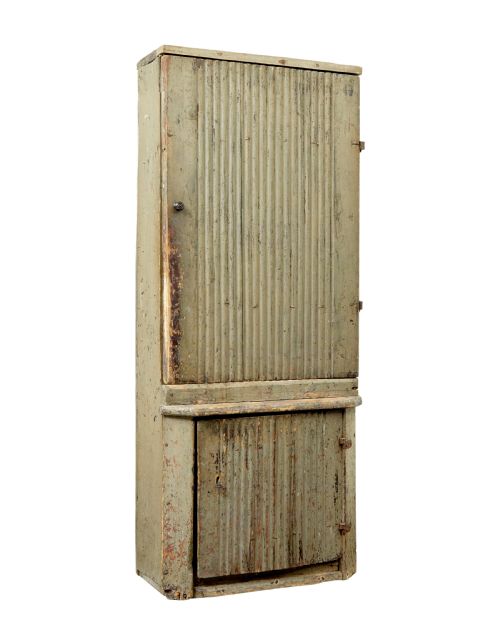
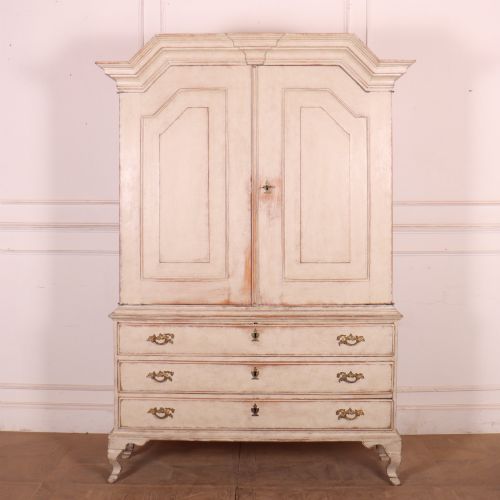


Swedish Country Pine Cabinet
A swedish country pine cabinet brings practical storage and pale painted charm into a room, offering versatile shelving hidden behind panelled doors.
Swedish Country Pine Cabinet
A swedish country pine cabinet encompasses storage forms built from softwood timbers, ranging from tall linen cupboards and corner cupboards to wall-mounted cabinets and kitchen storage. These pieces date principally from the eighteenth and nineteenth centuries, reflecting vernacular traditions across Scandinavia.
Buyers meet variations featuring upright proportions, simple cornices, and raised panel doors. Common formats include freestanding floor cupboards, wall cabinets, and bureau bookcases designed for domestic utility.
The aesthetic bridges utilitarian storage and decorative folk art, often retaining historical painted surfaces that define the regional character of these wooden furnishings.
Materials and construction methods
Joiners built these storage pieces using pine and softwood timbers, constructed with pegged joints, rebated panels, and traditional hand-planed boards. Iron and brass provide functional hardware such as hinges, latches, and escutcheons.
Surfaces received treatments of paint, mineral paint, or ragwork decoration applied over the bare timber. Many examples display scraped paint finishes revealing earlier layers of colour beneath the top coat.
Materials recorded across current pieces include pine, painted softwood, mineral paint, glass, iron, and brass.
Factors of quality and execution
Quality rests in the integrity of the timber framing, the crispness of any carved elements, and the survival of the original painted surface. Pieces retaining untouched scraped paint or traditional ragwork finishes command greater interest than stripped or repainted examples.
Proportion and scale dictate the visual success of the piece, where well-balanced cornices, elegant panel placement, and original ironwork distinguish finer regional workshop production from simpler utilitarian storage.
The Swedish Country Pine Cabinet Glossary
- Gustavian
- The Swedish neoclassical style spanning the late eighteenth and early nineteenth centuries, characterised by restrained carving, symmetry, and pale painted finishes.
- Ragwork
- A decorative paint technique where rags or cloths create mottled, textured patterns on the surface of the wood.
- Scraped paint
- A conservation method that removes later overpaint to reveal original historic colour layers underneath.
- Softwood
- Timber derived from conifers such as pine, used extensively for vernacular furniture construction throughout Scandinavia.
- Linen cupboard
- A tall storage piece traditionally utilised for bedding and textiles, featuring internal shelving enclosed by doors.
Swedish Country Pine Cabinet: Frequently Asked Questions
What is a swedish country pine cabinet used for?
These cabinets provide versatile storage for household goods, books, and linens within living spaces, kitchens, or hallways. Their interior shelving accommodates everyday organisation while maintaining a decorative presence.
Historically, rural households relied on these cupboards to protect textiles and provisions from dust and damp. Today, they serve a similar functional role while adding traditional Scandinavian character to modern interiors.
How do I date a swedish pine cupboard?
Dating relies on construction techniques, hardware types, and stylistic indicators such as Gustavian neoclassical details or folk art motifs. Eighteenth-century examples often feature hand-wrought iron hinges and pegged joinery distinct from later nineteenth-century manufacturing.
The evolution of paint layers also aids in establishing age, as original finishes wear down organically over decades of domestic use. Examining the internal construction and backboards reveals the age of the timber.
Are these cabinets painted or natural wood?
Most examples are painted, utilising mineral paint, traditional oil-based colours, or ragwork decoration in pale palettes. Unpainted pine occurs less frequently among regional vernacular pieces.
The painted surfaces often show historical wear and patination, which collectors value as evidence of age. Many pieces retain their original hues beneath later decorative schemes.