


Brown Painted Pine Armoire
A brown painted pine armoire brings rustic warmth and practical storage to a room through centuries of European vernacular tradition.
Brown Painted Pine Armoire
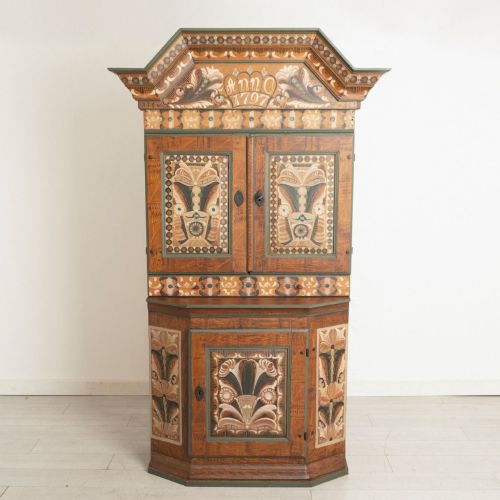
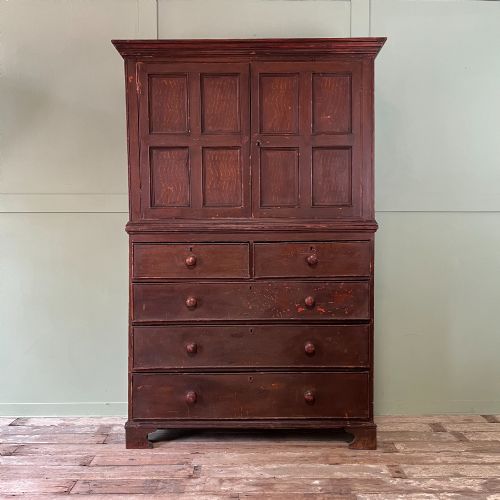
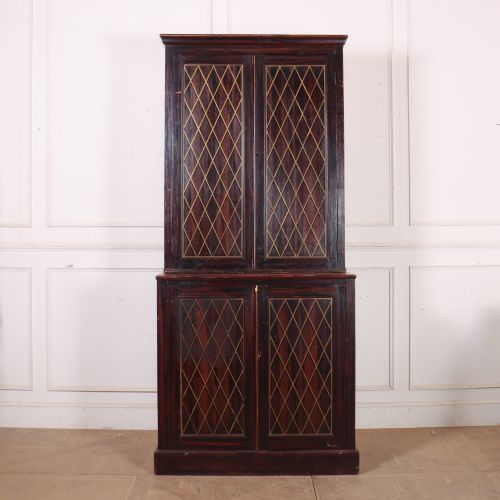
A brown painted pine armoire encompasses large storage cupboards, housekeepers' presses, and bedroom wardrobes built from softwood and finished with pigmented surface coats. Buyers seeking this type of furniture will encounter regional European pieces rather than formal court furniture, reflecting centuries of utilitarian domestic needs.
The selections available here lean heavily into nineteenth-century country traditions from Ireland, Sweden, and Italy, alongside school furniture from the early twentieth century. These tall storage units range from single-door skeleton cupboards to grand marriage cupboards and double-door presses.
Makers in rural workshops constructed these substantial storage pieces to house linens, garments, and provisions for households. Their presence in a modern interior grounds the space with tangible history and straightforward utility.
Materials and construction
Pine forms the structural core of every piece, selected for its accessibility and workability in regional joinery workshops across Britain and continental Europe. Craftsmen built these robust carcases using traditional pegged and panelled joinery to withstand the demands of farmhouse and institutional storage.
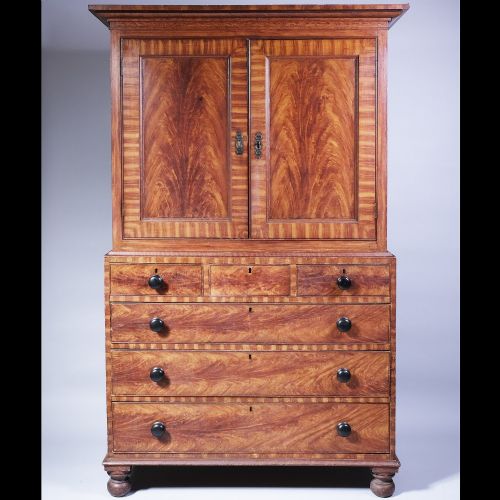
Surface treatments define the visual character, utilising traditional paint applications including scumble glazes, hand-painted folk art motifs, and polychrome finishes over the bare wood. Iron, brass, and gilt hardware - such as hinges and keyplates - secures the doors and complements the weathered painted surfaces.
Some nineteenth-century cupboards retain the exact scumble marks left by painters who dragged combs through wet glaze to mimic oak.
Assessing quality in painted pine storage
Quality rests upon the integrity of the original construction and the preservation of the early surface finishes. Pieces retaining their initial scumble, folk art, or polychrome layers command greater interest than those stripped or subjected to later repainting.
Proportion and regional character dictate the architectural success of each cupboard, separating standard utilitarian boxes from sophisticated examples of folk art and vernacular design. The harmony between the pine carcase, the patination of the paint, and the original ironwork determines the standing of the piece.
The Brown Painted Pine Armoire Glossary
- Scumble paint
- A decorative technique involving translucent layers of glaze manipulated over a lighter base colour to simulate richer wood grains or aged textures. This finish creates depth and movement across flat pine panels.
- Vernacular furniture
- Domestic objects built by local tradesmen for everyday use, following regional traditions rather than metropolitan academic styles. These pieces prioritise practical function over high-fashion ornamentation.
- Polychrome
- Decoration employing multiple distinct colours on a single surface, often seen in folk art traditions. Painters used this method to enliven plain pine with pictorial or geometric motifs.
- Housekeeper's cupboard
- A large storage cabinet traditionally used in country houses for storing household linens, dry goods, and tableware. They typically feature panelled doors enclosing multiple internal shelves or hanging space.
Brown Painted Pine Armoire: Frequently Asked Questions
What is a brown painted pine armoire?
A brown painted pine armoire is a large wooden storage cupboard finished with historic paint layers, originating mainly from nineteenth-century European country traditions.
These pieces were constructed in regional workshops to serve as functional storage for households, linens, and garments.
How were these cupboards used historically?
Households utilised these substantial wooden cupboards to store domestic provisions, clothing, and household linens away from dust and pests.
In institutional settings like schools, similar large presses stored books, supplies, and administrative records.
How do I live with a painted pine armoire?
Position the armoire against a sturdy wall in a bedroom, hallway, or living space where its height and painted surface can anchor the room.
Ensure the room maintains stable humidity levels to protect the historic pine timber and the aged surface paint.
How can I tell the periods apart?
Nineteenth-century examples display hand-cut joinery, forged iron hardware, and layered patination developed through decades of domestic use. Ninteenth-thirties pieces, such as institutional school cupboards, often feature simpler standardised construction methods and more industrial internal configurations.