
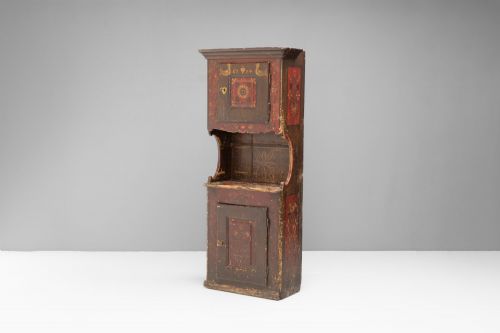


Pine Folk Art Cabinet
A pine folk art cabinet brings vernacular colour and regional character into a room through hand-painted surfaces and robust timber construction.
Pine Folk Art Cabinet
When you search for a pine folk art cabinet, you encounter vernacular storage pieces built across European rural communities during the eighteenth and nineteenth centuries. These domestic objects include wall cupboards, standing cupboards, dressers, and marriage armoires originating from Sweden, Hungary, Austria, and Italy. The version you are most likely to meet on this page is a Swedish painted pine cupboard or wall cabinet dating from the nineteenth century.
The aesthetic bridges utilitarian domestic storage and regional decorative traditions, often displaying floral motifs, linear brushwork, or textured ragwork finishes. Makers constructed these storage pieces to serve practical household needs in farmhouses, provincial homes, and alpine dwellings. Their survival reflects generations of domestic use, layered with successive coats of paint and traditional pigments over solid pine timber.
How they were made
Joiners constructed these cabinets primarily using solid pine, shaping boards with hand planes and assembling panels with traditional joinery, wooden pegs, and iron or brass hardware. The structural framework supported domestic storage requirements in kitchens, hallways, and living spaces.
Surfaces received decorative treatments using mineral paint, oil-based colours, and specialised techniques such as ragwork to imitate more costly wood grains or to create distinctive folk patterns. Artisans applied floral details and regional motifs directly onto the timber, often sealing the painted finishes with traditional varnishes or waxes.
Several marriage cupboards bear the ghosts of long-ago household arguments, having survived centuries of domestic reorganization with layers of teal and cream paint.
What varies in quality
The integrity of the original painted surface distinguishes pieces at different levels, separating examples retaining untouched historical layers from those with later repainting. The sophistication of the folk brushwork, from simple linear borders to detailed floral compositions, also marks the distinction between standard provincial work and accomplished regional artistry.
Structural preservation plays a significant role in overall quality, including the survival of original iron or brass hinges, working locks, and interior shelving. Cabinets that retain their original proportions without excessive timber replacement or structural alteration command greater interest among collectors of vernacular furniture.
Melissa White
The Pine Folk Art Cabinet Glossary
- Ragwork
- A decorative painting technique where rags or cloths are used to manipulate wet glaze or paint on a surface, creating mottled or textured patterns. This method was widely used on Scandinavian cupboards to soften plain timber finishes.
- Marriage armoire
- A large wardrobe or cupboard traditionally commissioned or decorated to mark a wedding, often inscribed with dates, initials, or symbolic motifs. These pieces served as central storage units in European households.
- Gustavian
- The Swedish neoclassical style spanning the late eighteenth and early nineteenth centuries, characterised by lighter colours, symmetrical lines, and restrained classical detailing. In folk pieces, it often merges with rural craftsmanship.
- Wall cupboard
- A compact storage cabinet designed to be mounted directly onto a wall rather than resting on the floor. These space-saving units frequently hung in kitchens or corners to hold small household provisions.
- Alpine folk art
- Decorative styles originating from mountain regions including Austria, northern Italy, and parts of Germany. Pieces from these areas often display carved wooden elements alongside vibrant floral paintwork.
Pine Folk Art Cabinet: Frequently Asked Questions
What is a pine folk art cabinet?
A pine folk art cabinet is a historical storage piece built by regional makers in European rural communities, primarily during the eighteenth and nineteenth centuries. These cupboards and wall units were painted with traditional pigments to brighten domestic interiors.
They combine practical timber construction with distinctive regional decorative styles, including floral motifs and ragwork finishes originating from Scandinavia, Hungary, and the Alpine regions.
How were these cabinets used?
Families utilised these cabinets in kitchens, hallways, and living quarters to store food, linen, and everyday household provisions. Hanging versions kept items away from damp floors, while larger dressers and wardrobes organised family belongings.
Marriage armoires and special cupboards often held textiles and dowry items, serving both a functional storage purpose and a symbolic role in the home.
How do I identify the period?
Dating relies on construction methods, hardware types, and the composition of the painted surface layers. Hand-cut iron hinges, pegged joinery, and the presence of early mineral paints help anchor pieces to the eighteenth or nineteenth century.
Stylistic markers such as Gustavian proportions or specific regional painting techniques also offer clues to the era in which the cabinet was built and decorated.
How do I care for painted pine?
Preserving painted pine requires maintaining stable indoor humidity levels and protecting the timber from direct sunlight, which can fade historical pigments. Dusting with a soft, dry cloth is sufficient for routine maintenance.
Avoid using modern chemical cleaners, harsh detergents, or abrasive polishes, as these substances can damage or strip the delicate historic paint layers.