


Painted Wooden Corner Cupboard
A painted wooden corner cupboard brings architectural interest to an awkward angle while adding character to a room.
Painted Wooden Corner Cupboard
A painted wooden corner cupboard is a practical storage form designed to fit snugly into the junction of two walls, making use of otherwise wasted space. These pieces range from hanging models meant to be mounted at height to grand standing cabinets that rest upon the floor.
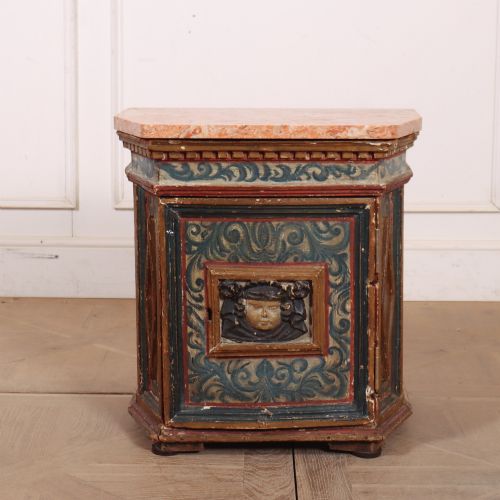
The versions met most frequently on this page span the eighteenth and nineteenth centuries, including Georgian formal designs and European folk art traditions. Forms vary from simple pine cupboards to bowfronted examples with curved doors.
How they were made
Makers built these cupboards primarily using pine and oak, relying on traditional joinery to construct the rigid angles needed for wall placement. Iron and brass hardware such as hinges and latches secured the doors and added functional detail.
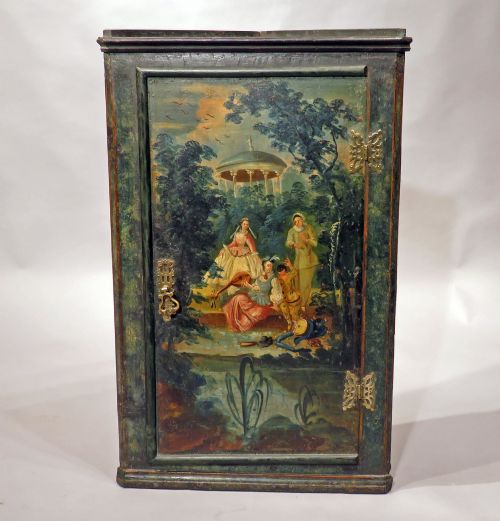
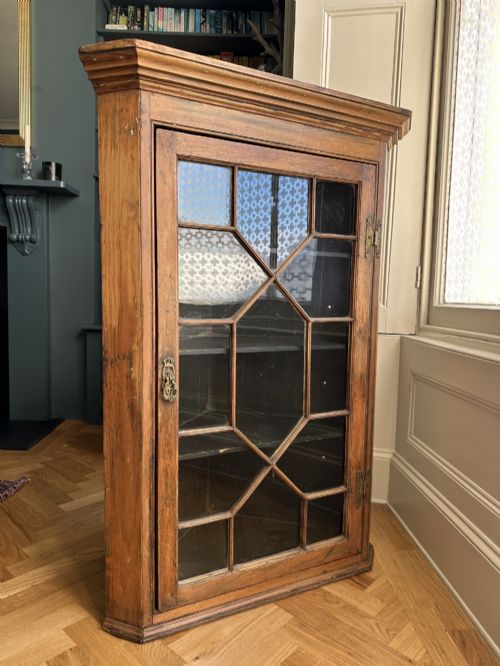
Surfaces were frequently finished with hand-applied paint, sometimes featuring decorative schemes like faux tortoiseshell or folk motifs. Glazed doors occasionally appeared to display contents within, while some interiors retained original painted treatments.
Listings feature pine and oak construction across eighteenth and nineteenth-century periods, including Georgian and Scandinavian folk art styles.
What varies in quality
The standard of a painted wooden corner cupboard depends heavily on the integrity of its original surface decoration and timber construction. Pieces retaining untouched early paintwork and well-preserved joinery sit higher in the range than those stripped or heavily altered over time.
Proportion and execution also define the distinction between everyday utility items and finer pieces, particularly in curved bowfront forms and specialised hardware integration.
The Painted Wooden Corner Cupboard Glossary
- Bowfront
- A convex, curved front to a cabinet or cupboard that projects outward. This shape requires skilled woodworking to achieve.
- Hanging corner cupboard
- A smaller cabinet designed to be mounted directly onto walls rather than resting on the floor. These often feature single doors and simple hanging brackets.
- Pine
- A softwood commonly used for carcases and painted furniture throughout the eighteenth and nineteenth centuries. It takes paint finishes readily.
- Faux tortoiseshell
- A decorative paint technique designed to imitate the mottled brown and amber shell of a marine turtle. It requires layered translucent glazes.
- Standing corner cupboard
- A tall floor-standing cabinet that utilises corner space from top to bottom. They often feature separate upper and lower sections.
Painted Wooden Corner Cupboard: Frequently Asked Questions
How do I hang a wall corner cupboard?
Hanging corner cupboards require secure fixing directly into wall studs or masonry using appropriate brackets. Because these pine and oak structures carry significant weight, professional installation ensures safety.
Position the cupboard at a height that allows easy access to the interior shelves while clearing existing skirting boards or cornices.
Are these cupboards suitable for small rooms?
Corner cupboards are specifically designed to utilise dead space in compact rooms without protruding too far into the main floor area. Their angled backs tuck neatly into corners, freeing up wall space for other furniture.
Choosing a hanging version rather than a standing model further maximises floor space in tight layouts.
How do I care for painted wooden surfaces?
Maintain painted pine and decorated surfaces by dusting gently with a dry, soft cloth. Avoid harsh chemical cleaners that can degrade historic paint layers.
Keep cupboards away from direct heat sources and dramatic humidity shifts to prevent the wood from warping and the paint from cracking.
What is the difference between Georgian and folk art styles?
Georgian painted wooden corner cupboards tend to follow classical architectural proportions with refined cornices and restrained decoration. They reflect formal British interior design tastes of the eighteenth century.
Folk art examples from Sweden or Italy showcase regional decorative traditions with expressive hand-painted motifs and more rustic timber construction.