



Swedish Country Cabinet
A Swedish country cabinet brings architectural presence and rustic charm to a room, offering practical storage disguised in historic painted timber.
Swedish Country Cabinet
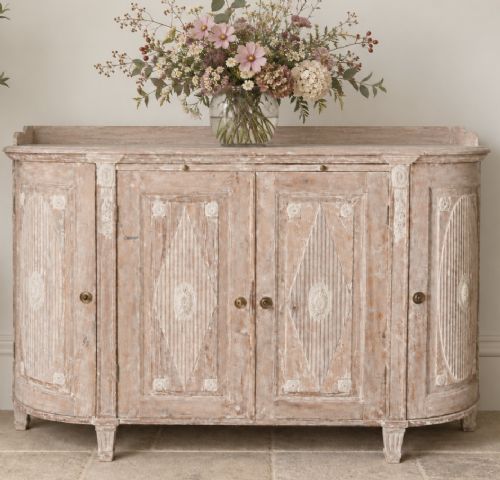
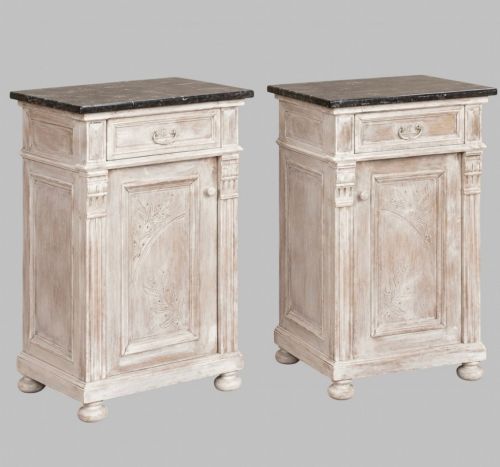
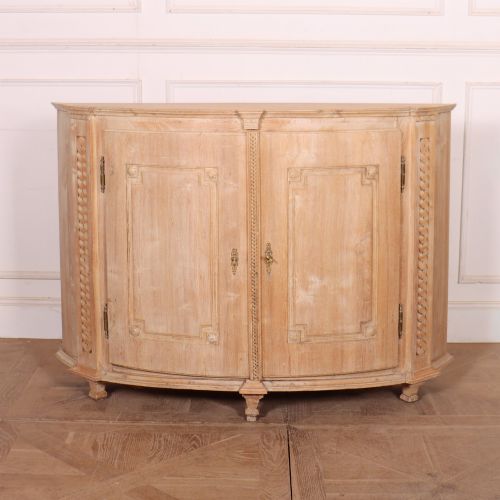
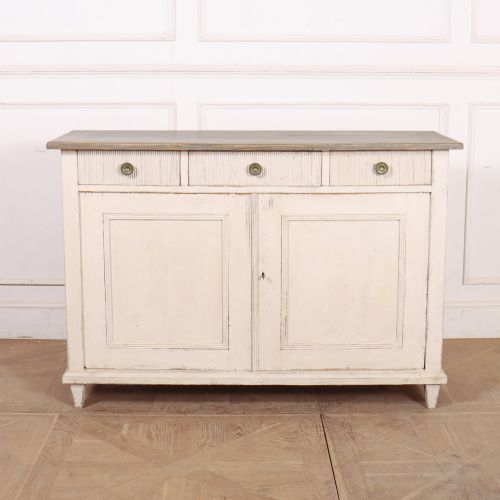
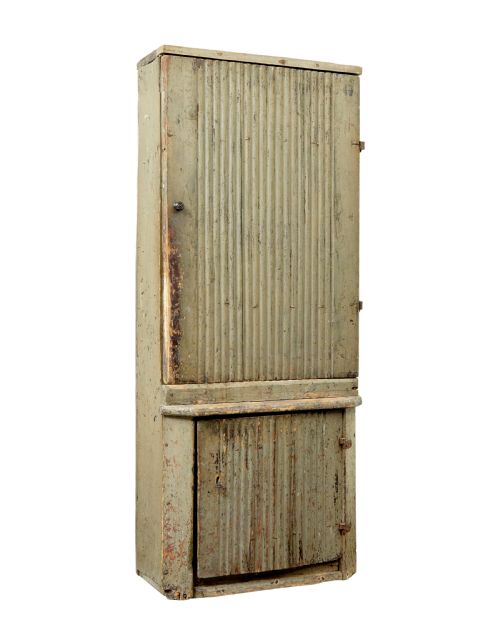
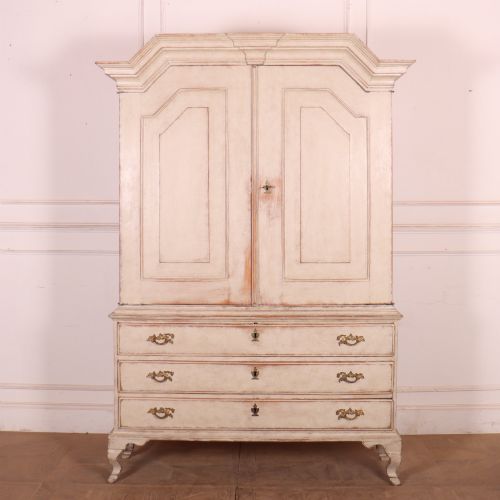
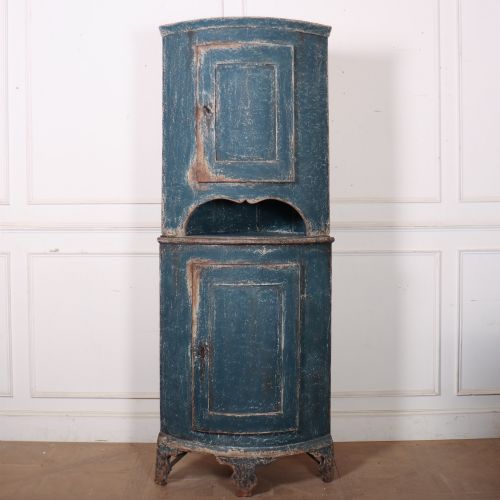
A Swedish country cabinet is essentially a storage piece shaped by Scandinavian vernacular tradition, appearing most frequently as a painted pine cupboard or linen cupboard from the nineteenth century. Buyers encounter these forms in various configurations, including wall-mounted cupboards, corner cupboards, bedside tables, and taller kitchen or clock cupboards.
The aesthetic bridges several related stylistic umbrellas, drawing heavily on Scandinavian country, folk art, and Gustavian design principles. Pieces range from grander linen cupboards bearing eighteenth-century dates to narrow cabinets and bookcases produced into the early twentieth century.
Beyond the standard freestanding cupboards, the selection occasionally encompasses specialised regional forms such as diminutive dressers, enfilades, and chests of drawers finished in pale pigments.
Distinguishing quality in vernacular furniture
Quality rests heavily on the integrity of the surface finish and the preservation of original pigment. Pieces displaying untouched or scraped historic paint schemes hold greater distinction than those stripped back to bare timber or heavily modernised.
Proportion and decorative restraint also set finer examples apart from utility pieces. Well-balanced cornices, careful joinery, and restrained carved pine details elevate an ordinary storage box into a piece of considered folk design.
Swedish Country Cabinet Retail Price Guide 2026
Typical asking prices for swedish country cabinet among the pieces listed under this phrase on Sellingantiques today, from the lower quarter to the upper quarter. They describe what is for sale here now, not the wider market.
Ragwork paint appears on several cupboards, proving that nineteenth-century domestic painters loved a sponge-effect feature wall just as much as modern decorators.
The Swedish Country Cabinet Glossary
- Gustavian
- The Swedish neoclassical style spanning the late eighteenth and early nineteenth centuries, characterised by restrained symmetry and pale finishes. It heavily influences the lighter forms of country furniture.
- Ragwork
- A decorative painting technique where rags or cloths are used to manipulate wet glaze or paint, creating a textured, mottled pattern on the surface of the timber.
- Enfilade
- A suite of pieces or a long sideboard unit designed to stand in a row, though in vernacular contexts it describes extended low storage forms.
- Scraped paint
- A conservation or aesthetic state where later layers of paint are carefully scraped back to reveal patches of earlier historic colour schemes underneath.
- Linen cupboard
- A tall storage piece traditionally used for stowing household textiles, featuring deep internal shelving enclosed by panelled doors.
Swedish Country Cabinet: Frequently Asked Questions
What is a Swedish country cabinet used for?
These pieces function primarily as versatile storage furniture, holding everything from clothing and linens to kitchenware and books.
In modern interiors, they provide concealed storage while serving as a strong decorative anchor in a hallway, bedroom, or living space.
How do I identify a Gustavian cabinet?
Gustavian pieces often display neoclassical symmetry, simpler geometric mouldings, and lighter pale paint finishes compared to heavier folk art designs.
They reflect the Swedish interpretation of French court styles adapted for provincial homes.
Are these cabinets made of solid pine?
Makers constructed the vast majority of these pieces from solid softwood, predominantly pine, with occasional use of birch for specific components.
This timber was selected for its availability and ease of working before being sealed with protective layers of paint.
What does original scraped paint mean?
Original scraped paint refers to a finish where newer coats have been carefully abraded to expose glimpses of the older, underlying decorative schemes.
This method preserves the historical depth of the surface without resorting to a completely modern repaint.