



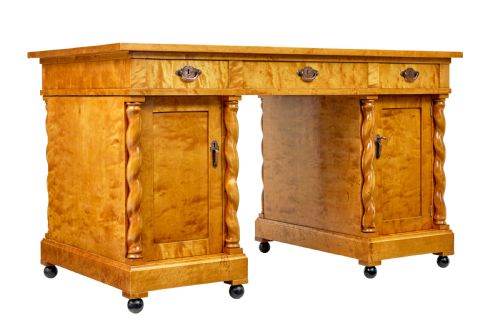


Swedish Birch Pedestal Table
A swedish birch pedestal table brings extraordinary grain and warm golden tones to a room, resting firmly on a central column.
Swedish Birch Pedestal Table
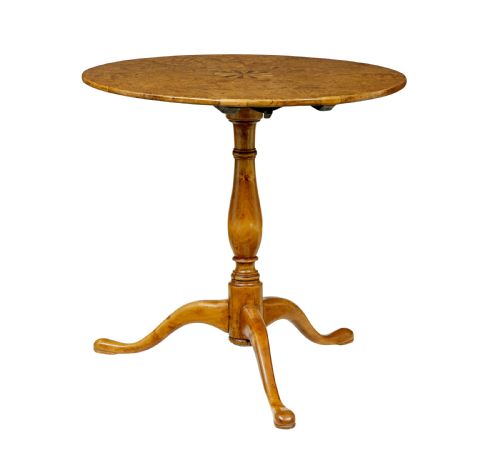
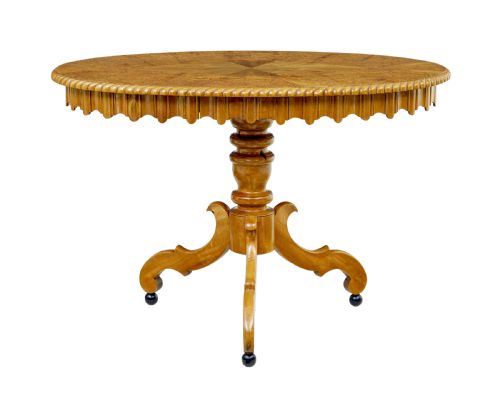
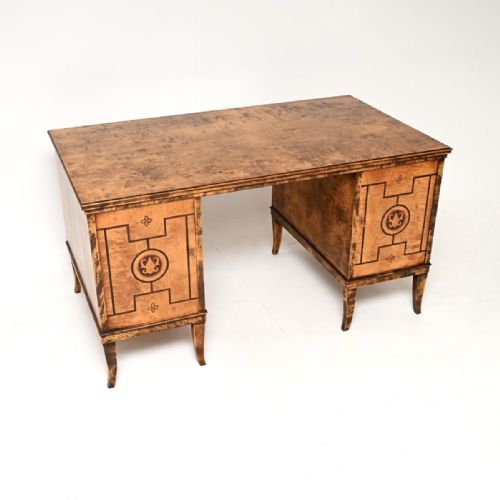
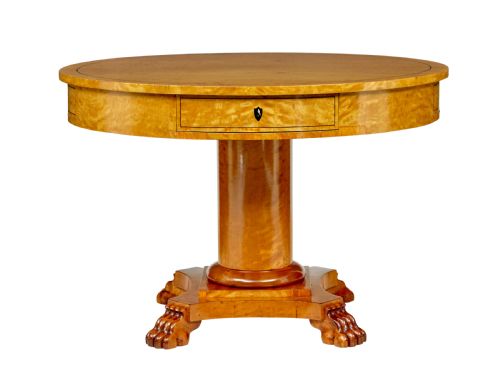
A swedish birch pedestal table spans a variety of forms including occasional tables, centre tables, and pedestal desks designed around a single central support. These pieces trace back across the nineteenth century through to the art deco period of the twentieth century.
The most common examples you will encounter are nineteenth-century occasional and centre tables displaying rich figuring in the wood. Forms range from circular and oval tops supported by tripod bases or sturdy pillars to games tables, dressing tables, and compact lamp tables.
How they were made
Cabinet makers utilised a variety of birch timbers, selecting burr birch, flame birch, satin birch, and birch veneer to create striking patterns across the surface. These lighter woods were frequently contrasted with ebonised wood or ebony details.
Construction techniques often incorporated fine marquetry inlay alongside brass mounts and carved elements. Timbers such as elm also appear alongside the primary birch body, particularly in nineteenth-century pieces.
Swedish Birch Pedestal Table Retail Price Guide 2026
Typical asking prices for swedish birch pedestal table among the pieces listed under this phrase on Sellingantiques today, from the lower quarter to the upper quarter. They describe what is for sale here now, not the wider market.
Makers occasionally snuck birch root into the timber mix, giving small tables a wild, knotted pattern that looks like frozen ripples.
What varies in quality
The visual impact depends largely on the choice and matching of the birch veneer or burr timber across the top. Grain configuration dictates the character of the piece, with complex figuring achieving a stronger decorative presence.
Execution of the joinery, the crispness of any carved decoration, and the integration of contrasting ebonised details separate standard utilitarian builds from finer cabinet work. Proportion between the central pedestal and the table top also governs the overall balance.
The Swedish Birch Pedestal Table Glossary
- Burr birch
- A growth deformity in the tree that yields a swirling, highly patterned wood grain. Cabinet makers prized this timber for creating decorative tabletops.
- Centre table
- A freestanding piece finished on all sides, designed to sit in the middle of a room rather than against a wall. These often feature prominent central pedestals.
- Biedermeier
- A dominant nineteenth-century central European style favouring clean lines and warm veneers over heavy ornamentation. Swedish interpretations make extensive use of native birch.
- Ebonised wood
- Timber treated to imitate ebony, providing dark contrast against pale birch surfaces. This technique frequently highlights mouldings and trims.
Swedish Birch Pedestal Table: Frequently Asked Questions
How do I care for birch veneer?
Keep the wood away from direct sunlight and excessive heat to prevent the delicate veneer from drying out or lifting.
Polish the surface gently with a dry, soft cloth to maintain the natural lustre of the golden timber.
Where should I place a centre table?
A centre table works best where people can walk around it, showcasing the grain from every angle in an open space.
Ensure the room has balanced lighting to highlight the intricate patterns of the burr or flame birch top.
What is the difference between Biedermeier and Art Deco pieces?
Biedermeier tables date mainly from the nineteenth century, emphasising warm wood tones, classical proportions, and restrained inlay.
Art Deco examples from the twentieth century lean towards geometric streamlining while retaining the traditional Swedish preference for birch.
Are these tables sturdy enough for daily use?
The central pedestal design provides a solid footprint, though smaller occasional and lamp tables are best suited for holding drinks or decorative items.
Heavier centre tables and pedestal desks offer robust construction built for daily writing and general use.