


Swedish Biedermeier Table
A swedish biedermeier table brings clean geometric lines and striking wood grains to a room, offering both function and restrained elegance.
What they are
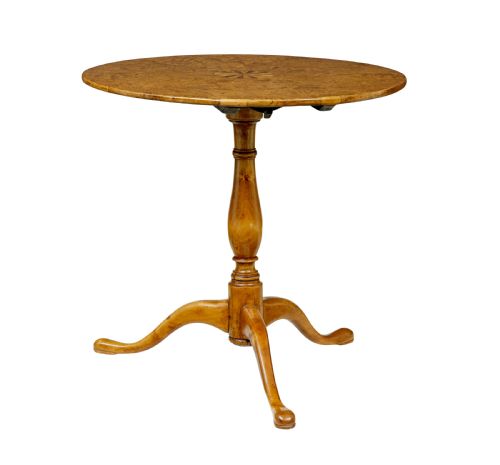
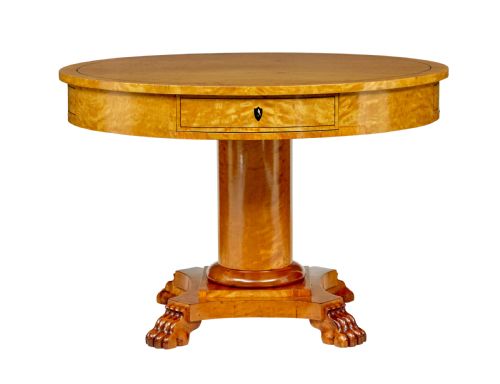
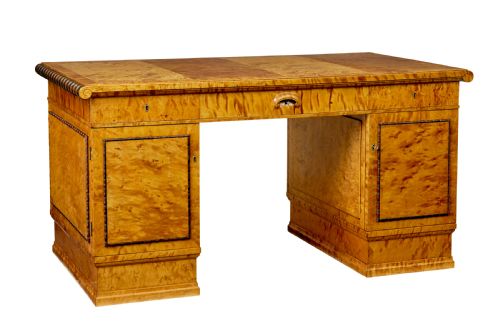
A swedish biedermeier table combines the functional domestic needs of the nineteenth century with a distinctly Nordic taste for pale, figured timbers. Buyers encounter diverse forms ranging from compact occasional and coffee tables to larger centre, sofa, and dining tables.
The selection includes circular centre tables, games tables, console tables, and occasional tripod pieces dating across the nineteenth century. Most examples date from the mid-nineteenth century, reflecting the height of the Biedermeier period in Sweden.
Makers adapted continental neoclassical ideas into simpler, domestic furniture focussed on timber figure and form. Buyers frequently find birch, satin birch, and burr birch surfaces contrasted with darker details.
How they were made
Cabinetmakers utilised native Scandinavian timbers such as birch, satin birch, burr birch, elm, alder root, and walnut as solid carcasses or applied veneers. Selected wood veneers were carefully arranged to display complex grain patterns across tabletops.
Dark contrast was achieved through the use of ebonised wood and ebony inlay, alongside occasional ormolu mounts. Surfaces were polished to highlight the natural figure of the birch and other hardwoods.
Retail Price Guide 2026
Typical UK retail prices for swedish biedermeier table, calculated from the Sellingantiques database of over a million retail prices indexed since 2003. This retail price guide relies exclusively on Sellingantiques data; no external sources or auction records are used, so the figures do not describe the wider market.
Some nineteenth-century tables hide your tea leaves in style while others simply hold your coffee cup.
What varies in quality
Quality rests upon the selection and matching of wood veneers, particularly the choice of burr birch, satin birch, or Karelian birch. Superior examples display symmetrical grain patterns and precise contrasting inlay work.
Construction standards appear in the stability of pedestal bases, tripod legs, and the smooth operation of tilt-top mechanisms or game table leaves. The depth and clarity of the polished finish also separate standard utility pieces from finer cabinetwork.
The Swedish Biedermeier Table Glossary
- Biedermeier
- A style of Central European and Scandinavian furniture dating from the first half of the nineteenth century. It prioritises utilitarian comfort and clean lines over heavy ornamentation.
- Satin Birch
- A pale northern European birch timber with a lustrous, reflective grain. Cabinetmakers selected it for its smooth texture and bright appearance.
- Burr Birch
- Wood taken from a tree growth where the grain has swirled into intricate knots. It creates a highly decorative mottled pattern on tabletops.
- Centre Table
- A freestanding table designed to stand in the middle of a room rather than against a wall. These pieces typically feature finished detail on all sides.
- Teapoy
- A small box table designed to hold tea canisters and brewing equipment. In Swedish examples, the top opens to reveal interior compartments.
Frequently Asked Questions
What is a Swedish Biedermeier table?
A Swedish Biedermeier table is a nineteenth-century piece of furniture known for its minimalist form and pale birch veneers. These tables emphasise clean architectural lines and the natural beauty of wood rather than carved decoration.
Craftsmen in Sweden adapted continental European designs to suit Nordic interiors, resulting in lighter, brighter furniture forms that remain popular in modern homes.
How do I use a centre table?
A centre table stands freely in an open space, often serving as a focal point in a living room or hallway. It provides a surface for lamps, books, or decorative objects while allowing movement all around it.
Because these tables are finished on all sides, they work well when placed in the middle of a room rather than pushed against a wall.
What woods were used?
Cabinetmakers primarily used birch, satin birch, burr birch, and Karelian birch for the main surfaces. These light timbers were often contrasted with dark ebonised wood or ebony inlay.
Other woods like elm, alder root, and walnut also appear, particularly in regional or slightly later nineteenth-century pieces.
How do I care for birch veneer?
Birch veneer requires protection from direct sunlight and excessive heat to prevent the wood from fading or drying out. Dusting with a soft, dry cloth is usually sufficient for routine maintenance.
Avoid using harsh chemical cleaners or silicone polishes, as these can damage the historic finish and accumulate on the polished surface over time.
How do I date a table?
Dating relies on examining the construction methods, timber choices, and overall design characteristics of the piece. Mid-nineteenth-century examples often feature crisp birch veneers and restrained neoclassical proportions.
Later Victorian pieces or tables influenced by rural traditions may incorporate heavier turnings or different secondary woods beneath the surface.