
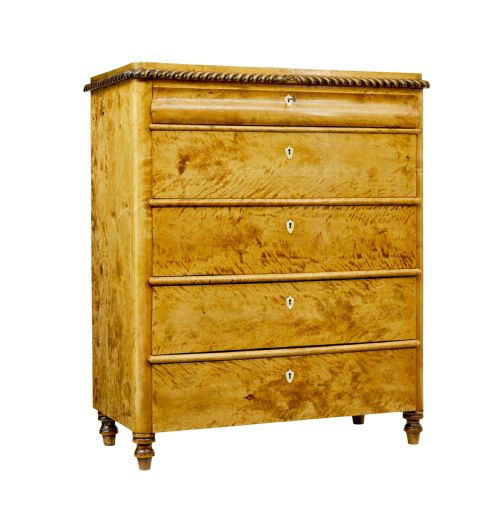


Swedish Biedermeier Dresser
A swedish biedermeier dresser brings restrained Nordic warmth to a room through figured timbers and clean architectural lines.
Swedish Biedermeier Dresser
A swedish biedermeier dresser primarily takes the form of a chest of drawers originating from the nineteenth century. These sturdy storage pieces serve as practical focal points in domestic spaces.
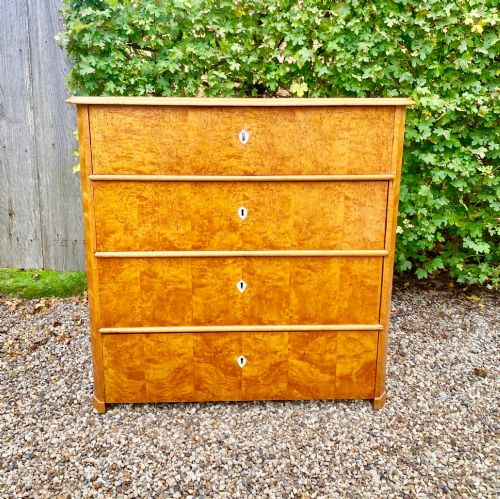
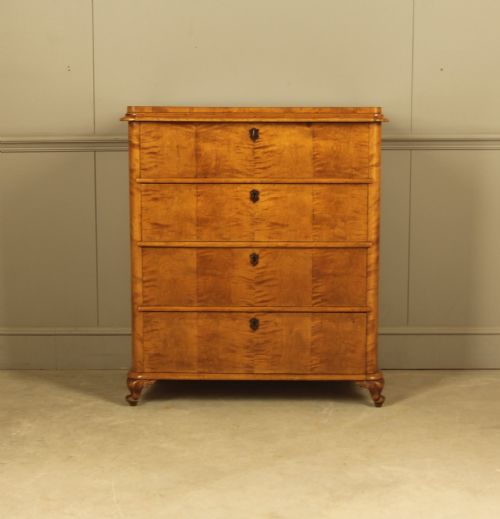
The most common version met on this page is a nineteenth-century birch chest of drawers. Pieces also span related styles such as Scandinavian country and Empire revival.
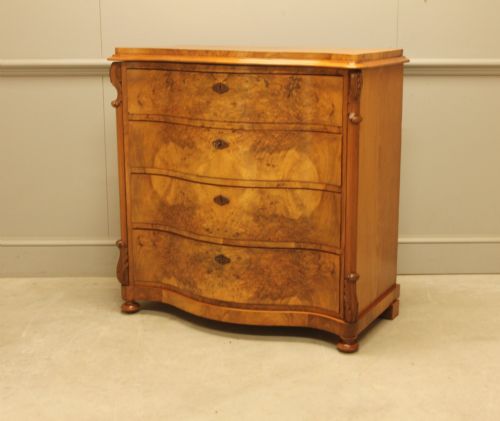
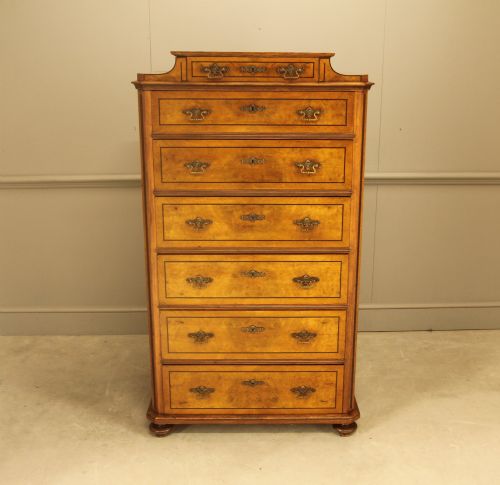
Variants emerge in timber selections and drawer counts, ranging from straight drawer configurations to serpentine fronts and caddy tops.
How these chests were constructed
Craftsmen built these pieces using solid pine carcases overlaid with decorative veneers including flame birch, tiger birch, masur birch, and birch veneer. Elm, mahogany, burr walnut, and simulated birch hand-painted surfaces also appear.
Detailing relied on precision woodwork, incorporating carved elements and inlay work. Brass and iron hardware complemented the timber surfaces alongside occasional bone details.
Some nineteenth-century chests feature simulated birch paintwork, proving that clever painters could trick the eye just as well as timber veneer.
What distinguishes the quality of these chests
Quality rests heavily on the selection and matching of wood veneers. Highly figured grains like flame, tiger, and masur birch elevate the visual impact compared to plain timber surfaces.
The sophistication of the construction dictates overall excellence. Fine carving, crisp inlay work, and well-executed serpentine or caddy top forms separate standard examples from superior ones.
Gemla Fabrikers
The Swedish Biedermeier Dresser Glossary
- Flame birch
- A distinctive timber veneer featuring a flamelike grain pattern. This material was favoured by makers for its striking decorative movement across large drawer fronts.
- Caddy top
- A raised, stepped moulding profile along the upper edge of the chest. It adds architectural definition to the top surface.
- Serpentine
- A gently curving front contour shaped in a double curve, flowing outward at the centre and inward at the sides. This technique demands high woodworking skill.
- Empire revival
- A later style drawing inspiration from earlier classical motifs of the French Empire period. It manifests in robust proportions and restrained ornamentation.
- Masur birch
- A natural wood variation characterised by dark swirling inclusions and spots within the grain. It creates a highly textured surface texture.
Swedish Biedermeier Dresser: Frequently Asked Questions
What is a swedish biedermeier dresser?
A swedish biedermeier dresser is a nineteenth-century chest of drawers originating from Scandinavia. These pieces emphasise functional elegance and striking wood grains.
They provide substantial storage while acting as decorative furniture centrepieces in modern or traditional interiors.
How do I identify a biedermeier chest?
Look for clean structural lines combined with decorative veneers like birch, flame birch, or mahogany. These chests typically avoid excessive ornamentation in favour of polished timber surfaces.
Drawer configurations often include straight fronts, caddy tops, or serpentine shapes supported by nineteenth-century craftsmanship.
Where should I place this chest?
These chests suit bedrooms, hallways, or living rooms where timber warmth and surface storage are beneficial. Their balanced proportions allow them to anchor a wall space effectively.
Ensure the room maintains stable humidity levels to protect the nineteenth-century wood veneers from drying out.
How do I care for birch veneer?
Dust the timber surfaces regularly with a soft, dry cloth to prevent particle buildup. Avoid placing the chest in direct sunlight or near heat sources.
Apply a microcrystalline wax occasionally to nourish the wood and maintain the natural lustre of the nineteenth-century finish.