




Swan Neck Mirror
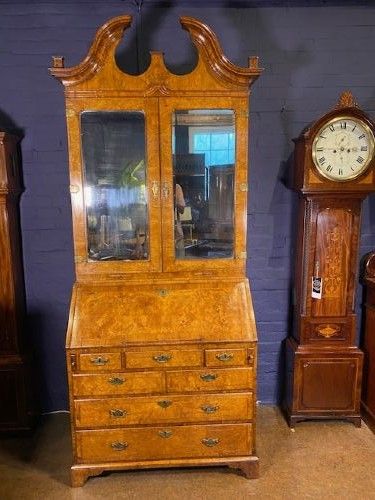
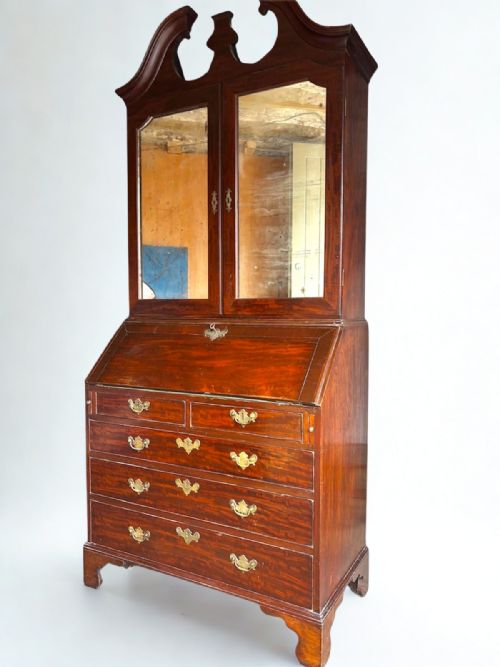
These pieces take their name from the swan neck mirror design, combining timber frames with shaped pediments that collectors prize for period interiors.
Swan Neck Mirror
When you search for a swan neck mirror, you encounter wall mirrors and large furniture pieces incorporating mirrored elements, spanning periods from the seventeenth century to the twentieth century. The selection ranges from compact wall-hanging glasses to elaborate bureau bookcases and dressing tables featuring shaped wooden pediments.
The most prevalent examples on this page are wall mirrors and pier mirrors rendered in walnut, mahogany, and giltwood. Alongside these wall pieces, bureau bookcases and cabinets with mirrored panels appear frequently, reflecting Georgian and revival styles.
Makers and craftsmen from the eighteenth century onwards adopted the swan neck pediment to soften the rigid geometry of tall furniture and wall frames. These forms endure because they anchor a room with balanced proportions and traditional materials.
How they were made
Makers constructed these frames using dense timbers such as mahogany, walnut, and rosewood, often applying gesso and parcel gilt highlights to enhance carved details. Glass plates were set into timber or giltwood rabbets, secured behind wooden backs.
Carvers shaped the characteristic swan neck pediments from solid wood or built up the curves with applied moulding and gesso work. Brass hardware, including finials and handles, completed the construction on dressing tables and cabinet drawers.
Some dressing table mirrors come equipped with secret drawers hidden beneath brass swan neck finials.
What varies in quality
The sophistication of the carving dictates the visual strength of the frame, distinguishing disciplined craftsmanship from routine production. Crisp execution in giltwood and gesso creates sharp definition along the scrollwork and mouldings.
The preservation of original glass plates and timber patination alters the character of each piece. Retaining early glass and untouched surfaces preserves the subtle distortions and depth valued by collectors.
The Swan Neck Mirror Glossary
- Swan neck pediment
- A broken pediment featuring two opposing upward curves resembling the neck of a swan, often terminating in a central finial or scroll. This architectural motif gained widespread popularity in British furniture design during the eighteenth century.
- Giltwood
- Wood that has been coated with a thin layer of gold leaf over a prepared gesso ground. It provides a luminous surface on ornate wall mirrors.
- Gesso
- A plaster-like mixture applied to wood surfaces as a smooth base for gilding and carving. Eighteenth-century artisans used it extensively to build up decorative relief.
- Pier mirror
- A tall mirror designed to hang on the wall space between windows, known as the pier. These mirrors often match console tables or amplify light within a room.
- Parcel gilt
- Partially gilded decoration where selected carved details receive gold leaf while the underlying timber remains exposed. This technique highlights specific ornamental motifs against a dark wood background.
Swan Neck Mirror: Frequently Asked Questions
How old are these mirrors?
The examples on this page span several centuries, with pieces originating from the seventeenth century through to the twentieth century. Revival periods also produced faithful interpretations of earlier designs.
Dating relies upon timber selection, construction joints, mirror plate characteristics, and the style of carving present on the frame.
Are the glass plates original?
Many pieces retain their original glass plates, which often display subtle imperfections, slight oxidation, or hand-beveled edges. Replacement glass plates also occur due to breakage over long periods of use.
Examining the silvering and how the glass sits within the rabbet helps determine whether the plate dates to the construction of the frame.
Where were these placed originally?
Wall mirrors and pier mirrors typically hung above mantelpieces or between tall windows to reflect natural light into dark rooms. Larger furniture items like bureau bookcases stood in parlours, studies, and hallways.
Their placement served both a practical function for grooming and a decorative role in enlarging the perceived space of historic interiors.