



Sunderland Lustreware Jug
A sunderland lustreware jug brings the bold pink splash, transfer-printed maritime scenes, and historic bridges of the North East straight into your cabinet.
Sunderland Lustreware Jug
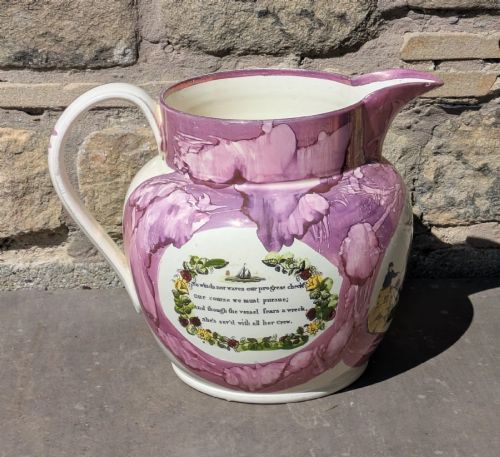
A sunderland lustreware jug is a striking ceramic vessel defined by its metallic sheen and transfer-printed or hand-coloured decoration. You will encounter forms ranging from large presentation pieces down to domestic pitchers.
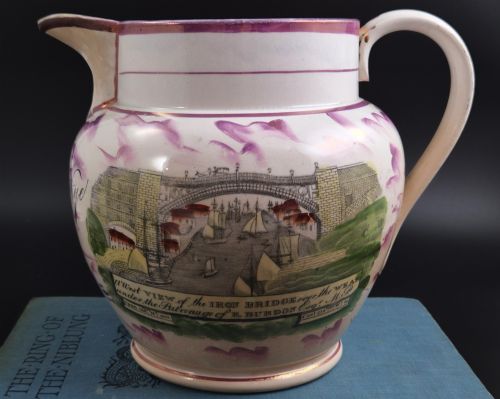
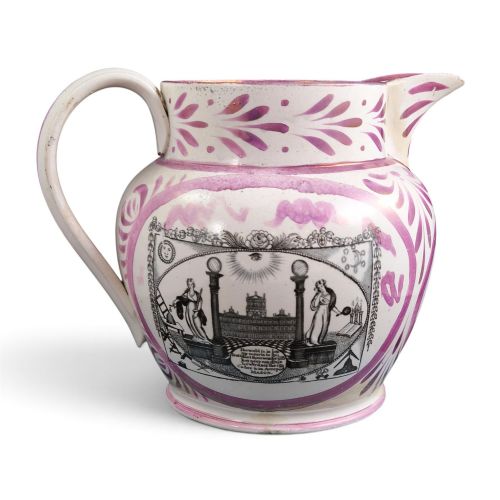
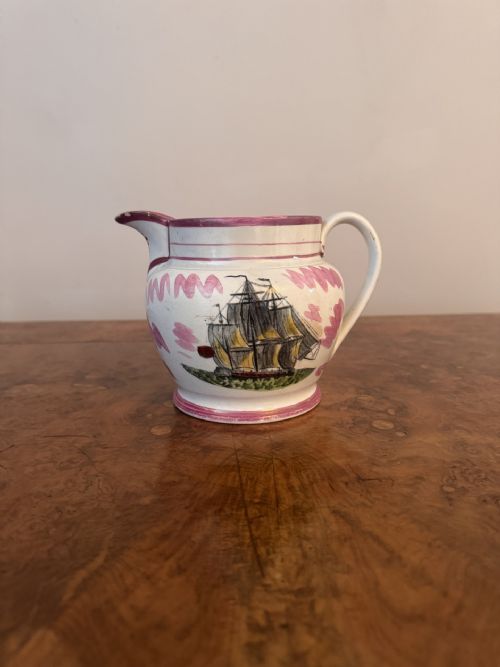
The pieces appearing on this page span the Georgian and Victorian eras, carrying dates from around 1800 through to 1860. Common themes include the Iron Bridge over the Wear, tall ships, masonic emblems, and poetic panels.
Makers and decorators produced these earthenware vessels primarily for sailors, workers, and local communities. They serve as tangible records of maritime life and regional pride during the nineteenth century.
Materials and construction
Potters shaped these jugs using earthenware and occasionally pearlware as the ceramic body. They applied metallic oxides to create the distinctive lustre glaze, often flicked or splashed across the surface for a mottled pink effect.
Makers embellished the bodies with black or coloured transfer prints depicting poems, boxing matches, and ships. Enamel colours were frequently washed over these prints by hand before a final kiln firing fixed the glaze.
Sunderland Lustreware Jug Retail Price Guide 2026
Typical asking prices for sunderland lustreware jug among the pieces listed under this phrase on Sellingantiques today, from the lower quarter to the upper quarter. They describe what is for sale here now, not the wider market.
Listings feature earthenware and pearlware bodies decorated with metallic lustre glazes, enamel colours, and detailed transfer prints.
Judging quality and character
The distinction between standard examples and superior ones rests on the crispness of the transfer prints and the richness of the pink splash lustre. Finer pieces display carefully applied hand-coloured enamel details that elevate the printed design.
Scale and subject matter also set pieces apart, with large jugs featuring named subjects, masonic symbolism, or specific historical dates commanding greater visual presence than simpler unmarked items.
The Sunderland Lustreware Jug Glossary
- Lustre glaze
- A metallic glaze containing gold, copper, or silver that leaves a reflective, iridescent film upon firing. This technique creates the characteristic metallic shimmer seen on nineteenth-century earthenware.
- Pearlware
- A refined earthenware developed in the late eighteenth century with a bluish glaze pooling in crevices. It bridges the gap between creamware and later white earthenwares.
- Transfer print
- An engraving technique where an inked design is transferred from a copper plate to paper and then onto the ceramic body. This allowed potters to apply intricate maritime scenes and poems with consistency.
- Pink splash
- A decorative effect where metallic lustre droplets disperse across the white background during firing to resemble marble or stone. It is a signature appearance of wares from the Wearside potteries.
- Earthenware
- A porous pottery body fired at lower temperatures than stoneware or porcelain. It requires a complete glaze to become watertight.
Sunderland Lustreware Jug: Frequently Asked Questions
What themes appear on these jugs?
The decoration frequently celebrates maritime life, featuring tall ships, patriotic verses, and named vessels such as the iron bridge over the Wear. You will also find masonic symbols, boxing scenes, and dedications like 'Dear Jack'.
These subjects reflect the interests of the maritime communities and tradesmen who commissioned or purchased them in the nineteenth century.
How do I date a sunderland lustreware jug?
Dating relies on stylistic clues, ceramic bodies such as pearlware, and occasional painted dates or inscriptions. Pieces span from the Georgian period around 1800 through to Victorian examples up to 1860.
Changes in the intensity of the pink lustre and the complexity of the transfer prints help narrow the decade of production.
Were these jugs used for serving?
Many larger jugs served functional roles at communal gatherings, inns, or homes, while others served purely as commemorative display pieces. Their robust earthenware construction meant they could hold liquids.
Present-day collectors generally display them away from heavy daily use to preserve the delicate enamel colours and metallic glaze.
What is pink splash lustre?
Pink splash lustre is a mottled decorative technique created by flicking metallic solution onto the ceramic surface before firing. It breaks into distinct patches of metallic pink against a white background.
This technique is particularly characteristic of the potteries operating around Sunderland and the River Wear.