
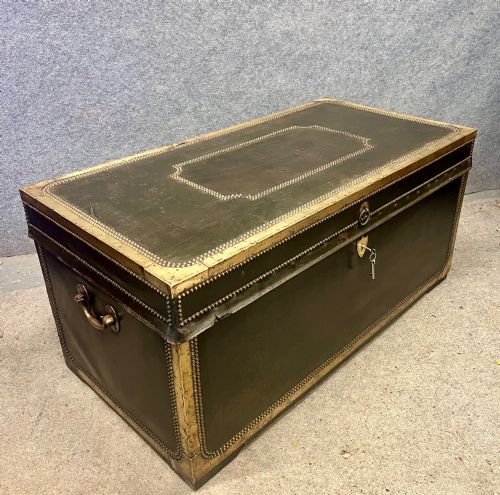

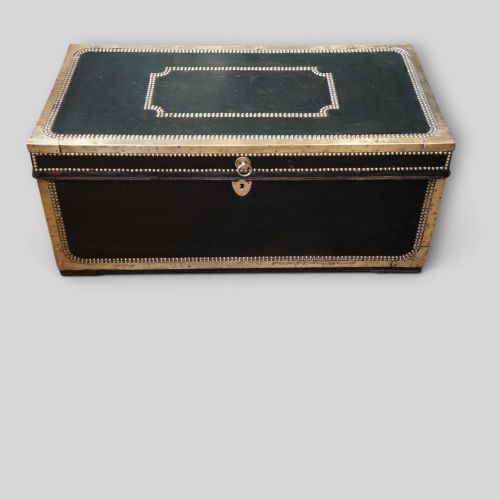
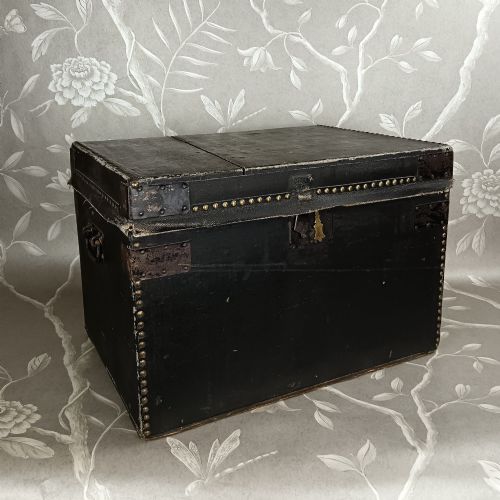
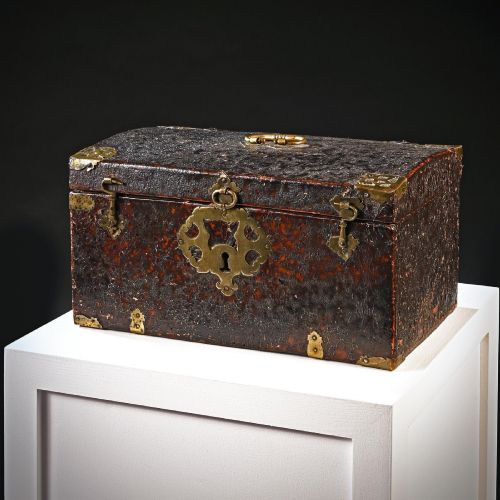
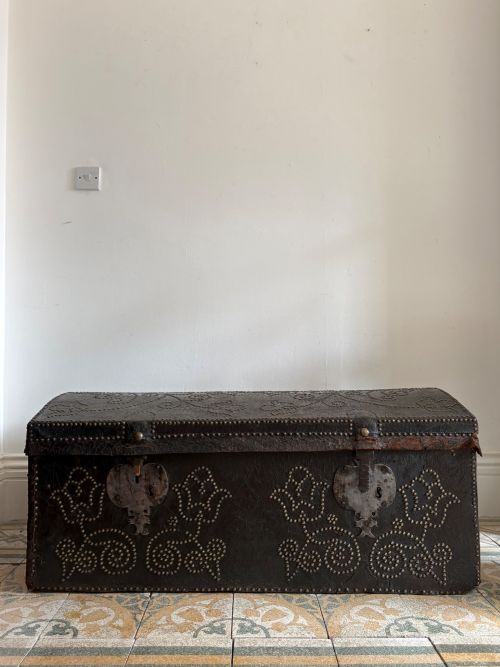
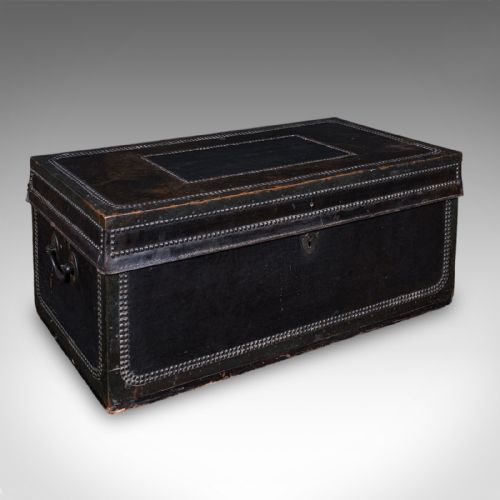
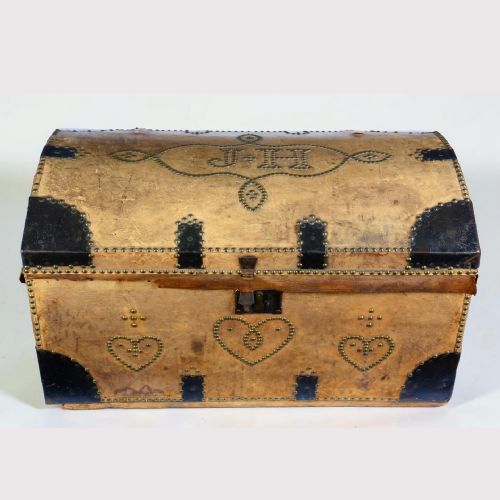
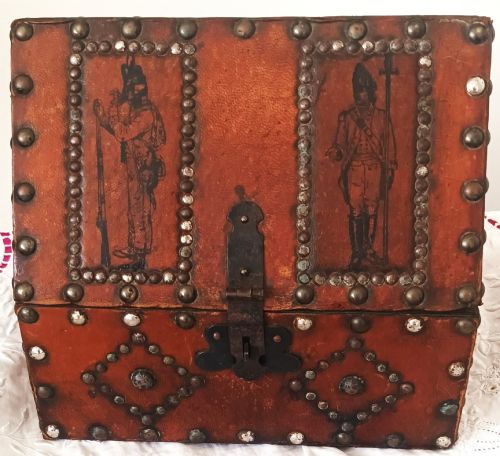


Studded Leather Coffer
These studded leather coffer pieces combine sturdy timber frames with decorative nailwork and hide coverings, offering both historic storage and striking domestic presence.
Understanding the Studded Leather Coffer
A studded leather coffer represents a robust form of historic storage, combining wooden structures with durable animal hide and metal fastenings. When searching for this phrase, buyers encounter substantial domestic trunks and chests designed for utility and transport across various centuries.
The versions most frequently met on this page span the 18th century and the Victorian era, alongside specific continental and colonial examples. These pieces often feature domed lids and heavy brass or iron studwork arranged in geometric patterns across the exterior.
Origins vary widely among surviving examples, ranging from Dutch workshops and Spanish colonial centres to Victorian British makers and Chinese export trade houses. This geographic spread introduces diverse decorative vocabularies while maintaining the core functional form of a covered trunk.
Materials and Construction
Construction relies upon a foundational timber frame, often utilising heavy woods to ensure structural integrity for storage and travel. Artisans then clad these wooden carcasses in leather, securing the hide with numerous metal nails and studs.
The metalwork serves both a structural purpose, holding the leather firmly to the wood, and a decorative function. Brass and iron studs are driven into the hide in precise alignments, creating borders, rosettes, and panel divisions.
Retail Price Guide 2026
Typical UK retail prices for studded leather coffer, calculated from the Sellingantiques database of over a million retail prices indexed since 2003. This retail price guide relies exclusively on Sellingantiques data; no external sources or auction records are used, so the figures do not describe the wider market.
Materials across these listings include leather, brass, wood, iron, and timber.
Assessing Quality and Execution
Quality reveals itself in the precision of the brass or iron studwork and the integrity of the leather cladding. Finer examples display meticulous nailhead patterns that remain regular and secure across the entire surface of the trunk.
The sophistication of the timber construction and the presence of original carry handles or hardware distinguish superior pieces. Coffer panels and trunks that retain their early surface patination and authentic structural elements command greater appreciation.
Arthur Wannop
The Studded Leather Coffer Glossary
- Dome top
- A rounded lid construction designed to shed water and increase internal storage capacity. This profile is frequently seen on travel trunks and early coffers.
- Studwork
- The decorative arrangement of brass or iron nails driven through leather into wood. It provides both reinforcement and visual pattern.
- Coaching trunk
- A sturdy chest built for travel by horse-drawn coach, typically featuring side carry handles. These pieces prioritized durability on rough roads.
- China Trade
- Goods manufactured in China specifically for export to Western markets during the 19th century. These items often combined local materials with European stylistic demands.
Frequently Asked Questions
What is a studded leather coffer?
A studded leather coffer is a historic storage chest built with a wooden core, covered in leather, and secured with decorative metal nails.
These pieces served as secure containers for valuable goods, clothing, and documents in domestic and travel settings.
How were these chests used historically?
They functioned primarily for storage and transport, keeping contents protected from dust and moisture during journeys.
Many examples include sturdy carry handles for movement between rooms or vehicles during travel.
How do I identify an 18th century coffer?
Eighteenth-century examples often feature heavy timber frames, domed lids, and robust iron or brass studwork patterns.
Dutch and Spanish workshops from this period frequently employed distinctive leather treatments and nailhead configurations.
Where should I place one at home?
These pieces suit living spaces or bedrooms as focal storage furniture, offering surface space on their domed or flat tops.
Their substantial presence pairs well with traditional interiors while providing practical containment for blankets or objects.