

Studded Club Armchair
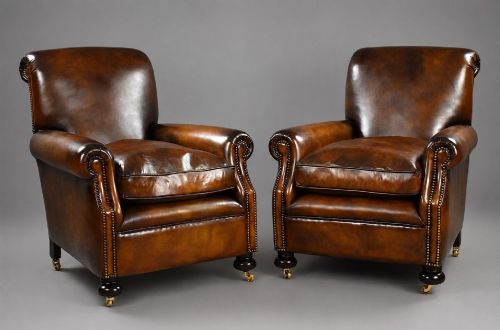
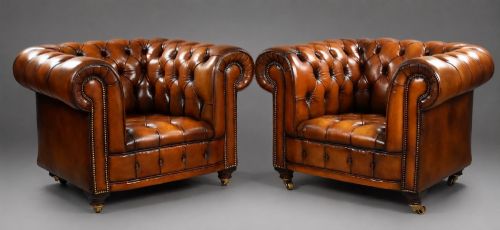
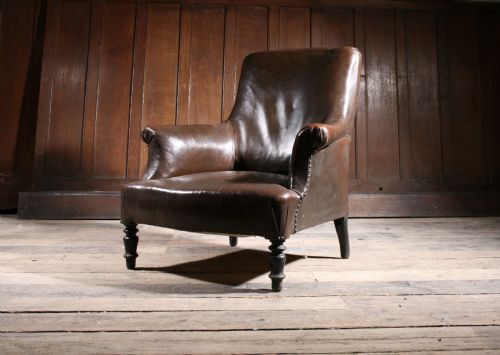
A studded club armchair delivers deep comfort through heavy leather upholstery secured with visible metal pins.
Studded Club Armchair
A studded club armchair is a substantial seating piece designed for library, fireside, and lounge spaces. When searching for a studded club armchair, buyers encounter heavy proportions, deep seats, and sturdy wooden frames wrapped in leather.
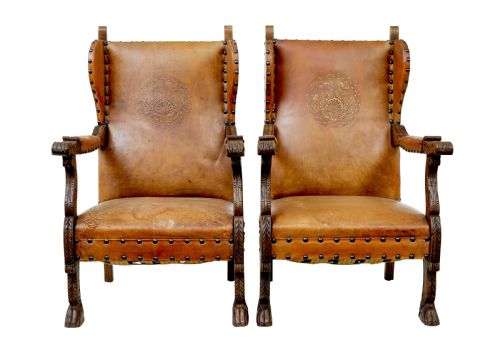
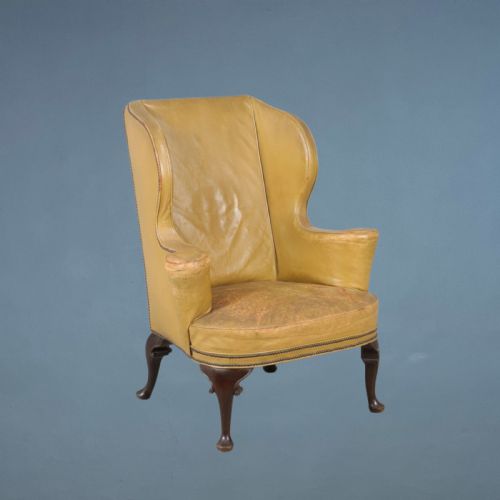
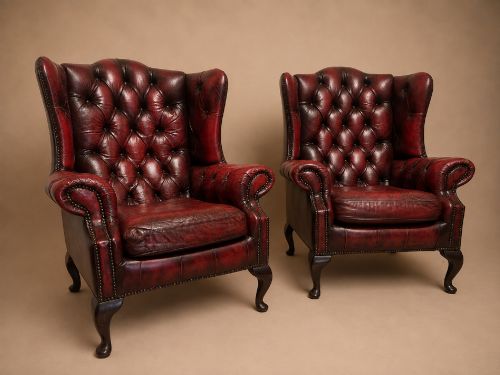
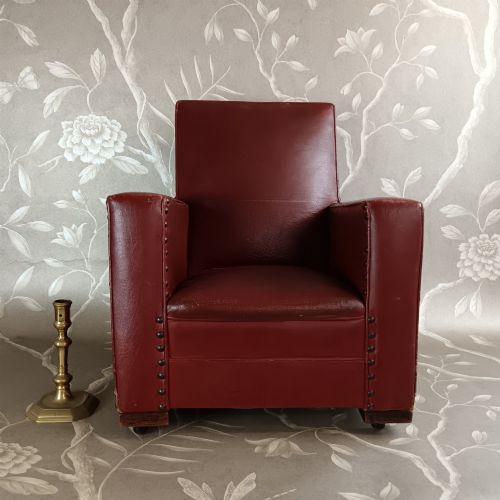
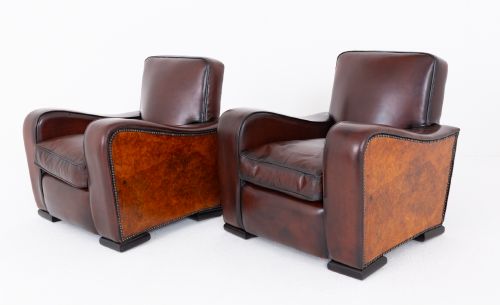
The versions most frequently met on this page span the Victorian and Edwardian eras alongside later Art Deco interpretations. Examples range from simple low tub shapes to grand wing backs and library armchairs.
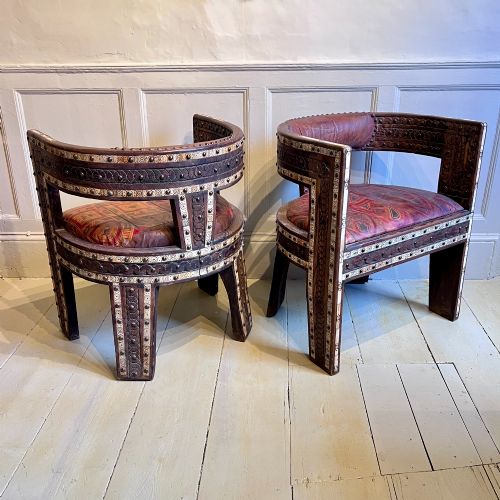
Origins stretch across English, French, and Scottish workshops, sometimes encompassing North African or Moroccan variations. Many survive in pairs or form parts of broader seating suites.
How they were made
Makers constructed the internal frames using solid timbers such as mahogany, oak, walnut, and general hardwood. These rigid wooden skeletons provided the necessary strength to support heavy daily use.
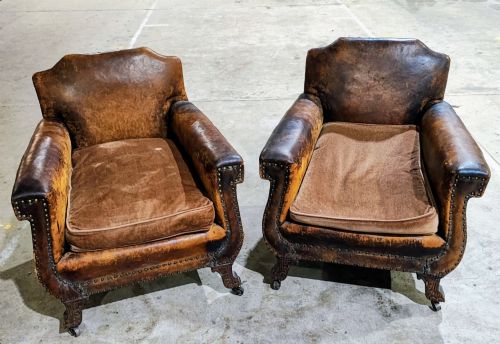
Upholstery relied primarily on durable leather stretched over internal stuffing and secured along the edges with brass studs. Some variations introduced velvet upholstery or incorporated embossed leather details.
Listings feature leather upholstery paired with brass studs across Victorian, Edwardian, and Art Deco styles.
What varies in quality
Quality rests upon the structural integrity of the timber frame and the depth of the woodwork. Heavier frames constructed from walnut or mahogany indicate superior initial investment compared to lighter utility timber.
The grade and tanning of the leather dictate tactile longevity and visual character. Hand-coloured hides and thick, supple leather retain their integrity better than thin alternatives.
The Studded Club Armchair Glossary
- Wing Back
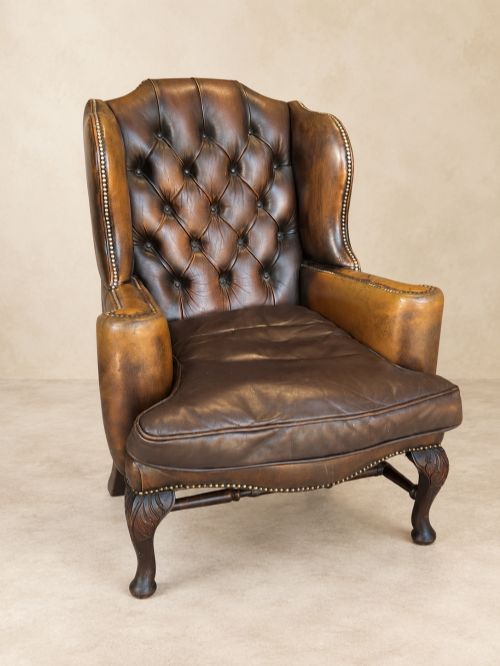
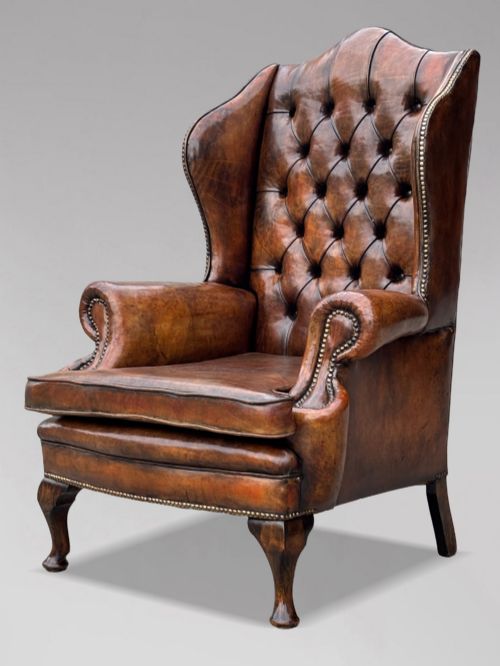
- An armchair style featuring protective side panels designed to deflect draughts from open fires. These panels extend upward from the armrests to frame the sitter's head.
- Chesterfield
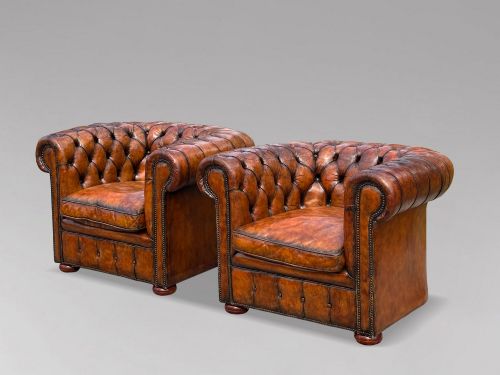
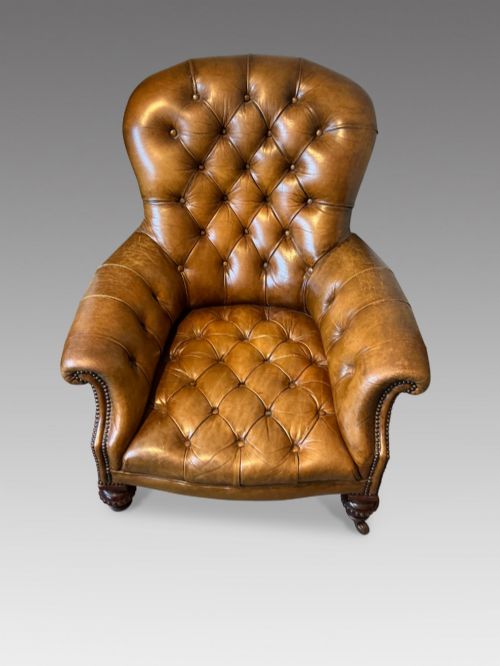
- A deep-buttoned upholstered seating form traditionally associated with rolled arms and substantial padding. This descriptor often applies to substantial club chairs and matching sofas.
- Library Chair
- A sturdy seating form designed for reading rooms and studies, typically combining exposed wooden framing with upholstered leather. They prioritize upright posture and durable construction.
- Tub Chair
- A compact seating option featuring a continuous curved back and armrest structure resembling the shape of a halved barrel. They offer enclosed comfort within a smaller footprint.
- Cabriole Leg
- A furniture support that curves outward at the knee and tapers inward toward the foot in a graceful double curve. This form frequently appears on 18th-century revival frames.
Studded Club Armchair: Frequently Asked Questions
How do I identify a Victorian club armchair?
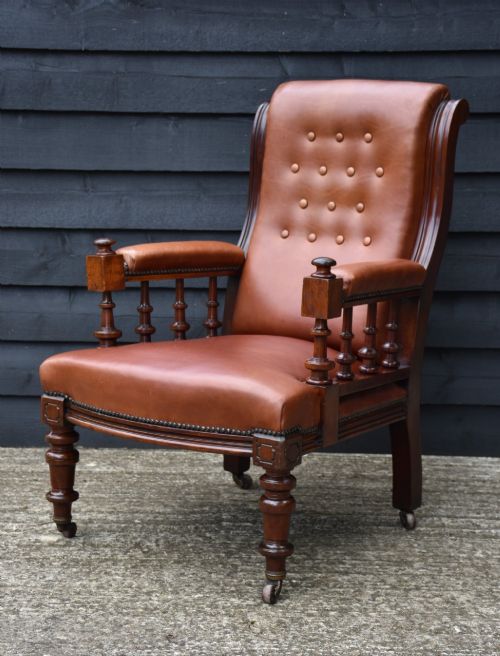
Victorian examples generally display darker wood tones, heavier proportions, and traditional button-tufted backrests. They often incorporate turned wooden legs or casters beneath substantial leather upholstery.
Makers working during this period favoured robust construction, resulting in heavier overall weights. Look for dense horsehair stuffing and hand-tacked brass stud work along the seams.
Where should I place a club armchair?
These armchairs suit studies, libraries, and living rooms where deep seating provides practical comfort. Their robust leather surfaces withstand daily use in high-traffic areas.
Pairing a club chair with a low reading lamp creates a functional corner. Avoid placing antique leather directly beside intense heat sources to prevent the hide from drying out.
What is the difference between Edwardian and Art Deco chairs?
Edwardian seating typically retains traditional buttoning, wing backs, and carved mahogany or oak frames. Their silhouettes lean toward classic revival styles.
Art Deco variations introduce smoother, more streamlined profiles with rounded club shapes and caramel or oxblood tan hides. Their frames minimise ornate woodwork in favour of clean, sweeping upholstered lines.
How do I maintain leather club chairs?
Leather upholstery benefits from regular dusting with a dry cloth and occasional conditioning to keep the hide supple. Maintaining ambient humidity in the room prevents the material from cracking.
Harsh chemical cleaners should be avoided in favour of specialised leather balms. Professional treatment helps preserve hand-coloured finishes on older pieces.