




French Leather Chairs
When you search for french leather chairs, you uncover robust club armchairs, library seats, and dining suites from periods spanning the nineteenth and twentieth centuries.
French Leather Chairs
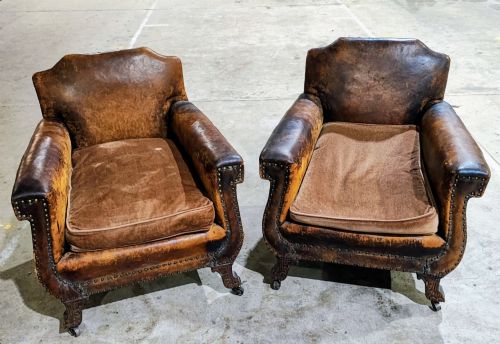
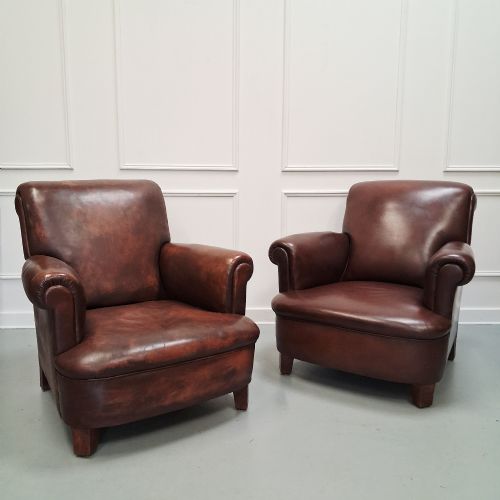
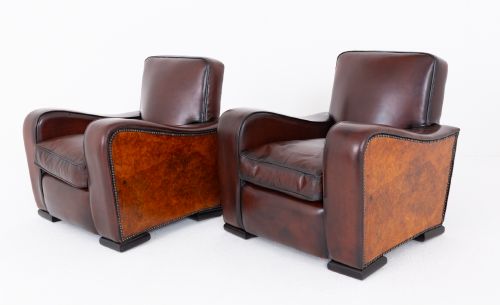
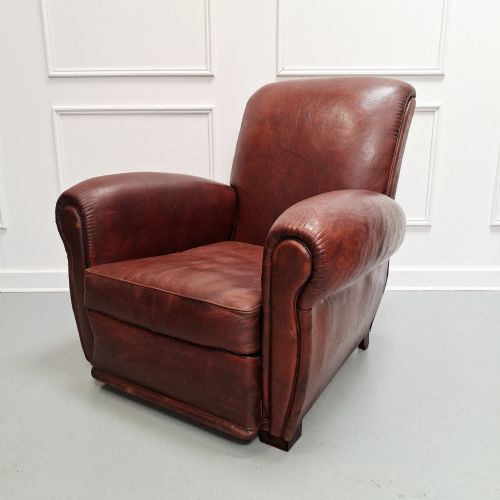
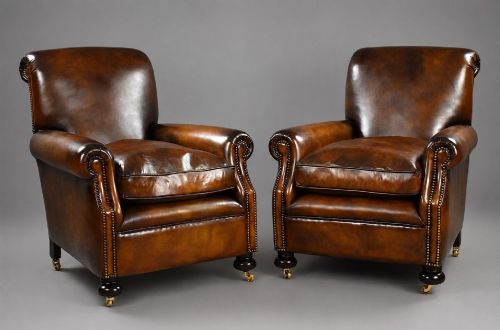
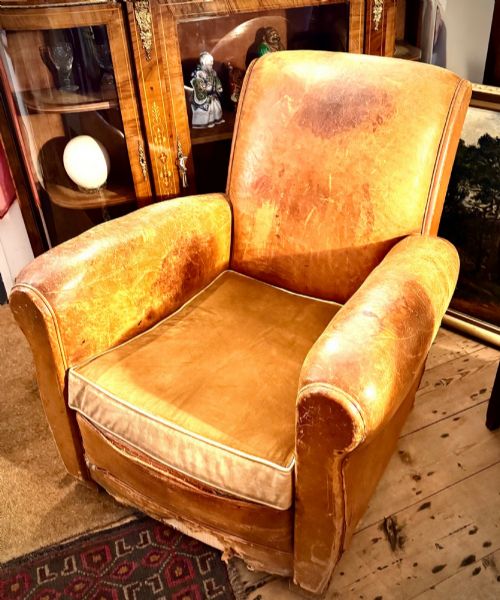
French leather chairs encompass a diverse range of forms, from nineteenth-century library armchairs to twentieth-century club chairs and dining sets. Buyers searching this phrase most frequently encounter comfortable club armchairs dating from the 1920s and 1930s, often upholstered in deep brown sheep hide.
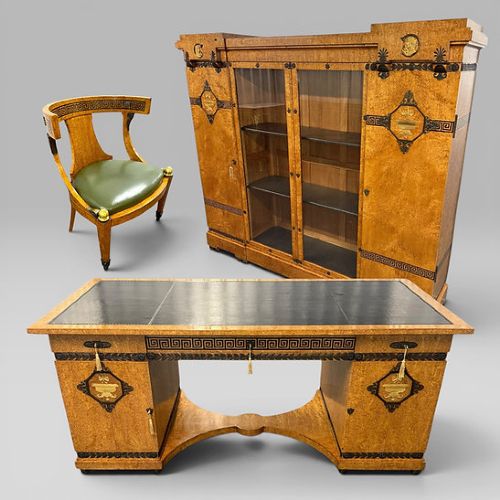
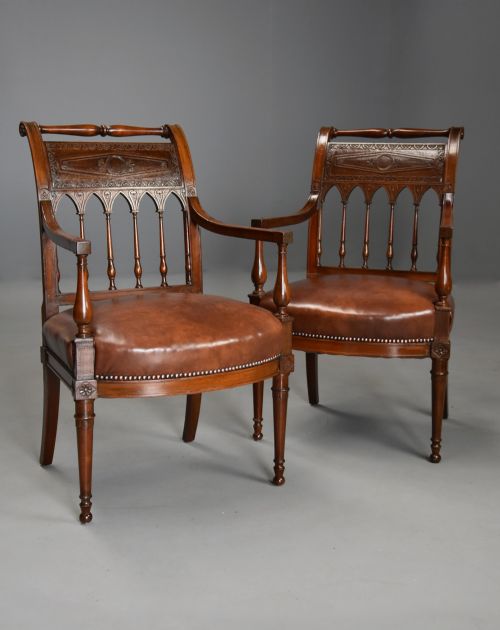
The selection also includes formal seating from earlier periods, such as Empire desk chairs, Louis Philippe designs, and nineteenth-century walnut or mahogany dining chairs. These seating options bridge domestic comfort and formal historical styling, originating from various epochs of French design.
Materials and construction
Makers utilised hardwood frames constructed from walnut, mahogany, oak, and rosewood to provide structural integrity for these seats. These wooden skeletons support upholstery finished in leather, sometimes accented with brass mounts, ormolu, or button-back detailing.
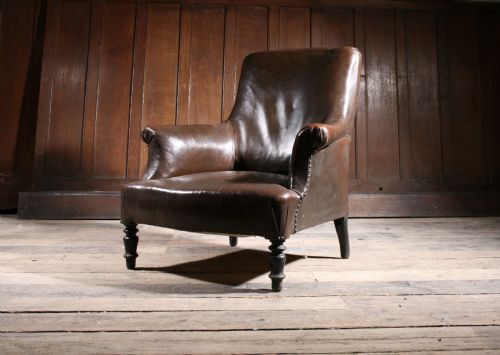
Twentieth-century examples often employ supple sheep's hide stretched over substantial padded frames, while nineteenth-century pieces integrate turned wood, carved details, and brass studwork along the leather margins.
Some nineteenth-century inventory includes campaign folding chairs designed for travelling gentlemen who refused to sacrifice comfort.
Assessing quality and character
Quality in these pieces rests upon the tactile depth of the leather and the integrity of the underlying woodwork. Superior examples display patinated hides with natural grain texture, whereas lesser items rely on uniform synthetic finishes.
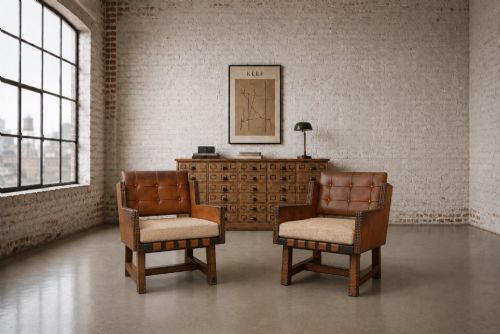
Construction methods also dictate grade; hand-carved walnut frames and traditional button-back upholstery represent higher tiers of craftsmanship compared to simpler twentieth-century production models.
Mercier Frères
The French Leather Chairs Glossary
- Club chair
- A deep, low-seated armchair with padded arms, frequently upholstered in leather and popular during the art deco period.
- Bergère
- An enclosed upholstered armchair with wooden framing exposed around the sides and back, common in historical French interiors.
- Ormolu
- Gilded bronze mounting applied to furniture frames, frequently seen on nineteenth-century Empire and neoclassical pieces.
- Fauteuil du bureau
- A traditional French desk or library chair designed for study spaces, often featuring leather upholstery and swivel or fixed wooden bases.
- Directoire style
- A transitional design period bridging Louis XVI and Empire styles, characterised by classical restraint and clean lines.
French Leather Chairs: Frequently Asked Questions
How do I identify a 1930s club chair?
Twentieth-century club chairs from this decade typically feature generous proportions, rounded padded arms, and soft sheep's hide upholstery. They prioritize relaxed comfort over formal posture.
Look for streamlined art deco silhouettes and deep brown or cigar-coloured leather patination developed through decades of use.
Where were library chairs used?
Library chairs served as sturdy, comfortable seating for reading rooms, studies, and private offices in large nineteenth-century homes. Their robust construction supported prolonged periods of sitting.
These pieces often incorporated rich mahogany or walnut frames paired with durable leather seats designed to withstand daily study.
Are dining chairs comfortable for daily use?
Nineteenth-century French dining chairs provide structured seating designed around the formal dining habits of the period. Sets featuring leather upholstery offer more padding than plain wooden alternatives.
When living with these sets, consider the seat height and frame width to ensure they suit modern dining tables and daily seating requirements.
How do Empire and Louis Philippe styles differ?
Empire style pieces display formal neoclassical grandeur, frequently incorporating ormolu mounts, mahogany, and strict symmetrical lines. They reflect nineteenth-century imperial aesthetics.
Louis Philippe designs, by contrast, offer understated curved wooden frames and rosewood or walnut construction, favouring domestic simplicity over ostentatious decoration.