
Striped Upholstered Seat
A striped upholstered seat brings pattern and colour to a room, offering practical comfort in forms ranging from compact stools to spacious library armchairs.
Striped Upholstered Seat
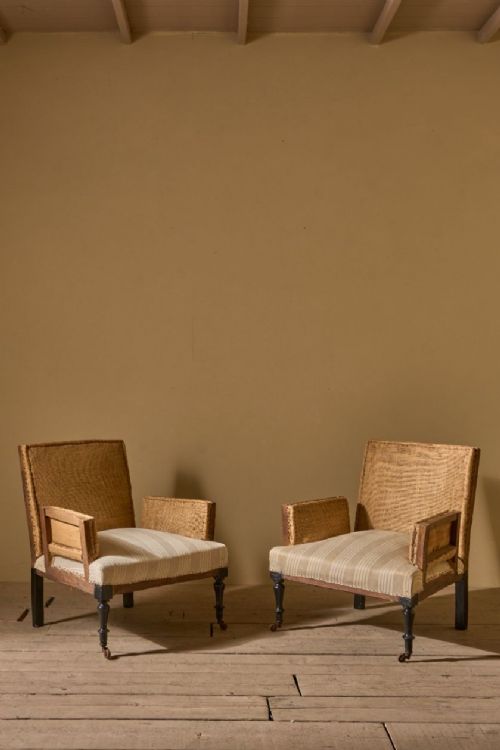
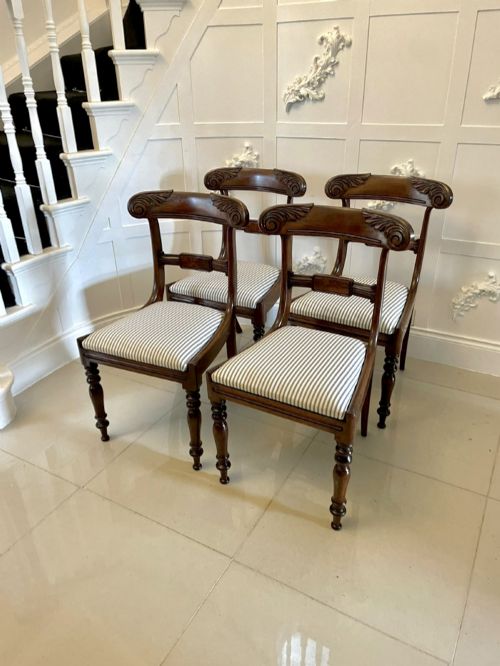
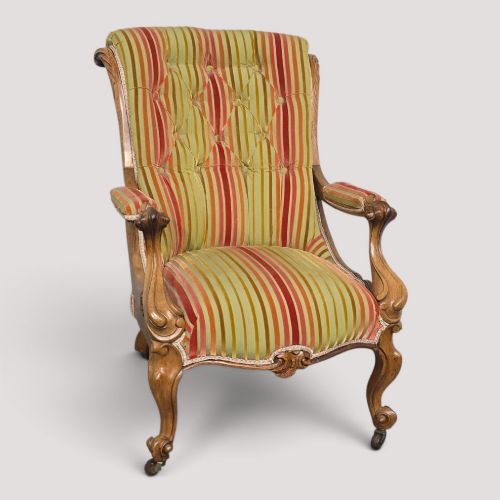
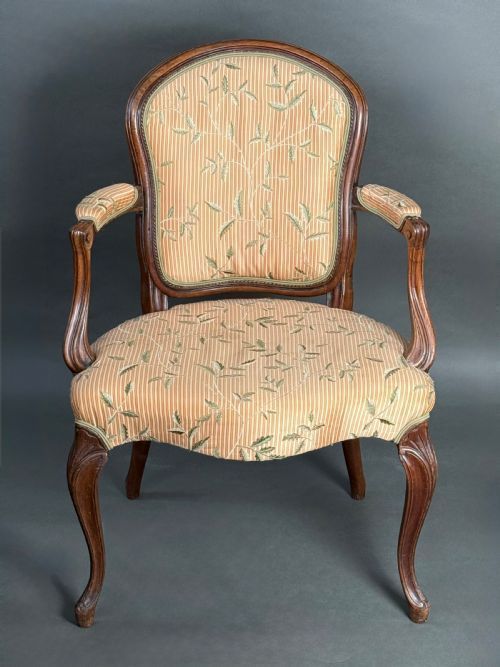
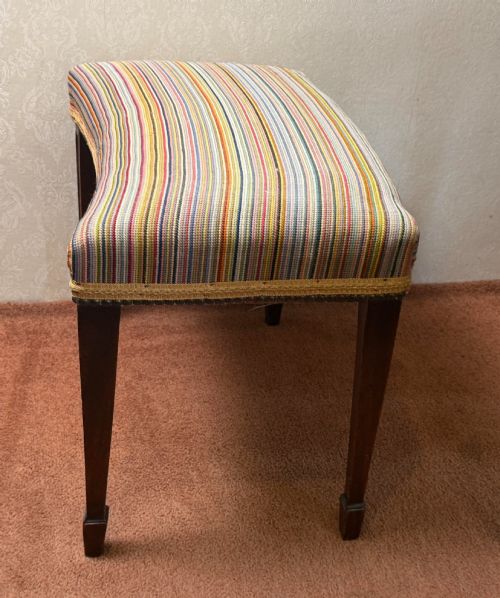
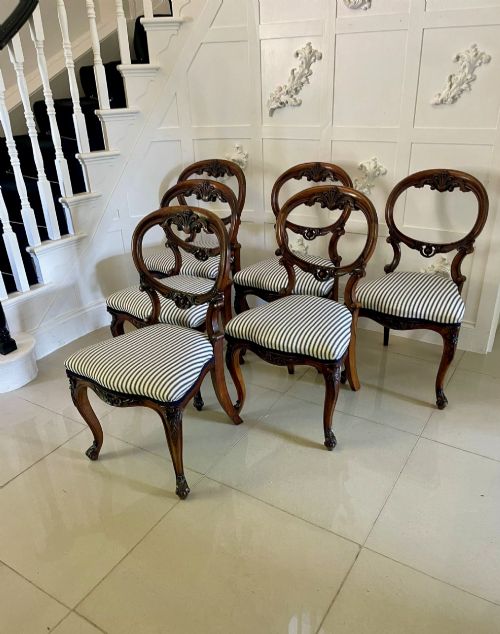
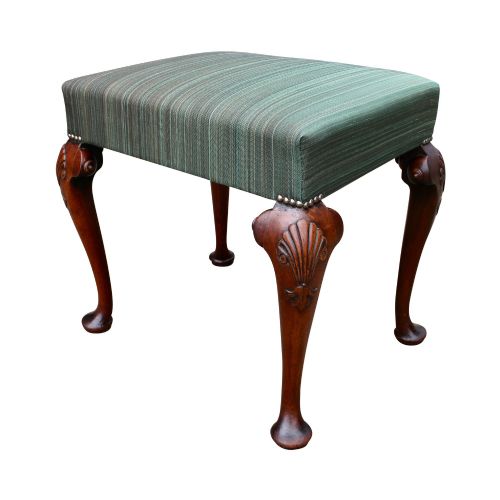
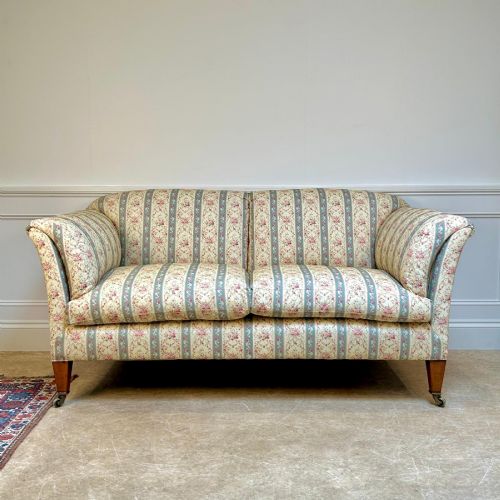
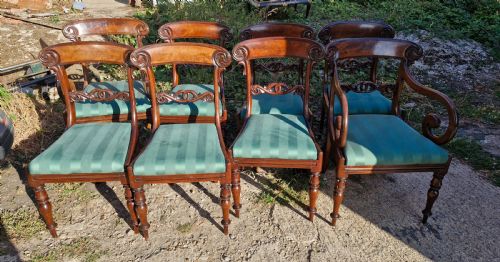
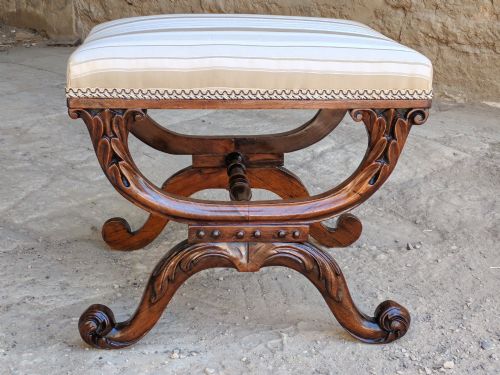
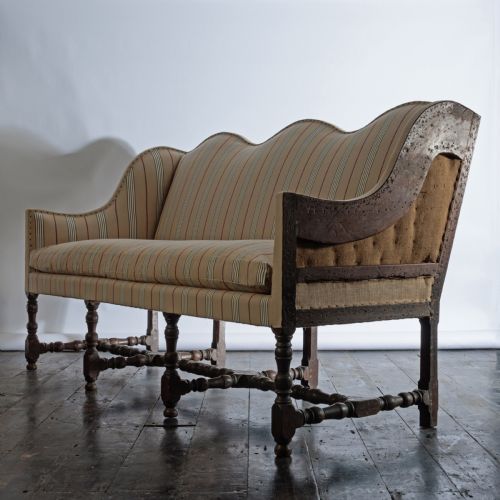
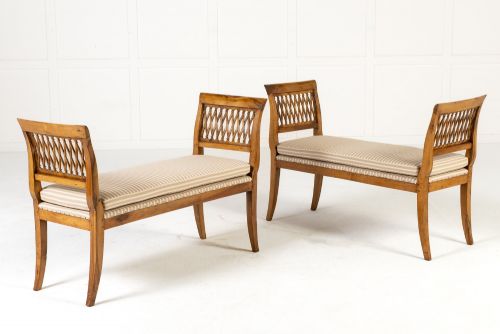
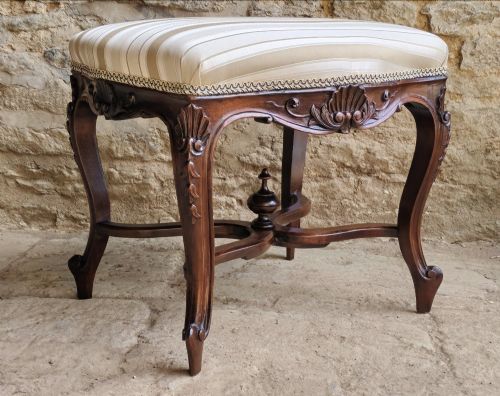
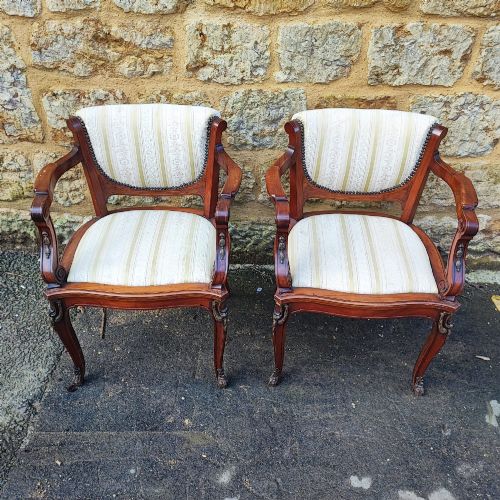
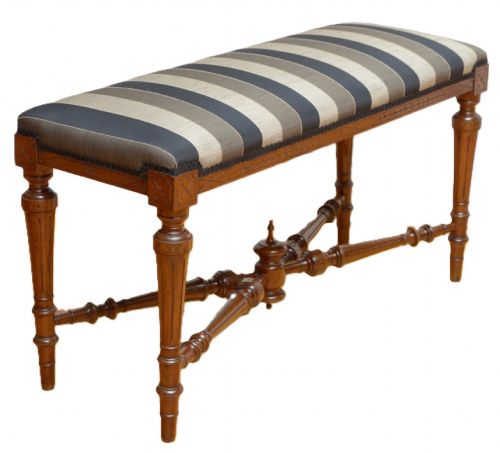
A striped upholstered seat covers a wide variety of furniture forms, including dining chairs, armchairs, sofas, settees, window seats, and stools. When exploring this selection, buyers encounter everything from compact footstools to sets of dining chairs and grand library armchairs.
The objects span multiple centuries, originating from periods such as the 17th, 18th, 19th, and early 20th centuries. Styles draw heavily upon historic design movements, including Regency, Victorian, Edwardian, Queen Anne Revival, Rococo Revival, Louis XV Revival, and Georgian.
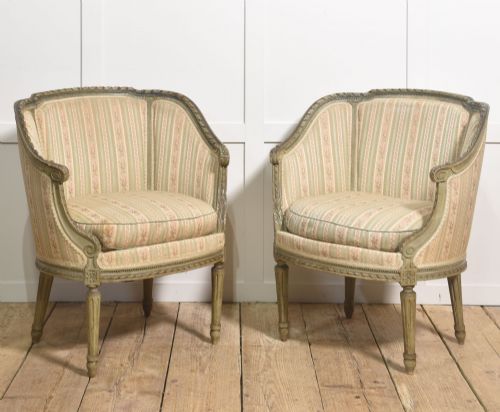
Common forms on this page include single accent chairs, pairs of salon or tub chairs, and matching sets of dining chairs. Frames are designed for specific domestic spaces, from formal drawing rooms and libraries to bedroom boudoirs and country house interiors.
Materials and Construction
Frames rely predominantly on solid hardwoods such as mahogany, walnut, oak, satinwood, and rosewood, alongside gilded or painted wooden structures. Woods are frequently shaped through carving, turning, or the application of decorative veneers like burr maple and faux bird's eye maple.
Upholstery incorporates traditional textile coverings including silk, velvet, and patterned furnishing fabrics stretched over supportive internal padding and webbing. Brass details sometimes appear on castors or decorative mounts, completing the structural composition of these pieces.
Listings feature striped upholstered seats spanning multiple centuries, from 17th-century walnut pieces to 1930s boudoir chairs.
Assessing Quality
Quality rests in the crispness of the timber carving, the structural integrity of the joinery within the frame, and the selection of timber grain. Pieces with substantial weight and balanced proportions reflect superior cabinetmaking.
The standard of upholstery work and the choice of textile also dictate the character of the piece. Historic frames retain an authenticity of form, whereas secondary elements rely on the precision of later restoration and re-covering.
Howard & Sons
The Striped Upholstered Seat Glossary
- Cabriole leg
- A furniture leg that curves out in a convex arc and tapers inward in a concave arc, terminating in a pad, claw, or scroll foot. This shape is characteristic of Queen Anne and Rococo revival styles.
- Balloon-back
- A chair design featuring an oval or rounded backrest that resembles the shape of a balloon, popular during the Victorian era. The curved wood provides structural support while offering ergonomic comfort.
- Settee
- A medium-length upholstered bench with a back and arms, designed to seat multiple people. These pieces sit between a single armchair and a full sofa in scale.
- Giltwood
- Timber that has been coated with a thin layer of gold leaf or gilt powder. This finish appears frequently on decorative frames from French and Regency periods.
Striped Upholstered Seat: Frequently Asked Questions
What rooms suit a striped upholstered seat best?
These pieces find natural placement in living rooms, bedrooms, and libraries where both seating and decorative pattern add character. Compact stools and boudoir chairs fit easily into tighter dressing spaces or corners.
Larger sofas, settees, and sets of dining chairs anchor principal rooms, establishing a clear period aesthetic through their timber frames and textile choices.
How do I identify a Victorian chair?
Victorian seating often employs dark, heavy timbers like walnut and mahogany, frequently displaying substantial carved detailing or rounded balloon-back forms. These pieces reflect the robust manufacturing methods of the 19th century.
Proportions tend to be generous, and stylistic revivals of earlier eras, such as Rococo or Elizabethan, frequently influence the decorative motifs.
Were these seats originally upholstered in stripes?
Many historic seats have undergone reupholstery over the decades to suit changing domestic interiors and taste. Original textiles rarely survive intact on older frames.
Modern covers frequently utilise traditional fabric designs, such as silks or woven stripes, to complement the historical period of the wooden frame.
How do I care for antique wood and fabric?
Polished timber frames benefit from occasional application of appropriate wax polish to maintain the finish and prevent the wood from drying out. Direct sunlight should be avoided to protect both the wood and the textile from fading.
Upholstered surfaces require gentle vacuuming with a soft brush attachment to remove dust without stressing the fabric fibres or internal padding.