







Striped Oriental Rug
A striped oriental rug brings rhythmic linear geometry and rich village character into a room.
Striped Oriental Rug
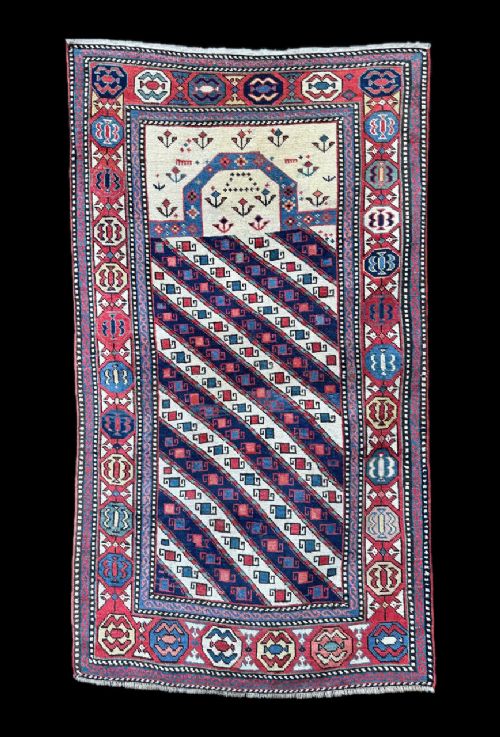
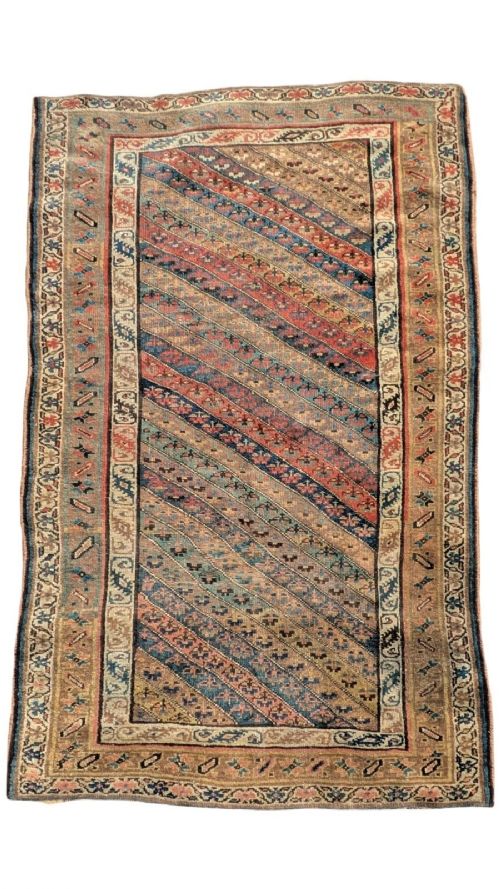
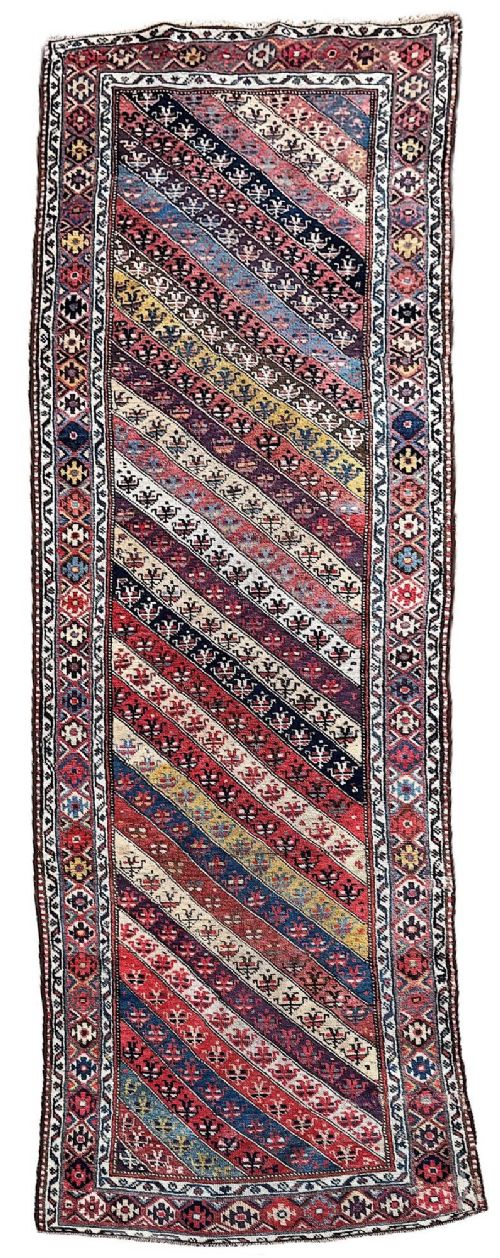
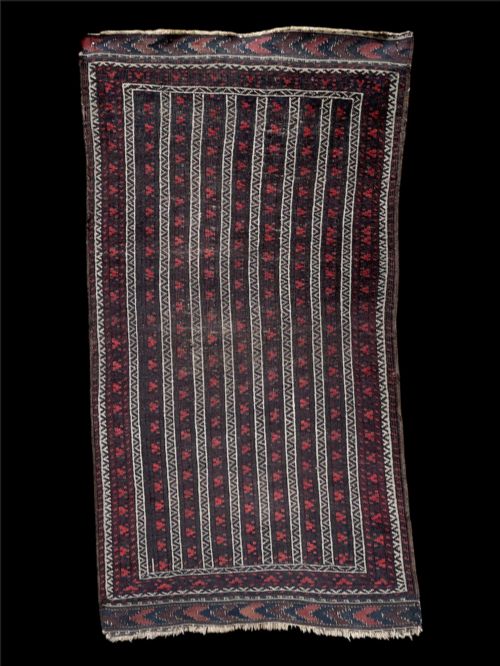
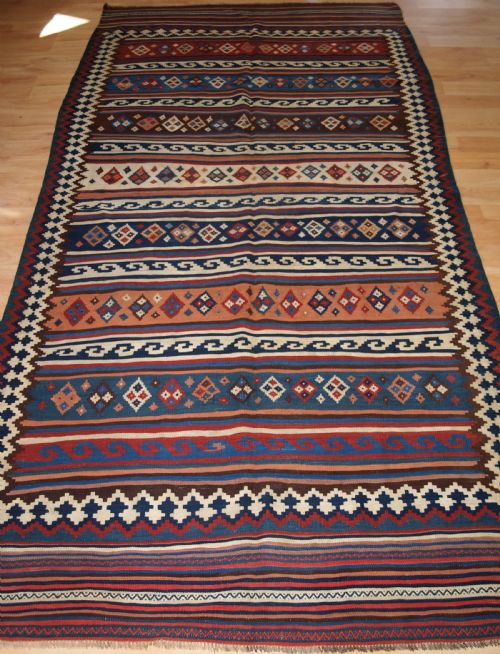
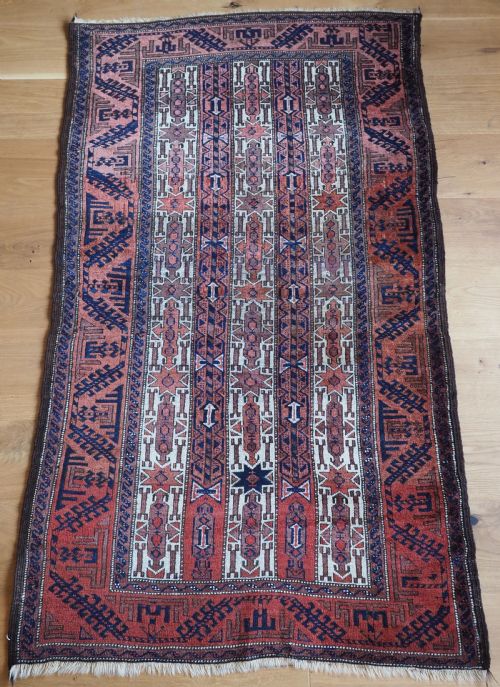
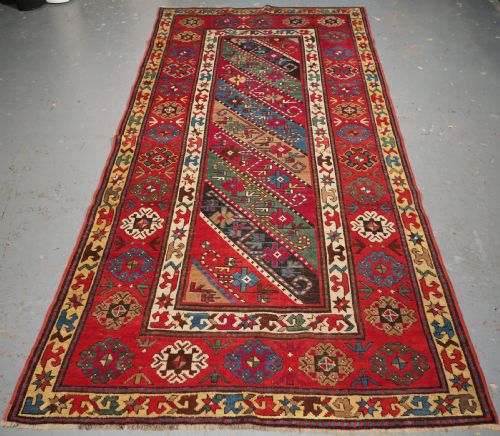
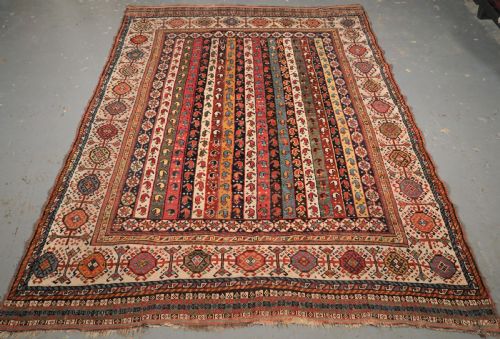
A striped oriental rug is a tribal or village textile featuring banded linear designs, often originating from Caucasian, Persian, or Central Asian weaving traditions. Buyers seek these pieces for their bold graphic appeal and authentic tribal craftsmanship, which differs greatly from formal court carpets.
The selection here encompasses runners, prayer-rugs, flatwoven kilims, and mounted jajim panels, spanning dates from the mid-nineteenth century through the early twentieth century. Most examples display diagonal stripes, banded borders, or repetitive stripe motifs rooted in nomadic weaving culture.
Materials and construction
These textiles are constructed primarily from wool, cotton, and silk, utilising traditional hand-weaving and flatweaving techniques. Nomadic weavers often incorporated wool for durability in pile carpets and kilims, while flatwoven bands and tent components like jajim and mafrash panels relied on tight warp-faced weaves.
Materials such as wood, leather, and metal appear supplementary, often associated with mounted pieces or structural elements of saddle bags. The reliance on natural fibres and local wool gives each woven stripe its distinct tactile depth.
Striped Oriental Rug Retail Price Guide 2026
Typical asking prices for striped oriental rug among the pieces listed under this phrase on Sellingantiques today, from the lower quarter to the upper quarter. They describe what is for sale here now, not the wider market.
Several textiles began life as functional nomadic storage containers before finding new life as compact wall art.
Evaluating quality and merit
Quality in these textiles rests upon the precision of the weave, the clarity of the stripe or boteh design, and the integrity of the natural materials. Pieces with distinct regional attributions, such as specific Caucasian Gendje or Shahsavan weaves, demonstrate superior artistic execution.
Condition and completeness also separate standard examples from exceptional ones, particularly when evaluating flatweaves made from tent bands, mafrash panels, or complete saddle bag sets. The crispness of the linear bands and the saturation of the wool define the upper tier of the range.
The Striped Oriental Rug Glossary
- Kilim
- A flatwoven carpet or rug produced without a pile, common in Eastern Caucasus and Persian tribal regions. These textiles are tightly woven using slit-weave techniques to create sharp geometric patterns.
- Jajim
- A brightly coloured flatwoven textile traditionally used as a blanket or tent cover, often constructed in narrow panels that are subsequently joined together. Surviving examples are frequently mounted or repurposed into smaller decorative formats.
- Mafrash
- A large woven storage bag or chest panel made by nomadic tribes such as the Shahsavan, featuring distinctive banded or striped designs. Panels are often preserved and made into small kilims or display pieces.
- Boteh
- An almond-shaped or pine-cone motif with a curved upper end, frequently arranged in rows or stripes on Caucasian and Persian rugs. It remains one of the most recognisable ancient decorative symbols in oriental weaving.
- Sofreh
- A ceremonial spread or cloth used for sharing meals in Persian and tribal households. These textiles combine utilitarian function with expressive geometric artistry.
Striped Oriental Rug: Frequently Asked Questions
How do I clean a striped oriental rug?
Professional specialist cleaning is essential for antique wool and silk textiles to protect the natural dyes and historical structure.
Regular gentle surface care helps maintain the fibre integrity without introducing moisture that harms aged foundations.
Where were these striped rugs woven?
The pieces originate from tribal and village workshops across the Caucasus, Persia, and Central Asia.
Regions like Gendje, Shirvan, and areas inhabited by Shahsavan and Baluch nomads produced distinct regional patterns.
Can I use a runner in a hallway?
Long narrow formats and runner rugs suit hallways and corridors, offering durable walking surfaces underfoot.
Appropriate underlays protect the historic wool and cotton foundations from excessive friction on hard floors.
What is the difference between a kilim and a rug?
Kilims are flatwoven without any raised pile, resulting in a thin, tapestry-like fabric with visible warp and weft threads.
Standard rugs possess a knotted pile that creates a denser, softer surface texture.