
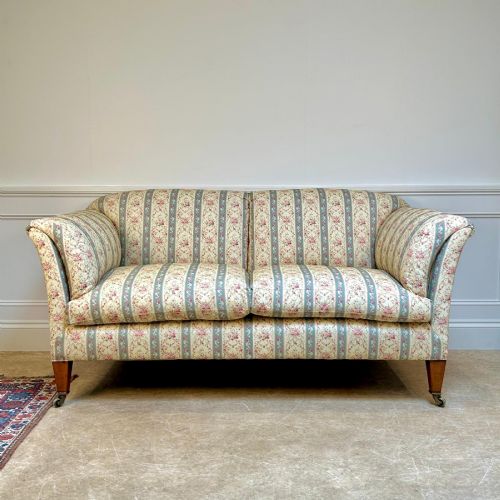
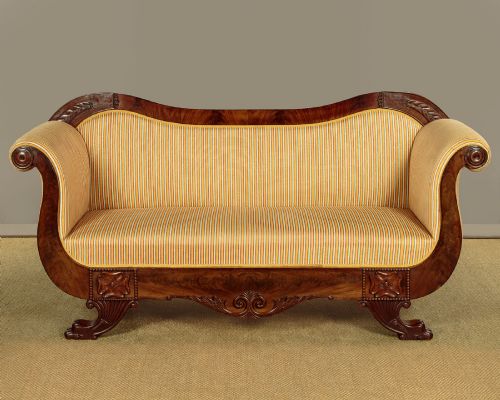
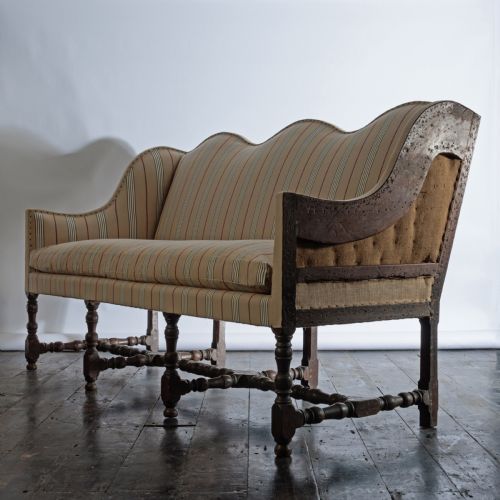


Striped Settee
A striped antique settee brings enduring line and upholstery history to a room, offering a seat designed for both formal reception and daily repose.
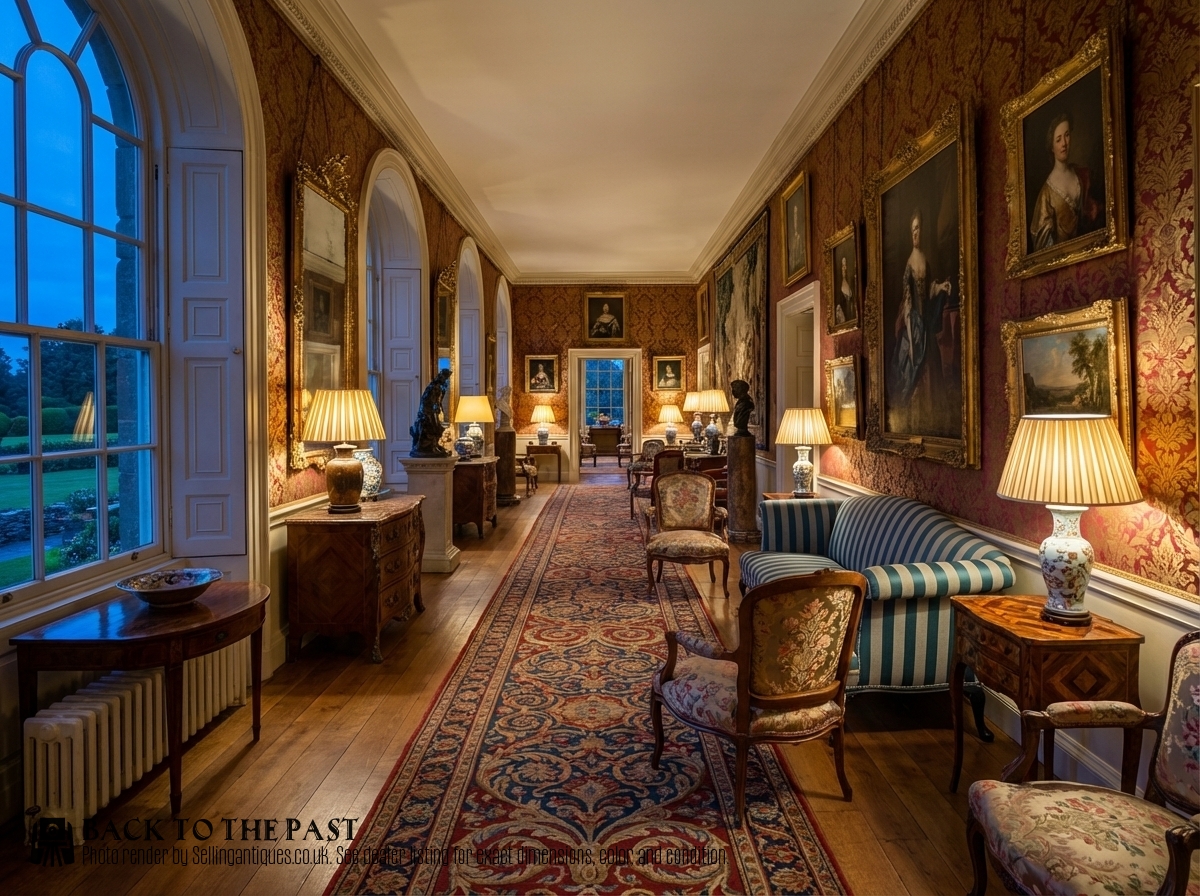
Striped Settee
When you search for a striped antique settee, you encounter seating forms ranging from compact salon pieces to expansive multi-seat couches. The selections span periods from the seventeenth century through the Regency era and into the Edwardian decades, reflecting shifting domestic spaces.
The dominant forms on this page include scroll-end sofas, carved mahogany settees, and lighter salon furniture upholstered in various fabrics. Makers utilised traditional frames of mahogany, walnut, fruitwood, and birch to support extensive textile work.
Stylistic influences move from Baroque heavy frames to Louis XVI restraint, Biedermeier simplicity, and English Country comfort. Buyers find both formal parlour seating and functional window seats or daybeds.
How They Were Made
Makers constructed the structural frames of these pieces using hardwoods such as mahogany, walnut, fruitwood, and birch, often incorporating carved detail or inlaid satinwood. Joinery relied on traditional carpentry methods to sustain the weight and tension of upholstered seating.
Upholstery techniques combined internal stuffing with durable textiles including cotton, velvet, and original ticking. Giltwood, painted finishes, and brass accents completed the decorative scheme on French and English frames alike.
Materials across these listings include mahogany, walnut, birch, fruitwood, brass, velvet, cotton, and textile.
What Varies in Quality
The standard of a piece rests primarily on the integrity of the timber frame and the precision of any carved or inlaid ornamentation. Finer examples display crisp moulding, well-balanced proportions, and sophisticated joinery that survives centuries of use.
Upholstery execution and fabric selection also dictate the standing of a settee, with original ticking or period-appropriate textiles adding historical weight. The harmony between the underlying woodwork and the decorative surface defines the upper tier of these pieces.
Howard & Sons
The Striped Settee Glossary
- Scroll end
- A sofa arm or terminal curved outward in a tight or sweeping scroll, typical of Regency designs. This profile defines many nineteenth-century couches.
- Giltwood
- Timber coated with a thin layer of gold leaf or powder, frequently seen on French decorative frames. It provides a bright metallic sheen to carved details.
- Satinwood
- A durable, hard timber with a natural golden lustre, often used for decorative veneers and delicate inlay work on Edwardian and earlier furniture. Its grain catches the light.
- Biedermeier
- A Central European style spanning the nineteenth century, prioritising clean lines and utilitarian comfort over excessive ornamentation. These pieces feature warm domestic woods.
- Ticking
- A tightly woven, durable cotton or linen fabric traditionally used as a protective lining or primary cover for stuffing. Original examples preserve early upholstery methods.
Striped Settee: Frequently Asked Questions
Where did people place these settees?
These pieces historically stood in formal drawing rooms, parlours, and large reception halls where guests gathered for conversation. They also appeared in private bedrooms and expansive country house landings.
Today, they function well in living rooms, hallways, and studies, providing both seating and a focal point for interior design.
How do I identify a Regency settee?
Regency settees frequently feature characteristic scroll-end arms, mahogany frames, and clean classical lines influenced by ancient Greek and Roman design. Simulated rosewood finishes and brass mounts also appear in this group.
Examining the construction methods and wood species helps distinguish these early nineteenth-century pieces from later Edwardian revivals.
Can I use an antique settee daily?
Many of these pieces were built with robust hardwood frames designed for active household use. Their structural integrity often permits regular sitting in modern homes.
Evaluating the internal webbing and upholstery support helps determine whether a particular piece suits everyday requirements or light decorative placement.
What is a salon suite?
A salon suite typically comprises a matching settee and accompanying chairs designed for formal entertaining in a nineteenth or early twentieth-century drawing room. These matched groups ensured a unified aesthetic for hosting visitors.
They offer a complete decorative arrangement for a principal room rather than a single isolated seat.