




Stone Wall Landscape Painting
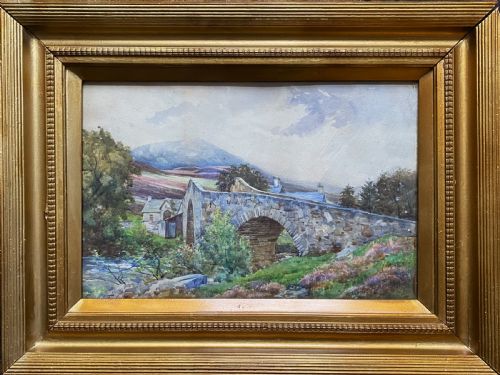
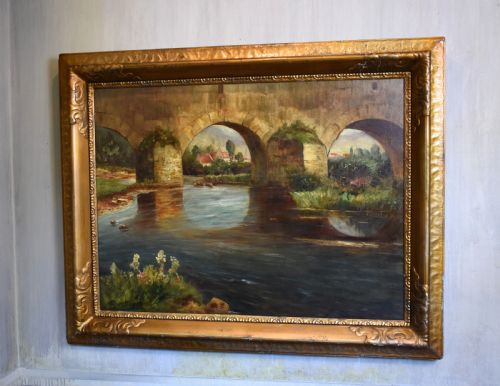
These stone wall landscape painting works capture rural boundaries and country fields through nineteenth-century and mid-century brushwork.
Stone Wall Landscape Painting
A stone wall landscape painting depicts rural scenery where dry-stone boundaries divide fields, hillsides, and riverbanks. These works appear in nineteenth-century and twentieth-century formats, reflecting both British and continental schools.
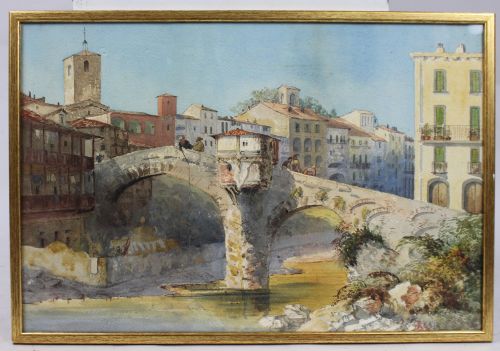
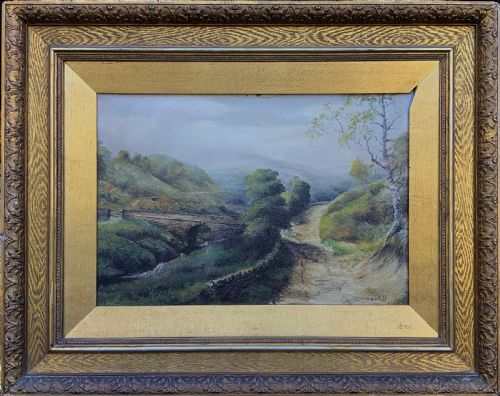
The pieces on this page span from Victorian watercolours to post-impressionist canvases and mid-century realist boards. Buyers encounter compositions ranging from Welsh mountains and Yorkshire dales to French suburbs and Venetian waterways.
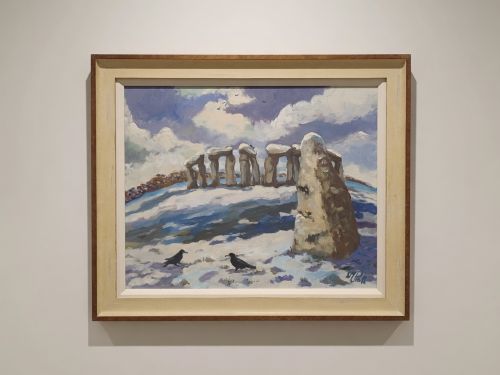
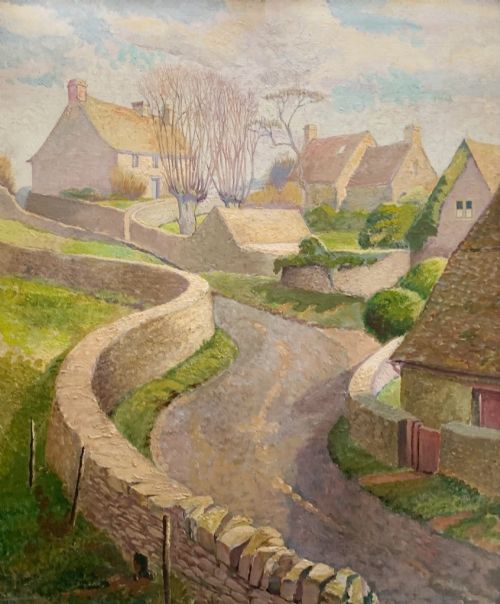
Framed oils and watercolours form the core of these listings, often featuring signed works by identified regional artists. The subject matter centres on pastoral settings where rural stone architecture defines the perspective.
Materials and technique
Artists utilise oil paint on canvas, board, and panel, building texture with traditional brushwork and palette knife application. Watercolour paint on paper appears in earlier nineteenth-century examples, capturing translucent atmospheric effects.
Canvas supports are frequently stretched over wooden frames and occasionally housed within gilt surrounds. Panel and board supports provide a rigid foundation for mid-century compositions.
Listings feature works spanning the Victorian era through the mid-twentieth century, executed in oil and watercolour on canvas, board, and paper.
Assessing quality and execution
Quality rests in the confidence of the brushwork and the structural handling of light across the landscape. Stronger pieces demonstrate deliberate control over tone, giving weight to masonry and depth to distant hills.
Provenance and signature clarity elevate specific works above anonymous school pieces. The integration of architectural elements like stone walls into the natural terrain reveals the painter's structural skill.
Lucy Pratt·Florence Adelina Hess·Claude Jousset·J Barclay·Donald McIntyre·John Frederic Greenwood·H Church·James H Hulse·Noel Harry Leaver·Franz Reder-Broili·George Willis Pryce·Robert John Hammond
The Stone Wall Landscape Painting Glossary
- Oil on Canvas
- A traditional painting medium where oil pigments are bound with drying oils and applied to a woven fabric support. This combination allows for rich colour blending and textured impasto surfaces.
- Watercolour Paint
- A water-soluble medium applied to paper to create transparent washes of colour. It relies on the white of the paper to reflect light back through the pigment.
- Post-Impressionism
- An art movement extending beyond impressionism that prioritised emotional expression and structural form over mere visual recording. It influences several twentieth-century works in these listings.
- Gilt
- A thin layer of gold leaf applied to picture frames to provide a decorative metallic surface. It enhances the visual boundary between the painting and the room.
- Panel
- A flat wooden support used instead of canvas for painting. It offers a stable, rigid surface favoured by various twentieth-century artists.
Stone Wall Landscape Painting: Frequently Asked Questions
How do I date an antique landscape painting?
Dating relies on stylistic markers, canvas types, and framing methods typical of specific decades. Signatures and biographical records of the artist provide precise chronological anchors.
Secondary clues include stretcher construction, lining materials, and historical gallery labels attached to the reverse of the frame.
What is the difference between oil and watercolour?
Oil paint utilises a slow-drying medium that permits heavy layering and rich texture build-up. Watercolour uses water-soluble binders on paper, creating luminous, translucent effects.
Oils require rigid supports like canvas or panel, whereas watercolours need protection behind glass.
How should I care for an oil painting?
Keep paintings away from direct sunlight and fluctuating humidity to prevent canvas warping and pigment degradation. Dust gently with a soft, dry brush without applying pressure.
Avoid using liquid cleaners or chemical solvents on the painted surface or gilt frame.
Where were these landscape scenes usually painted?
Many scenes depict specific British locations including Yorkshire, North Wales, and Warwick. Others capture continental views across France and Italy.
Artists often worked plein air to capture natural light before finishing compositions in the studio.