


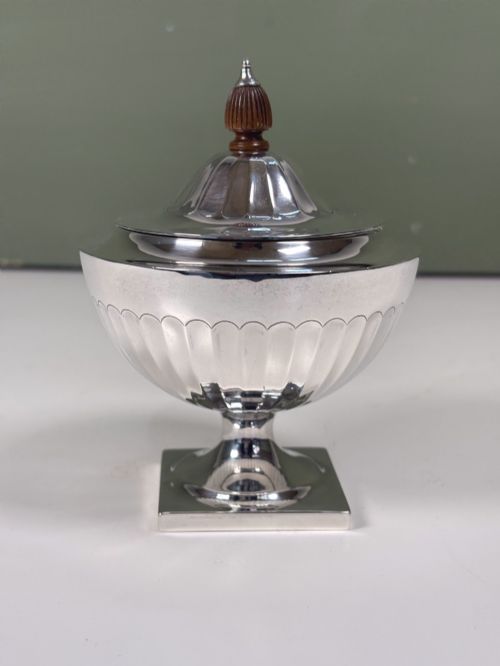


Sterling Silver Tea Jar
A sterling silver tea jar brings quiet elegance to the table, offering a refined vessel shaped by decades of traditional British craftsmanship.
Sterling Silver Tea Jar
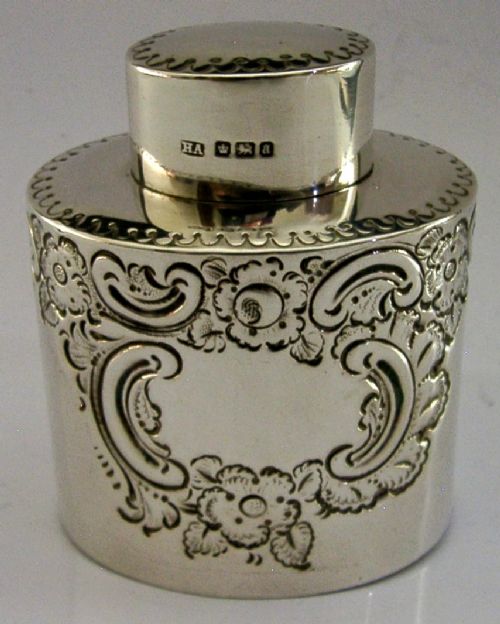
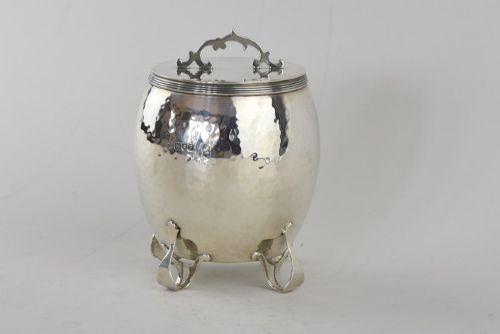
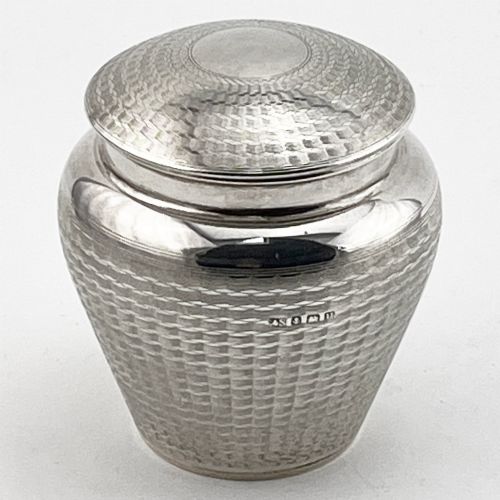
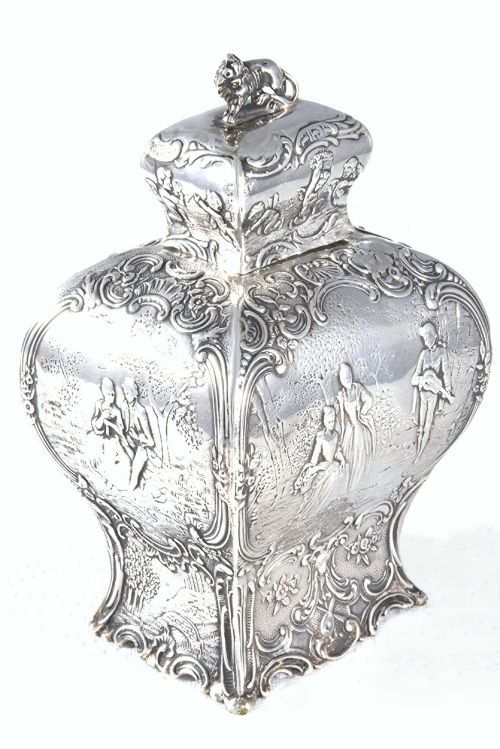
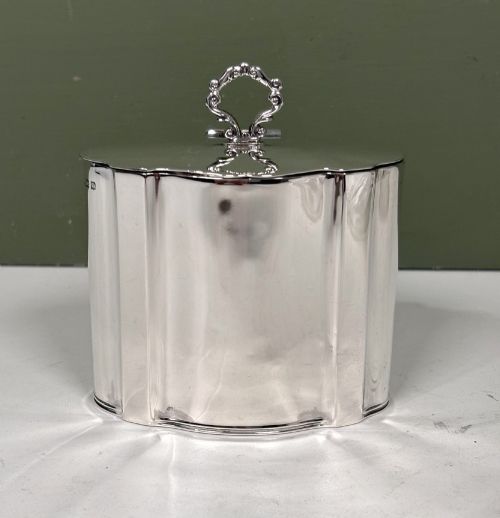
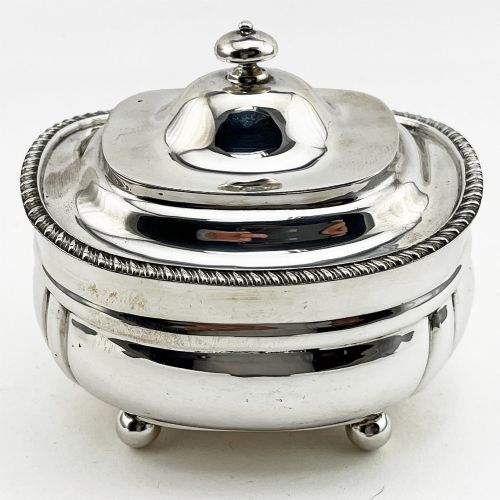
A sterling silver tea jar, frequently identified as a tea caddy or box, represents a dedicated container designed to store and preserve loose tea leaves. Collectors encounter various forms on this page, ranging from oval and bombe shapes to novelty designs and cut crystal bodies paired with silver mounts.
The pieces span the Victorian, Edwardian, and Art Deco periods, alongside Georgian Revival and Arts and Crafts examples. London, Birmingham, and Sheffield assay offices dominate the origins, reflecting principal centres of British silversmithing across the late nineteenth and early twentieth centuries.
Materials and construction methods
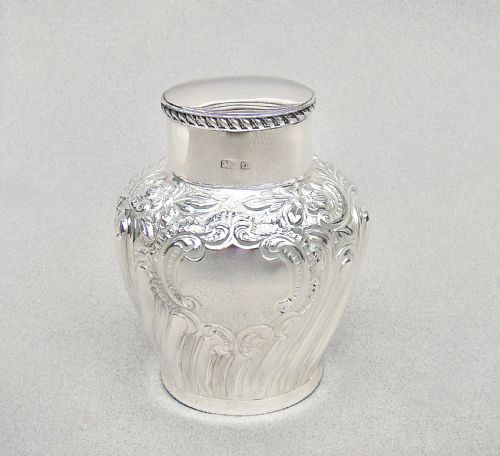
Silversmiths utilised solid sterling silver, often combined with cut crystal or ebonised wood details to create sturdy and decorative storage containers. Repoussé decoration, hand hammering, and smooth polished finishes display the primary techniques employed by makers in this selection.
Lids typically feature pull-off designs or hinged mechanisms fitted closely to preserve the aroma of the contents. Makers also incorporated substantial metal gauges to ensure durability and a reassuring weight in the hand.
Factors that distinguish the range
Subtle differences in metal gauge and the crispness of hand-hammered or repoussé decoration separate standard vessels from exceptional ones. Heavier silver weight and intricate surface detailing indicate a higher standard of manufacture by established silversmiths.
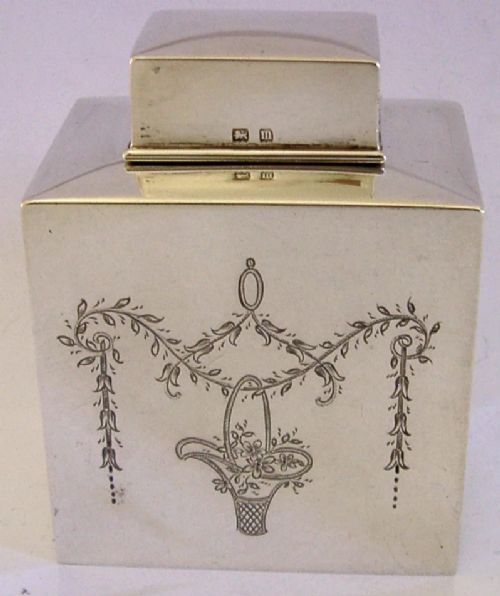
The clarity of cut crystal bodies and the precision of fitted lids further influence the overall character of a piece. Well-preserved hallmarks and maker stamps provide clear evidence of origin and period authenticity.
Charles Edwards·Thomas Hayes·Mappin and Webb·Goldsmiths and Silversmiths Co.·Asprey and Co.·Atkin Brothers
The Sterling Silver Tea Jar Glossary
- Sterling silver
- An alloy consisting of pure silver and other metals, typically copper, standardised for durability and strength in British tableware. It provides the bright reflective surface seen across these caddies.
- Repoussé
- A metalworking technique where the silversmith hammers the design from the reverse side to create a raised relief pattern on the surface. This method creates textured floral or scroll motifs.
- Hallmark
- A series of official marks stamped on precious metal items to guarantee purity, origin, and the year of assay. These marks guide collectors in dating individual pieces accurately.
- Bombé
- A swelling, rounded furniture and vessel profile popular in various nineteenth-century silver designs. This curved shape adds visual depth to the body of a caddy.
Sterling Silver Tea Jar: Frequently Asked Questions
How were sterling silver tea jars used?
These vessels served to store loose tea leaves securely in the drawing room or dining room. Because tea was an expensive commodity, the containers often featured lockable lids.
Today, they function primarily as decorative objects or refined storage boxes for small keepsakes on a desk or mantelpiece.
How do I clean a silver tea caddy?
Clean the surface gently using a soft microfibre cloth and a specialist silver polish designed to remove tarnish without harming the metal. Avoid harsh abrasive pads that can scratch delicate repoussé work.
Store the piece in a dry environment to slow down natural oxidation and maintain the polished shine.
What is the difference between a tea caddy and a biscuit box?
Tea caddies are generally smaller vessels designed specifically for holding loose tea leaves, often featuring tight-fitting or pull-off lids to preserve freshness. Biscuit boxes are larger containers meant for biscuits or baked goods.
Both items utilise similar sterling silver materials and stylistic periods within British manufacturing.
How can I tell the period of a silver jar?
Examine the stamped hallmarks to identify the specific assay office mark and date letter associated with the year of manufacture. Stylistic indicators such as Arts and Crafts hand hammering or Edwardian elegance also point to specific eras.
Comparing the decorative motifs against documented silversmith designs helps confirm the historical context.