
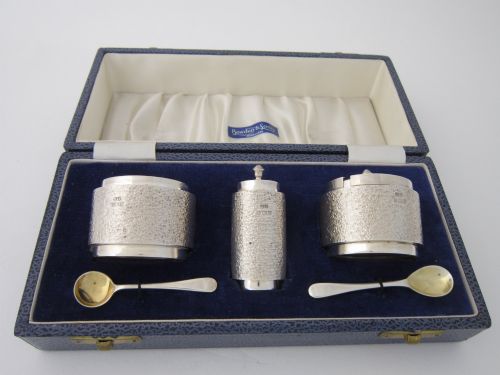


Sterling Silver Salt Shakers
Sterling silver salt shakers arrive here in forms ranging from plain Edwardian pairs to Victorian novelty animals.
Sterling Silver Salt Shakers
When you search for sterling silver salt shakers, you encounter functional tableware and decorative condiment pieces spanning the Victorian, Edwardian, and mid-century periods. These items appear individually, in pairs, or as part of larger cruet sets alongside mustard pots and pepperettes.
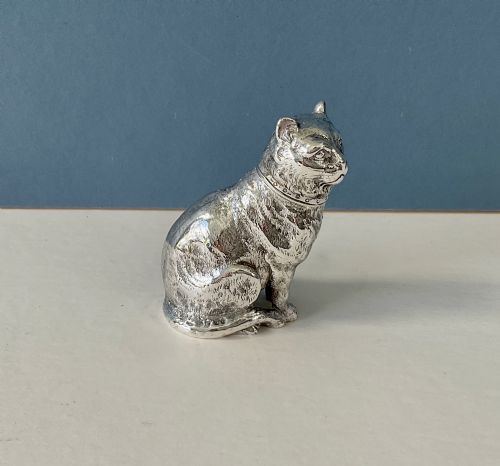
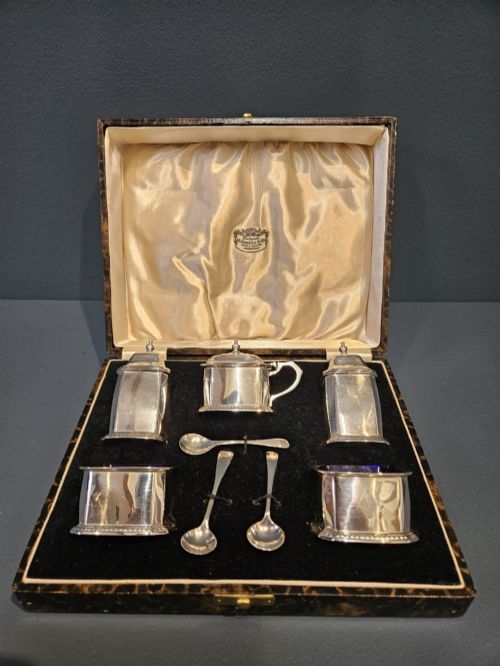
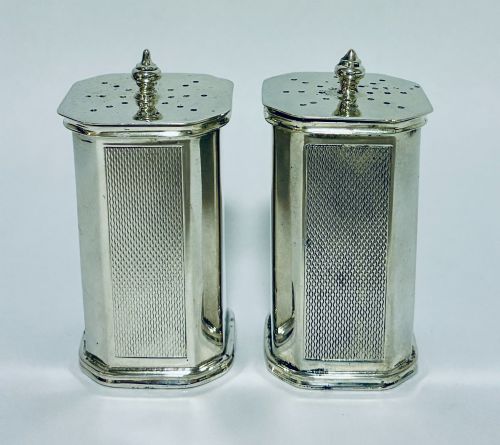
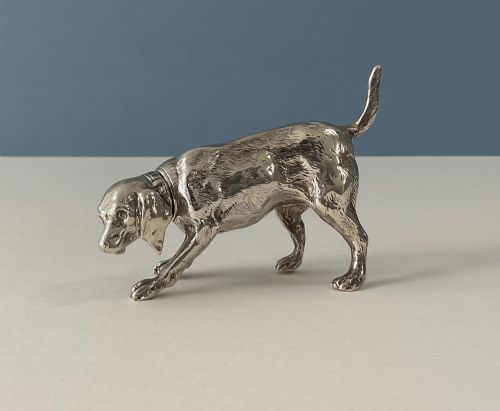
The most common examples on this page are Victorian and Edwardian novelty pieces shaped as animals and birds, alongside standard paired shakers from the 1920s and 1930s. Makers also produced fitted boxed sets complete with spoons and glass liners.
Originating primarily from British workshops, these silver table items served both practical dining needs and decorative display functions in domestic interiors.
How they were made
Makers shaped sterling silver through casting, hammering, and piercing techniques to create hollow bodies, hinged lids, and pierced shaker tops. Many pieces incorporate blue glass liners inside open salt cellars to protect the metal from corrosion.
Object forms include novelty animal pepper pots, individual salt tubs, and multi-piece cruet sets.
What varies in quality
The distinction between standard production items and superior pieces rests on the crispness of the cast detail and the weight of the metal. Animal novelties with sharp feather or fur definition and secure fitting lids represent higher execution.
Maker attribution also influences standing, with pieces bearing marks from notable silversmiths commanding greater interest among collectors. Completeness within a cruet set, including matching spoons and undamaged glass liners, elevates the overall standard.
Goldsmith & Silversmith's·Sampson Mordan·Thomas Johnson·Wilmot Manufacturing Co·Viners·Mappin & Webb·Tiffany
The Sterling Silver Salt Shakers Glossary
- Cruet set
- A matched collection of bottles, casters, and pots for holding table condiments such as salt, pepper, and mustard. These often sit within a dedicated silver frame or stand.
- Pepperette
- A small shaker or caster specifically designed for dispensing ground pepper onto food. They frequently take the form of miniature urns or cylindrical pots.
- Silver gilt
- Sterling silver that has been coated with a thin layer of gold on its surface. This technique provided a rich interior finish to salt cellars and protected the metal.
- Hallmark
- A series of official marks stamped onto precious metal items to guarantee the purity of the silver, the maker, and the year of assay. British pieces typically show a lion passant and an assay office mark.
- Salt tub
- An open circular vessel used to hold salt before the invention of the shaker, often paired with a small spoon and a coloured glass liner.
Sterling Silver Salt Shakers: Frequently Asked Questions
What is a silver cruet set?
A silver cruet set is a matched group of condiment containers used together at the dining table for salt, pepper, and mustard. They often share a uniform design style and sit on a matching tray.
These sets were essential dining accessories throughout the Victorian and Edwardian periods, providing organised access to seasonings during meals.
How do I clean antique silver?
Antique silver requires gentle cleaning with a specialist silver cloth to remove tarnish without wearing away thin details or hallmarks. Avoid harsh abrasive dips that can damage the surface.
Keeping pieces dry and stored away from direct light helps maintain the polish on items featuring velvet or satin linings.
Why do some salt cellars have blue glass?
Blue glass liners protect the sterling silver from the corrosive effects of salt, which can pit and damage the metal over time. The vibrant glass also provided a decorative contrast against the polished silver frame.
These liners lift out easily for washing after use at the dining table.
How do I date antique silver shakers?
Dating relies primarily on the stamped hallmarks, which include a specific letter corresponding to the year of assay and an office mark. Stylistic clues such as Art Deco geometric lines or Victorian novelty shapes also help narrow down the period.
Comparing the maker's mark against historical registry records confirms the exact year of production.