


Sterling Silver Pill Container
A sterling silver pill container is a small pocket vessel made to carry medicines or personal items, offering practical utility combined with decorative metalwork.
Sterling Silver Pill Container
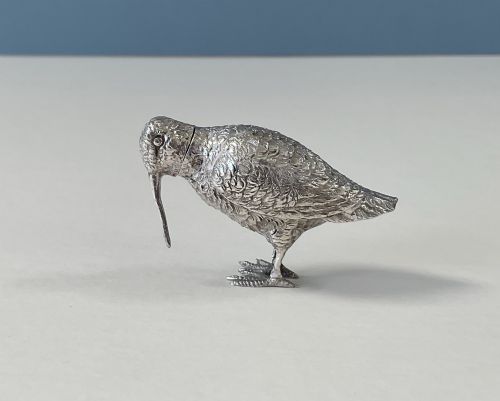
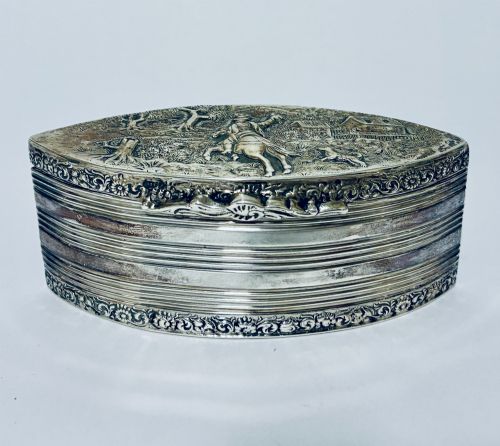
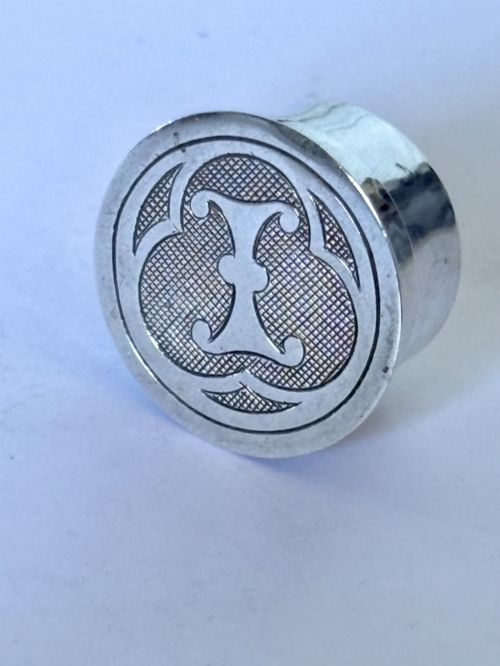
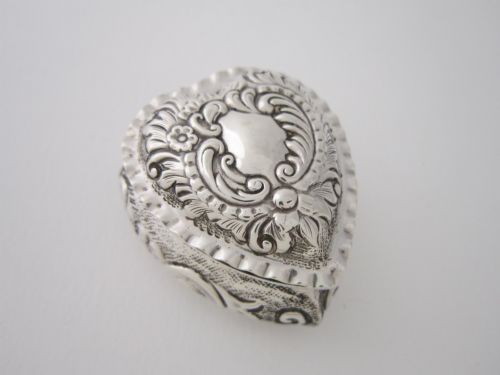
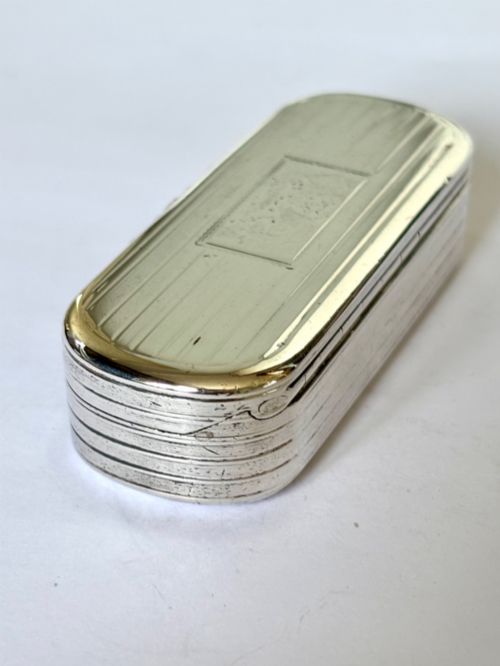
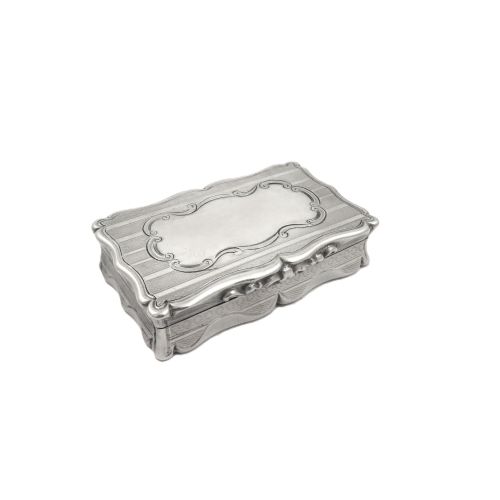
A sterling silver pill container encompasses small pocket items produced across the Victorian, Edwardian, and Georgian periods, alongside pieces from the early twentieth century. Buyers encounter forms ranging from simple oval and heart-shaped boxes to novelty shapes, snuff boxes, pyx boxes, and small trinket containers.
The selection on this page demonstrates origins spanning English assay offices such as Birmingham, Chester, and London, alongside Scottish, French, and Scandinavian workshops. Pieces take the form of dedicated pill boxes, small vanity pots, and double-lidded pocket receptacles designed for daily use.
Materials and Technique
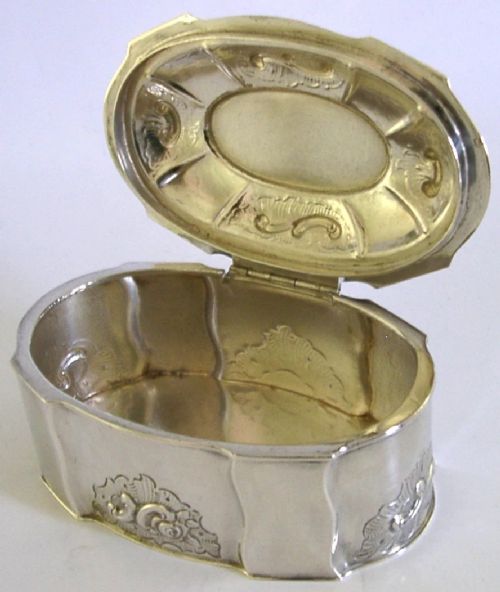
These pieces rely on sterling silver as the primary body material, frequently augmented with interior gilding known as silver-gilt or gilt metal. Makers combined the metalwork with natural elements including mother of pearl, garnet, amethyst, and citrine set into the lids.
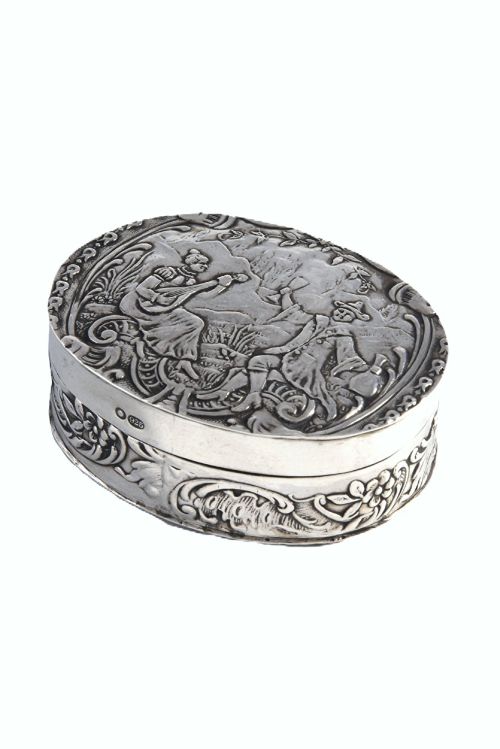
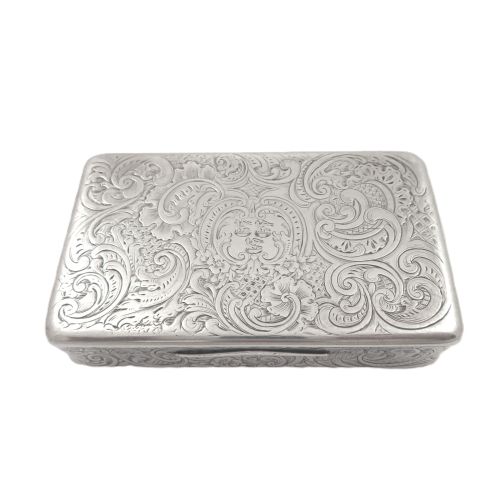
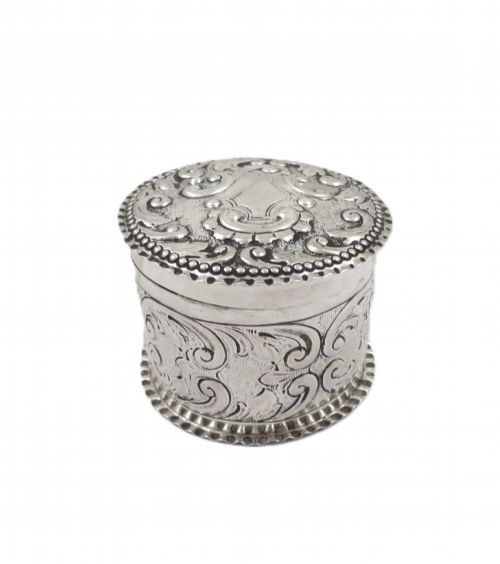
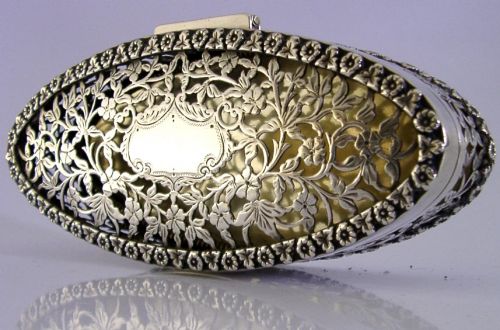
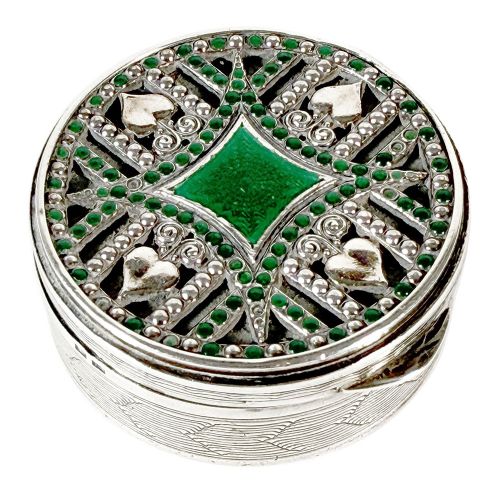
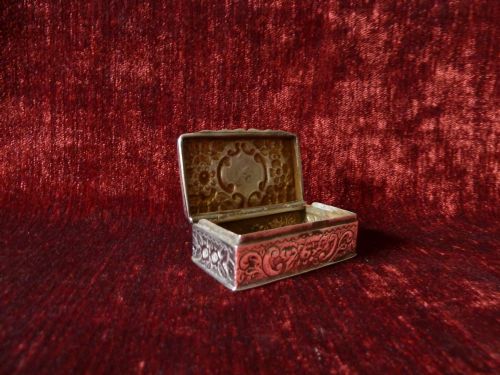
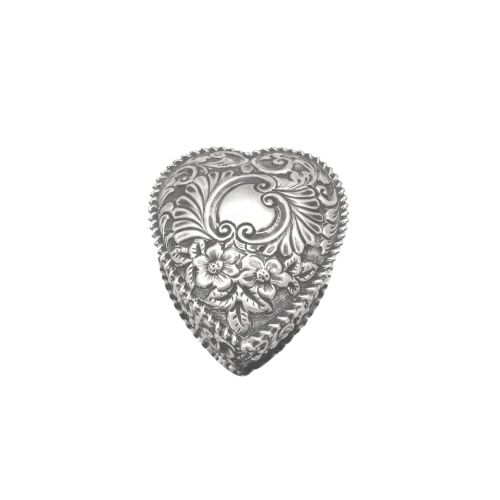
Techniques recorded in the manufacture include surface piercing, detailed hand engraving, repoussé relief work depicting cherubs or floral scrollwork, and spot-hammered finishes characteristic of the Arts and Crafts movement. Enamel work provides colour contrast on specific pieces from the turn of the twentieth century.
Listings feature sterling silver pill containers incorporating gemstones like amethyst, garnet, and citrine alongside mother-of-pearl insets.
Distinctions in Quality
The standard of a sterling silver pill container depends upon the crispness of the chased or engraved decoration and the precise alignment of the hinge and lid. Superior examples retain sharp relief work on repoussé panels and tight closures without gaps.
Makers' marks and full hallmarks struck by regional assay offices indicate domestic standard silver, while the integration of hardstones or enamel panels elevates the complexity of the piece above plain metal containers.
FA Barrett·Robert Thornton·John Bettridge·William Eaton·Elkington and Co·George Adam Scheid·Frederick Mason·Nathan and Hayes
The Sterling Silver Pill Container Glossary
- Sterling silver
- A silver alloy containing 92.5 percent pure silver by mass, with the remaining part comprising other metals for durability. This standard is frequently denoted by the lion passant hallmark on British items.
- Hallmark
- An official mark stamped onto precious metals in Britain to indicate the standard of purity, the assay office, and the year of manufacture. These stamps allow collectors to date pieces accurately.
- Repoussé
- A metalworking technique where the metal is hammered from the reverse side to form a raised design in relief on the front. It creates tactile surface decoration on lids and bodies.
- Silver-gilt
- Sterling silver that has been coated with a thin layer of gold on its interior or exterior surfaces. This finish prevents the silver from tarnishing when in contact with acidic contents.
- Pyx box
- A small round container historically utilised to carry the consecrated Eucharist. In secular contexts, similar lidded vessels serve as portable storage containers.
Sterling Silver Pill Container: Frequently Asked Questions
What is a sterling silver pill container used for?
These small receptacles were traditionally carried in pockets or handbags to hold medicines, lozenges, or snuff safely while away from home. Their sturdy metal construction protected fragile contents from being crushed.
Over time, owners also repurposed them to hold stamps, tokens, or small trinkets. Today, they remain functional items for daily use as well as decorative collectors' pieces.
How do I date an antique silver box?
Dating relies primarily on the stamped hallmarks found on the body or lid of the piece. These marks include a date letter corresponding to the specific year of assay at offices such as Birmingham, Chester, or London.
Style indicators such as Art Nouveau enamel work or Victorian repoussé motifs also help narrow down the period of manufacture when hallmarks are worn or absent.
What is the difference between a pill box and a snuff box?
Snuff boxes were specifically manufactured to hold powdered tobacco, requiring a tightly sealed lid to preserve the moisture and aroma of the contents. They often date from the Georgian and Victorian eras when snuff-taking was widespread.
Pill boxes generally feature slightly different internal proportions suited for solid medications, though many antique lidded vessels served multiple interchangeable purposes depending on the owner's needs.
How should I clean silver pill containers?
Cleaning requires a soft microfibre cloth and mild soapy water to remove surface dirt from engraved or pierced sections. Aggressive chemical dips should be avoided, particularly on pieces with enamel, mother-of-pearl, or hardstone insets.
Allowing a natural patina to remain on antique silver highlights the depth of the hand engraving and relief work without stripping away the history of the piece.