



Sterling Silver Oval Tray
A sterling silver oval tray brings a refined, reflective surface to a table, valued for both practical service and timeless metalsmithing.
Sterling Silver Oval Tray
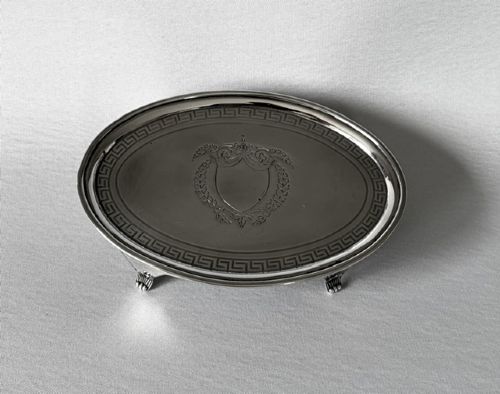
A sterling silver oval tray encompasses everything from small Georgian teapot stands and George III snuffer's trays to large Edwardian and Victorian serving pieces. The pieces encountered range across the eighteenth, nineteenth and early twentieth centuries, reflecting changing domestic rituals from tea service to dressing table displays.
Georgian and Victorian examples often feature distinct regional hallmarks, such as those from Sheffield, York or Dublin, alongside makers known for exceptional silverwork. Alongside these, buyers find Arts and Crafts interpretations and Art Deco drinks trays with handles, showing how the oval form adapted across successive design movements.
While smaller examples like bread dishes and decorative bowls appear, the quintessential large sterling silver oval tray offers a substantial expanse of metal. These larger serving platters and drinks trays demonstrate the heavier gauges required for functional hospitality during the Edwardian period and earlier.
Assessing quality in silver trays
Quality rests significantly on the gauge of the silver and the crispness of the workmanship. A heavier piece resists flexing and provides a satisfying heft in the hand, whereas thinner metal feels unsubstantial over a large surface area.
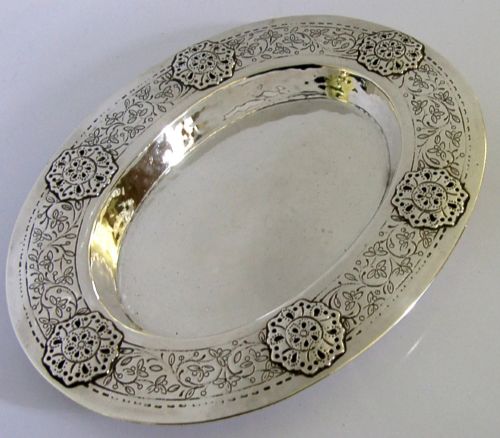
The finesse of the detailing distinguishes finer items, from the precision of pierced fretwork on a Victorian serving dish to the clarity of hand-engraved scrollwork. Maker marks and clear hallmarks also contribute to the distinction of the piece, marking work from established workshops.
Sterling Silver Oval Tray Retail Price Guide 2026
Typical asking prices for sterling silver oval tray among the pieces listed under this phrase on Sellingantiques today, from the lower quarter to the upper quarter. They describe what is for sale here now, not the wider market.
Listings span from the 18th century through the Georgian, Victorian, Edwardian, and Art Deco periods, featuring sterling silver and oak.
Liberty & Co·Robert Breading·Harrison Bros·Peter and Anne Bateman·Martin Hall·Elkington & Co·Tiffany & Co
The Sterling Silver Oval Tray Glossary
- Hallmark
- Official stamps applied to precious metals indicating the standard of purity, the assay office, and the year of manufacture. These marks provide the definitive record of a piece's origin and age.
- Pierced
- A technique where metal is cut through to create decorative openwork patterns, commonly seen on Victorian serving dishes and galleries. It lightens the visual weight of the silver.
- Snuffer's tray
- A small, specialised tray designed to hold candle snuffers and catch stray wax. These early pieces often feature distinct shaped rims and small feet.
- Chasing
- A method of hammering metal from the front to push the design inwards and create raised relief ornamentation. It adds texture and depth without removing metal.
- Salver
- A flat tray, typically with feet, used for presenting food, drinks or documents. In silverwork, the term often overlaps with large platters.
Sterling Silver Oval Tray: Frequently Asked Questions
How do I clean a sterling silver tray?
Use a specialised silver polish and a soft cloth to gently remove tarnish, avoiding abrasive pads that scratch the metal.
Rinse the tray thoroughly in warm water and dry it immediately with a lint-free cloth to preserve the polished finish.
Were these trays used for food?
Many larger platters and bread dishes were designed specifically for serving food and baked goods during formal meals.
Smaller trays often served tea accessories, bottles, or dressing table items rather than direct food contact.
How can I date my silver tray?
Examine the hallmarks stamped into the metal, which include date letters and assay office symbols unique to specific years.
Stylistic markers such as George III borders or Art Deco geometry also help narrow down the manufacturing period.
Can I use an antique tray daily?
Sterling silver is durable enough for regular use, provided you handle pieces with care and clean them appropriately.
Using felt pads or coasters can help protect the surface from unnecessary scratching during everyday service.