

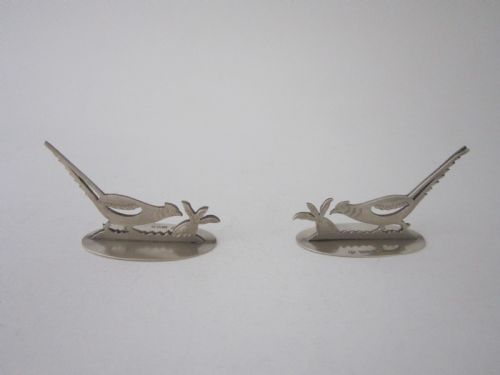


Sterling Silver Menu Stands
Sterling silver menu stands bring character to dining tables through figural designs and silver craftsmanship from the Edwardian era onwards.
Sterling Silver Menu Stands
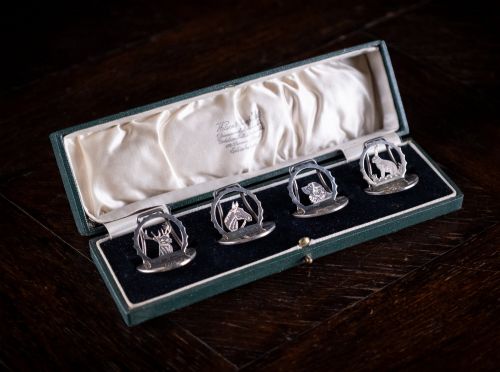
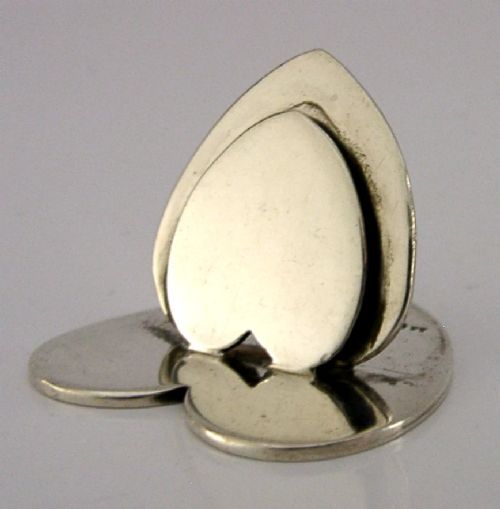
Sterling silver menu stands are small table accessories designed to hold menus and place cards upright during formal dining. You will most frequently encounter Edwardian examples on this page, alongside pieces from the 1910s, 1920s, and 1930s.
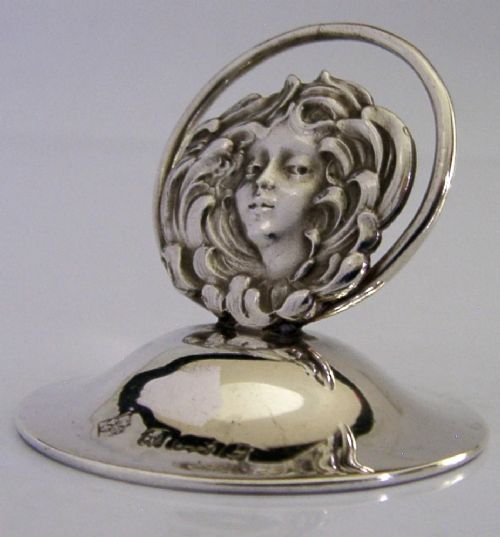
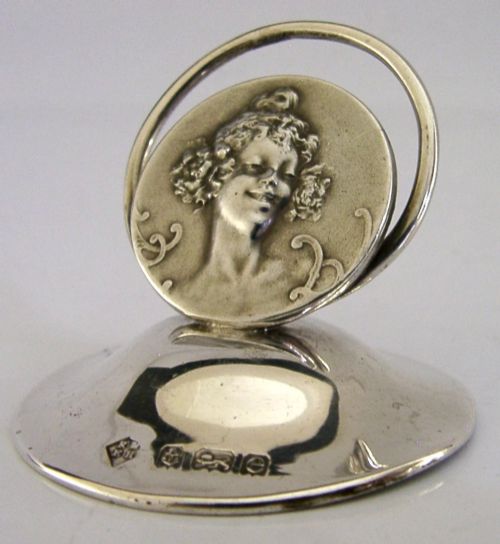
The selections span several distinct stylistic movements including Art Nouveau, Art Deco, and Arts and Crafts. Makers translated popular culture and nature into metal, producing forms ranging from simple holders to elaborate figural subjects.
How they were made
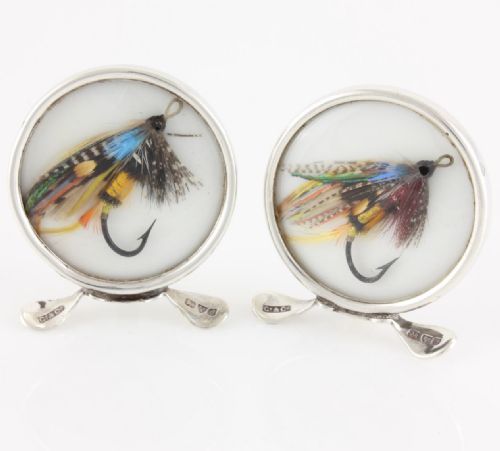
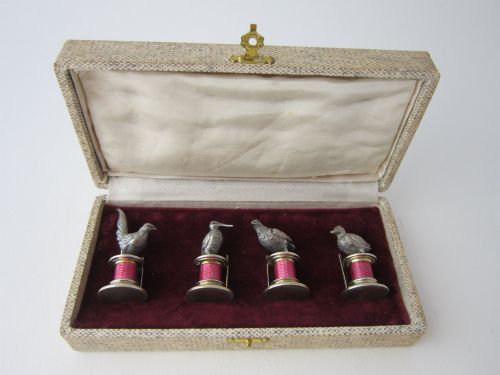
These items utilise sterling silver, often combined with materials such as velvet, silk, glass, leather, feathers, and guilloche enamel to add colour and texture to the designs. Silversmiths employed casting, chasing, and stamping techniques to shape the metal into animals, figures, and decorative motifs.
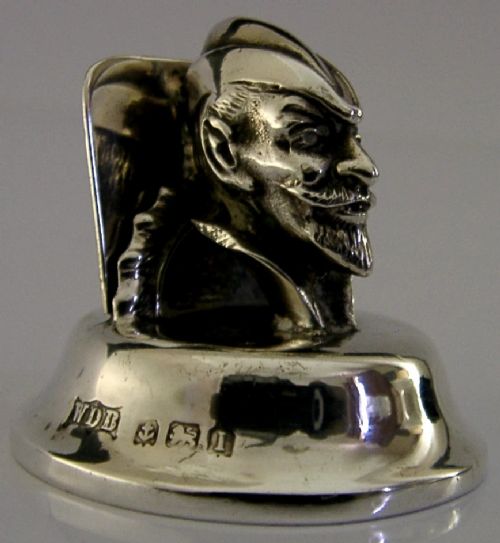
Many pieces incorporate weighted bases or supportive struts to ensure the small silver frames remain upright when carrying cards. Hallmarks stamped directly into the metal record the assay office, standard of silver, and date of manufacture.
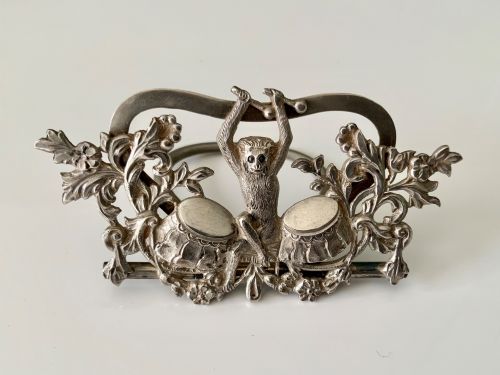
A solitary silver monkey captured mid-drumming sits ready to keep time for the dinner party.
What varies in quality
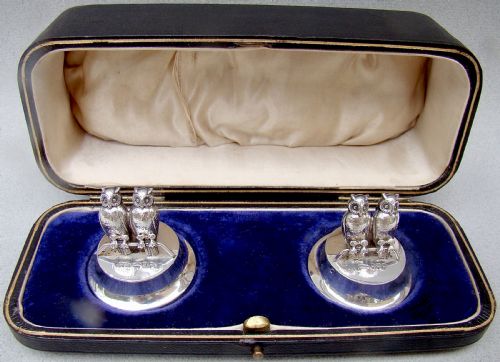
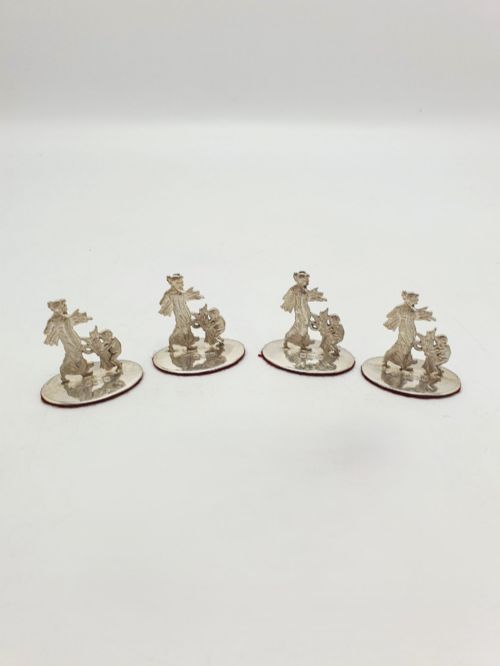
Completeness also dictates standing within the range, as matched sets or cased pairs command greater interest than solitary survivors. The legibility of hallmarks and the preservation of applied enamel or backing materials further distinguish the examples.
Levi & Salaman·A. Wilcox·Grey & Co·Sampson Mordan·Asprey·Liberty
The Sterling Silver Menu Stands Glossary
- Sterling silver
- A silver alloy containing 92.5 percent pure silver and 7.5 percent other metals, usually copper, chosen for durability in tableware. This standard is denoted by specific hallmarks on British items.
- Hallmark
- A series of official marks stamped on precious metals indicating the maker, assay office, and year of testing. These marks provide the primary evidence for dating an antique.
- Guilloche enamel
- A decorative technique where transparent enamel is layered over mechanically engraved metal. It adds vibrant colour and geometric patterns to the surface.
- Assay office
- An official body that tests the purity of precious metals and stamps the corresponding marks. Towns such as Birmingham, Chester, and London operated these offices.
- Place card holder
- A miniature stand used at formal dinners to display the name of a guest next to their seat. They share the same construction methods and stylistic periods as menu holders.
Sterling Silver Menu Stands: Frequently Asked Questions
How were menu stands used?
Hosts placed them along dining tables so guests could read the upcoming courses or locate their assigned seats. In large households, matching sets ensured a uniform appearance down the length of the table.
They served both a practical purpose and acted as decorative conversation pieces. Today, collectors utilise them to set a traditional dining table or display small cards.
How do I identify Edwardian examples?
Edwardian pieces date from the reign of Edward VII between 1901 and 1910. The hallmarks on these items will correspond to this specific decade.
Stylistically, they often reflect Art Nouveau curves or naturalistic animal forms. Makers during this period frequently produced figural subjects inspired by literature and nature.
Why do some pieces feature animals?
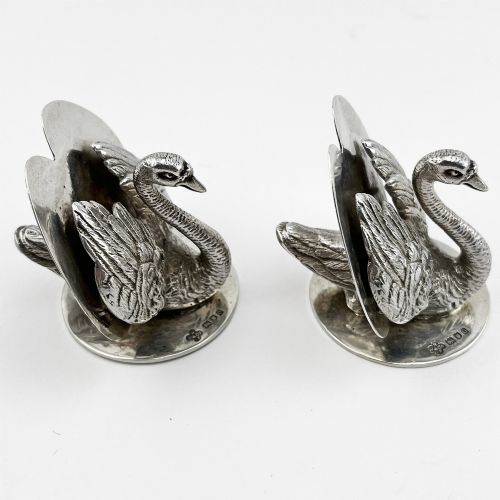
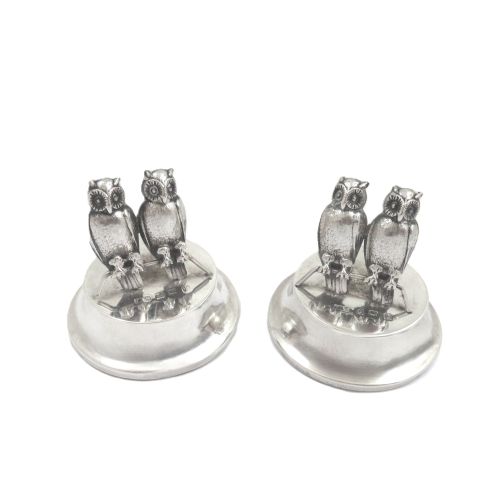
Animal subjects reflected the Victorian and Edwardian fascination with wildlife, hunting, and anthropomorphic design. Makers produced owls, foxes, swans, and game birds to amuse diners.
These figural designs turned utilitarian objects into miniature works of art. Specific themes like Alice in Wonderland or military motifs also appeared on custom orders.