


Sterling Silver Knife Fork
These sterling silver knife fork sets span centuries of dining, offering a tangible link to formal meals and historic domestic rituals.
Sterling Silver Knife Fork
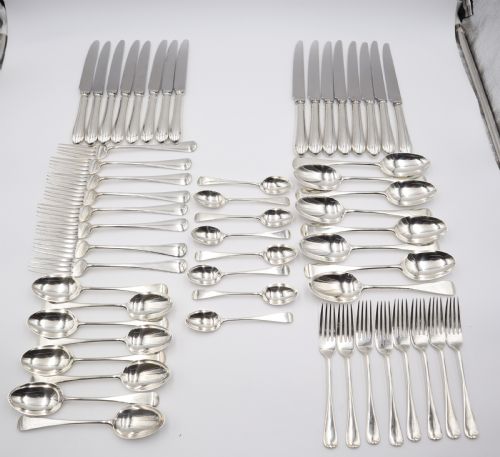
When you search for a sterling silver knife fork, you are looking at functional table implements designed for specific dining tasks, ranging from fish servers to boxed christening sets. The selections here include everything from single folding fruit pieces to large canteens for twelve persons, showing how dining habits evolved across the Georgian, Victorian, and Edwardian eras.
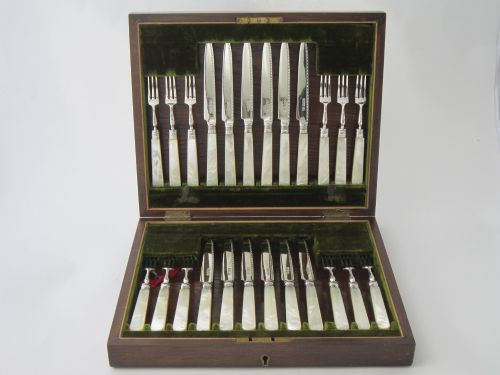
The most common formats on this page are matched pairs and boxed presentation sets, frequently featuring handles of mother of pearl alongside the silver blades and tines. These items served both practical dining functions and ceremonial roles, such as marking births through christening gifts.
Origins stretch from English workshops in Sheffield to French makers and American silversmiths like International Silver Co. The variety encompasses specialised implements like pickle forks, sardine servers, and dessert sets alongside standard cutlery.
How they were made
The construction of these items relies on sterling silver paired with contrasting materials such as mother of pearl, leather, velvet, silk, wood, and steel. Blades and tines are frequently wrought from silver or steel, whilst handles utilise organic materials shaped to fit the hand.
Many pieces incorporate fitted cases lined with silk or velvet, indicating their status as valued presentation items or gifts. Metalworking techniques span traditional forging, hallmarking, and intricate pattern stamping such as the Coburg design.
Listings span the eighteenth century through to the 1930s, featuring materials such as velvet, silk, mother of pearl, leather, steel, and wood.
What varies in quality
Quality in these implements rests on the crispness of the chased or engraved ornament, the integrity of the fitted case, and the preservation of the original materials. Pieces displaying clear hallmarks and maker marks command attention for their documented origins.
The balance between the handle material, such as mother of pearl, and the silver component dictates the tactile success of the utensil. Completeness of original boxed sets further separates standard utilitarian survivals from presentation grade examples.
International Silver Co·Mappin & Webb
The Sterling Silver Knife Fork Glossary
- Sterling silver
- An alloy containing 92.5 percent silver and 7.5 percent other metals, usually copper, chosen for durability in tableware. This standard forms the baseline for the majority of items listed here.
- Hallmark
- An official stamp applied to precious metals indicating standard of purity, place of assay, and year of manufacture. These marks allow collectors to date pieces accurately.
- Christening set
- A boxed collection of cutlery presented to an infant to mark a baptism, often comprising a knife, fork, and spoon in sterling silver. These survive in remarkably preserved states due to their ceremonial nature.
- Fish servers
- A matched knife and fork designed specifically for serving fish courses at formal Victorian and Edwardian dinners. The knife blade is typically wide and flat to lift delicate flesh.
- Canteen
- A fitted chest, box, or cabinet designed to hold a complete set of cutlery for a specified number of diners. They organise large services of silver knives and forks systematically.
Sterling Silver Knife Fork: Frequently Asked Questions
Are these silver knives and forks safe for daily use?
Many of these pieces were built for practical dining and remain robust enough for careful use at the table. However, older items with delicate mother of pearl handles or hollow silver shafts benefit from gentle hand washing rather than machine cleaning.
Storing them in lined boxes or anti tarnish rolls protects the silver surface from unnecessary scratching and reduces the need for frequent polishing.
How do I know if a set is Victorian or Georgian?
Dating relies heavily on the stamped hallmarks found on the silver components, which indicate the specific assay office and year of production. Stylistic clues also help, as Georgian pieces often display simpler utilitarian forms while Victorian examples embrace ornate decoration and Rococo revival motifs.
Matching the fitted case and materials like silk or velvet lining to the stylistic period provides further confirmation of age.
Why do some sets include mother of pearl handles?
Mother of pearl provided a decorative, lustrous contrast to the polished silver blades during the Victorian and Edwardian periods. It was selected for dessert sets, fruit knives, and small forks because it resisted staining from acidic foods better than bone or ivory.
This material adds a warm, iridescent quality to the cutlery, making boxed sets visually striking when opened.
What is the purpose of a fish server pair?
Fish servers consist of a large specialised knife and fork designed to portion and lift delicate fish at the dining table. The broad blade of the knife helps separate flesh from bone without breaking the presentation.
These utensils were standard additions to formal dinner services during the nineteenth century, often housed in dedicated velvet lined cases.
How should I store a boxed cutlery set?
Keep the set in its original fitted case where the velvet or silk lining supports each piece individually. Store the box in a stable environment away from extreme humidity and direct sunlight to preserve both the silver and the organic handle materials.
Avoid wrapping silver directly in rubber bands or certain papers that can accelerate tarnishing over time.