
Sterling Silver Condiment
Sterling silver condiment pieces bring formal dining history to the table, ranging from Victorian salt cellars to Art Deco cruet sets.
Sterling Silver Condiment
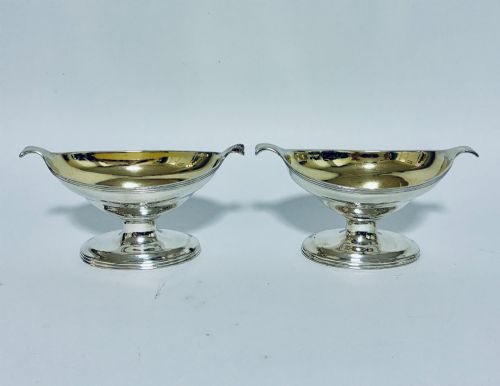
When you search for sterling silver condiment items, you encounter functional dining table accessories designed to hold salt, pepper, mustard, sauces, and oils. The selection spans the Victorian, Edwardian, and Art Deco periods, alongside Georgian and mid-century revivals.
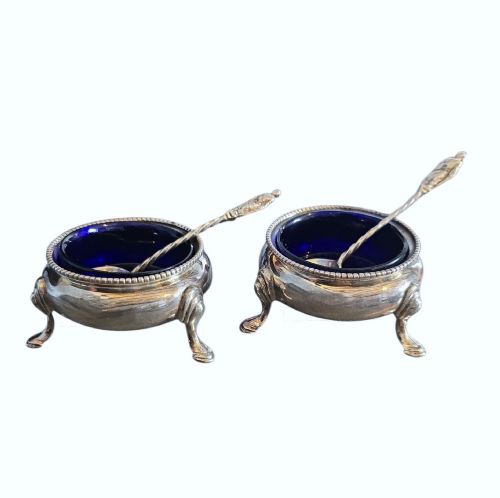
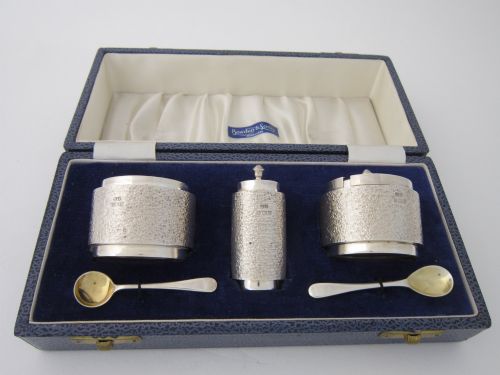
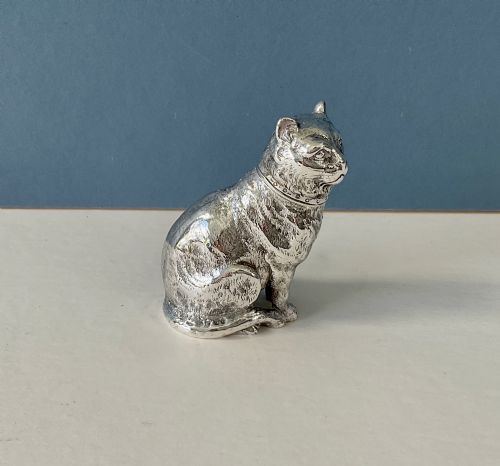
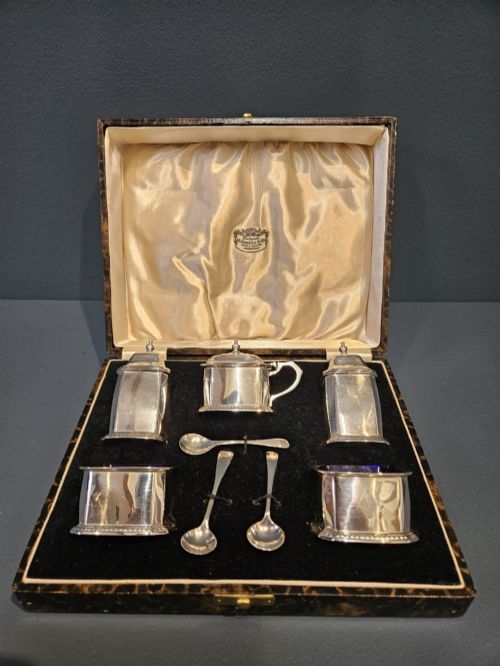
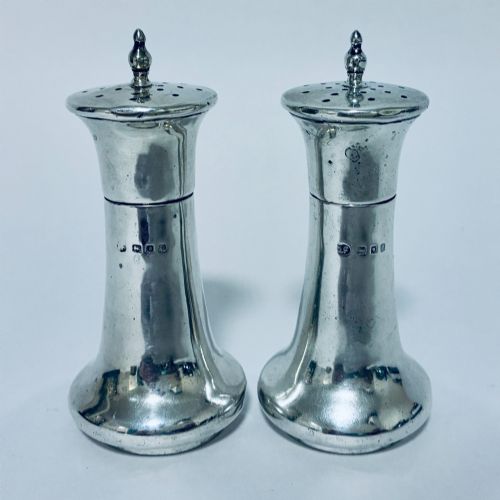
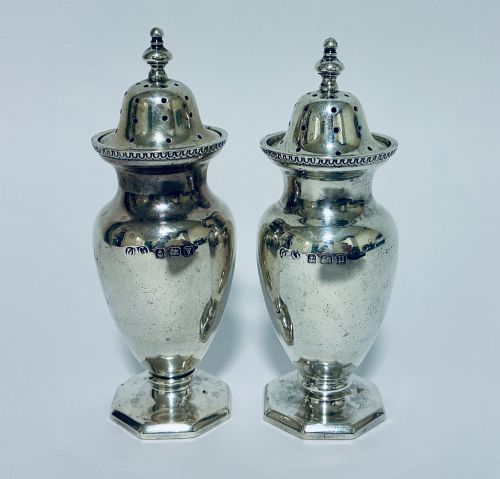
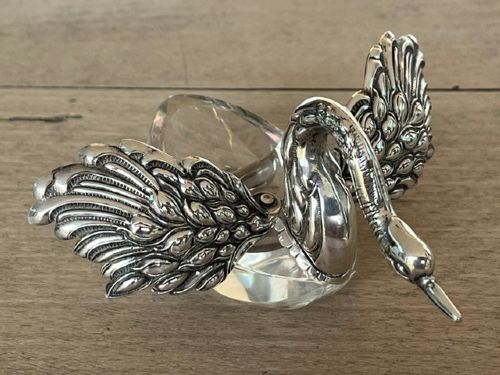
Salt cellars, mustard pots, and pepper pots form the majority of the offerings, often appearing as matched sets or individual novelty items shaped like animals and thistles. Makers utilised glass and cobalt glass inserts to protect the silver from corrosive contents.
The objects originate from workshops spanning the nineteenth and twentieth centuries, reflecting changing dining habits and table service customs. Cruet sets and sauce boats complete the table settings found in this category.
Materials and Technique
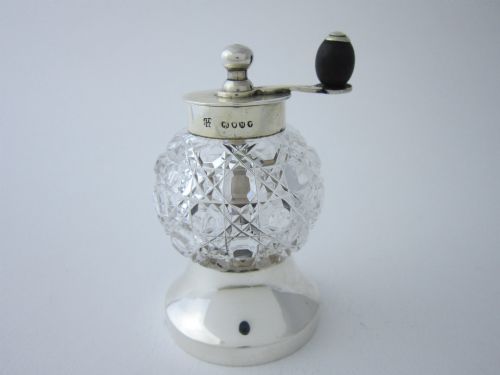
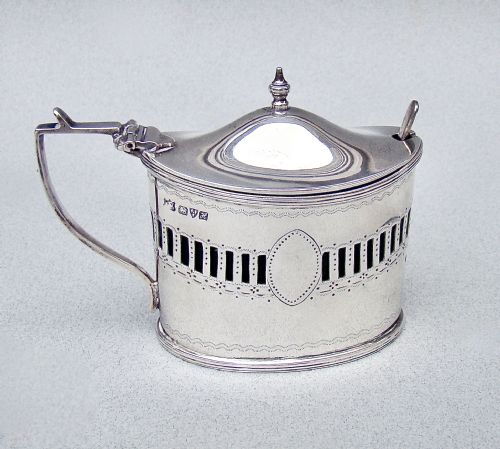
Silversmiths shaped sterling silver through hammering, casting, and piercing, creating intricate drum mustard pots and wirework condiment tubs. Structural components rely on solid silver, occasionally paired with cut glass, crystal, and leather.
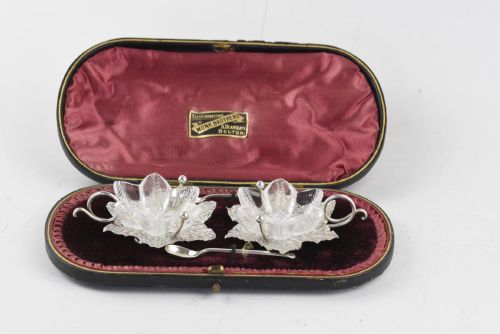
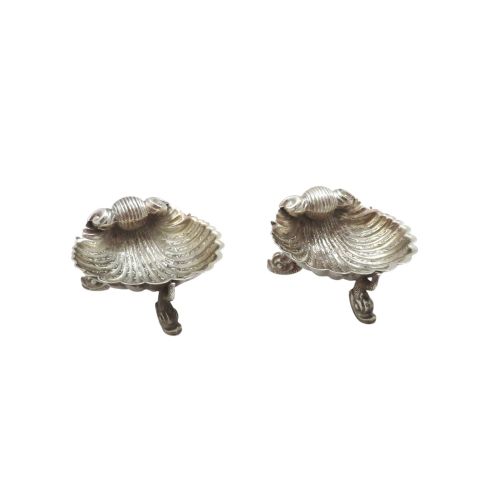
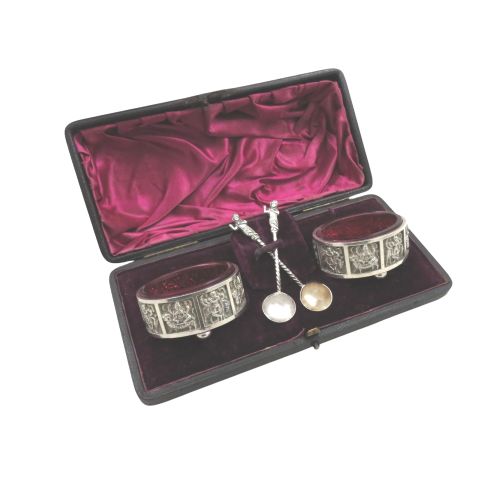
Internal liners utilise cobalt glass and clear glass, while associated serving pieces incorporate silk and velvet within fitted presentation cases. Chasing and embossing techniques add surface detail, visible on foliate-decorated salt dishes and shell forms.
Materials paired with sterling silver across these items include cobalt glass, crystal, velvet, and leather.
Craftsmanship and Distinction
Quality separates standard production wares from exceptional studio pieces through the crispness of the chasing and the weight of the metal. Hand-pierced galleries and detailed novelty castings, such as animal figures or grotesque pepper pots, demand higher levels of artisan skill.
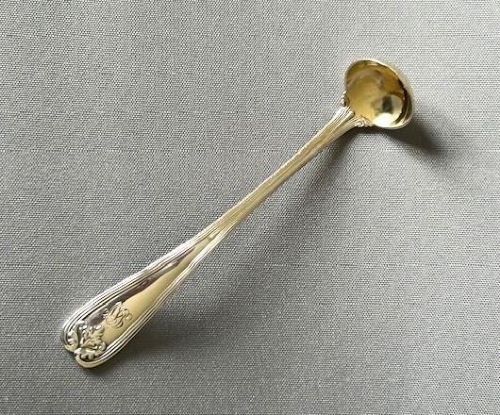
The presence of original, undamaged glass liners and matching spoons significantly impacts the integrity of a set. Maker marks and clear hallmarks anchor the origin and chronological context of each piece.
Beare Falcke·Alfred Marston·Frederick Brasted·Nathan & Hayes·Barnards·Charles & George Fox·William Neale·William Plummer·Josiah Williams & Co
The Sterling Silver Condiment Glossary
- Salt Cellar
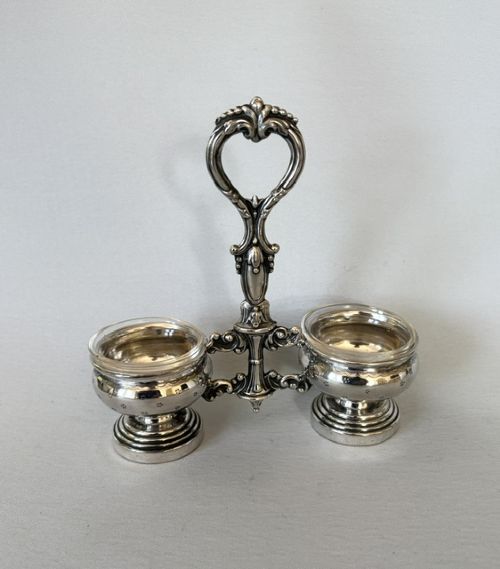
- A small open bowl or vessel used to hold salt at the dining table before the invention of the spring-loaded shaker. They frequently require glass liners to prevent salt corrosion.
- Mustard Pot
- A small covered container designed for prepared mustard, often featuring a cutout in the lid for a spoon. Pierced silver versions reveal coloured glass liners beneath.
- Cruet Set
- A matched assemblage of bottles or containers holding condiments such as oil, vinegar, salt, and pepper upon a stand. They became central fixtures of formal dining tables.
- Sauce Boat
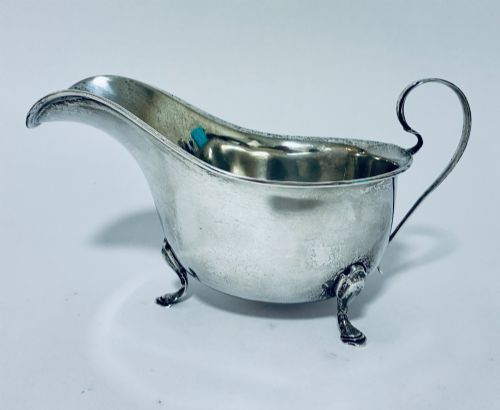
- An open vessel with a lip and handle used for serving gravies and sauces. Examples range from simple George V designs to elaborate Georgian revival pieces.
- Chasing
- A metalworking technique where the silversmith punches and pushes the front of the silver to create raised surface patterns. This differs from engraving, which removes metal.
- Hallmark
- An official stamp applied to precious metals indicating the standard of purity, the assay office, and the year of manufacture. These marks help identify specific makers.
Sterling Silver Condiment: Frequently Asked Questions
What is a sterling silver condiment set?
A sterling silver condiment set comprises matching vessels for table seasonings, typically including salt cellars, mustard pots, and pepper shakers.
These collections reflect the dining etiquette and silversmithing styles of periods such as the Victorian era and the Art Deco movement.
How were salt cellars used historically?
Diners used salt cellars by taking pinches of salt with small spoons or fingers rather than shaking it over food. Open cellars required glass liners to protect the silver from corrosion.
They sat beside each place setting or at intervals along the length of the dining table.
How do I identify the date of a silver pot?
Silver pieces carry hallmarks that indicate the assay office, the maker, and a date letter corresponding to the year of manufacture. Consulting a hallmarking guide decodes these stamped symbols.
Stylistic indicators such as piercing patterns and form also point toward specific decades like the Edwardian period.
How do I clean sterling silver condiment pieces?
Sterling silver benefits from gentle washing in warm soapy water with a soft cloth to remove residues from salt or mustard. Avoid abrasive cleaners that wear away fine chasing and engraved details.
Glass liners should be removed and washed separately before reassembly.