




Sterling Silver Cigar Lighter
A sterling silver cigar lighter brings tactile weight to the smoking table, combining period craftsmanship with functional novelty.
Sterling Silver Cigar Lighter
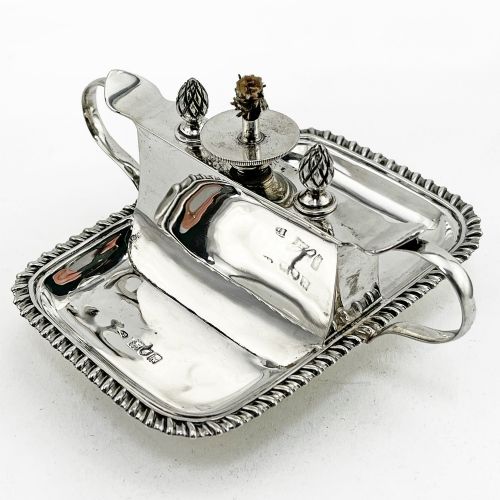
When you examine a sterling silver cigar lighter, you find substantial smoking accessories designed to sit on a desk or dining table during the Victorian, Edwardian, and Art Deco periods. These pieces range from simple table vessels to elaborate novelty forms.
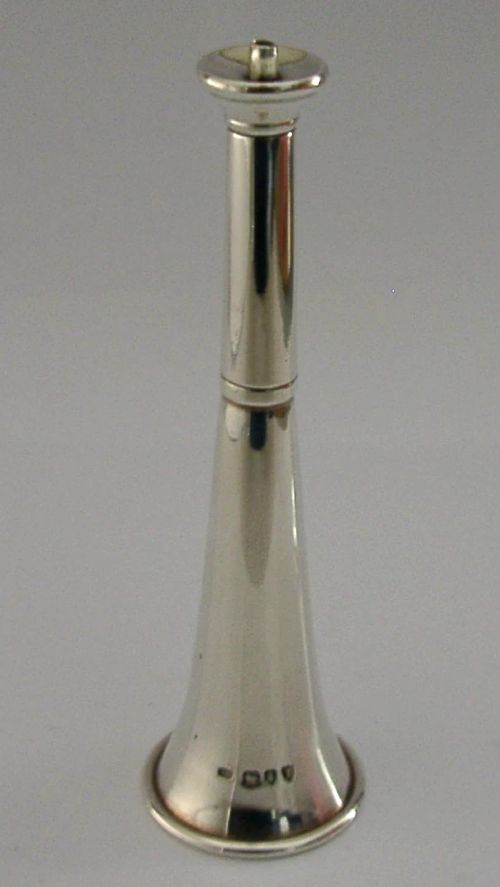
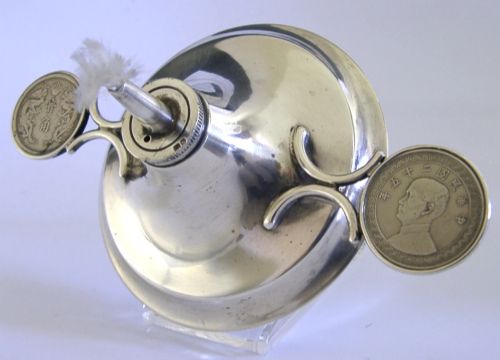
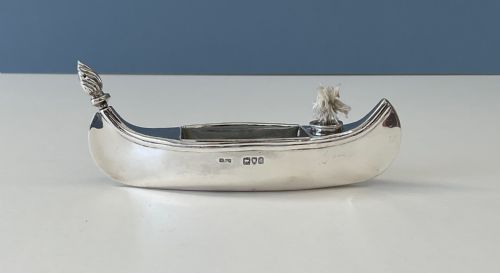
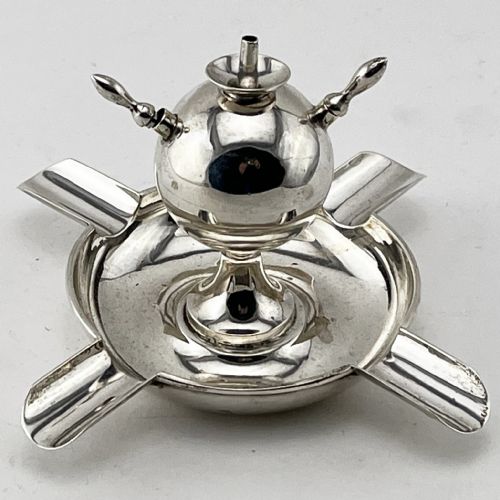
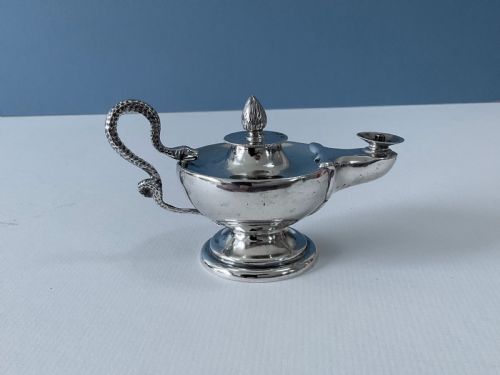
The version you are most likely to meet on this page takes the shape of a classical oil lamp, such as an Aladdin or ancient vessel, alongside novelty animal and hunting horn designs. Makers also produced humidor cigar boxes equipped with lighting attachments.
Originating primarily from British workshops, these table lighters reflect the gentlemanly pursuits of the nineteenth and early twentieth centuries. They served to ignite heavy cigars before the widespread adoption of pocket matches or disposable flame sources.
How they were made
Silversmiths constructed these table lighters predominantly from solid sterling silver, occasionally applying silver gilt finishes or incorporating materials like horn, green glass, and fabric wicks for functional parts. Metal was cast, hammered, and chased to create detailed animal and classical forms.
Workshops utilised traditional techniques such as hand-chasing for surface texture and secure soldering to assemble complex shapes like hunting horns and lighthouse models. Hallmarks stamped directly into the metal record the assay office, date letter, and maker's mark.
Listings demonstrate a strong presence of Victorian and Edwardian pieces, alongside Art Deco examples shaped as classical oil lamps and novelty animals.
What varies in quality
The reputation of the maker and the clarity of the full hallmarks heavily influence the standing of a piece. Substantial metal weight and intact original components, such as wick holders and matching covers, separate exceptional studio productions from standard utilitarian items.
Wright and Davies·Joseph Braham·Comyns·Gorham·Asprey
The Sterling Silver Cigar Lighter Glossary
- Sterling silver
- A silver alloy containing 92.5 percent pure silver and 7.5 percent other metals, usually copper, chosen for durability. This standard metal forms the body of the majority of these table accessories.
- Hallmark
- An official stamp applied by an assay office to guarantee the purity of the precious metal. These marks identify the city of testing, the maker, and the exact year of manufacture.
- Novelty lighter
- A smoking accessory shaped to resemble an animal, vehicle, or historical object rather than a standard vessel. Common themes include hunting horns, frogs, snakes, and lighthouses.
- Aladdin lamp
- A table lighter styled after a classical grease lamp with a prominent spout for the wick. This Neoclassical revival form mimics ancient Greek and Roman oil lamps.
- Silver gilt
- Silver covered with a thin layer of gold on its surface, creating a rich two-tone effect. This technique was occasionally applied to the interior or exterior of select table lighters.
Sterling Silver Cigar Lighter: Frequently Asked Questions
How did a table lighter work?
These table lighters held flammable liquid within a sealed reservoir, drawing fuel up through a cotton fabric wick for ignition. A small snuffer cap attached by a tiny chain was placed over the nozzle to extinguish the flame.
Users lifted the piece or used the attached burner to light cigars across the dining table or smoking room. The heavy metal base kept the vessel stable during handling.
What styles are common?
The listings feature Classical Revival oil lamps alongside Victorian novelty animal shapes like frogs and snakes. Fox hunting horns and miniature lighthouses also appear frequently.
Designers of the Edwardian and Art Deco periods favoured these playful conversation pieces for smoking rooms. The variety ranges from restrained domestic vessels to elaborate sculptural objects.
How do I date a piece?
Dating relies on the stamped hallmarks, which include specific date letters corresponding to the assay office records of London or other cities. Stylistic cues such as Victorian ornamentation or Art Deco lines provide a secondary guide.
Archival comparisons with similar indexed pieces help narrow the decade of production. Examining the maker's mark alongside the town mark confirms the exact period.
Where were they used?
These objects belonged in the dining room, library, or dedicated smoking room of large nineteenth and twentieth-century homes. Gentlemen gathered in these spaces after meals to smoke cigars and converse.
The lighters sat on side tables or central surfaces so guests could easily reach them. Their solid weight prevented tipping during active social gatherings.
Are they made of solid silver?
The pieces recorded here consist of solid sterling silver or silver gilt, as confirmed by period hallmarks. Makers occasionally combined the silver body with functional elements like cotton wicks, horn handles, or glass inserts.
Silver plate also appears among domestic table accessories. Full hallmarks distinguish solid sterling creations from plated alternatives.