


Antique Tobacciana Silver Lighter
These antique tobacciana silver lighter pieces are silver and silver-plated smoking accessories built to sit on a table, prized for their inventive novelty forms.
Antique Tobacciana Silver Lighter
When you search for an antique tobacciana silver lighter, you are looking at functional smoking equipment designed to sit permanently on a table or desk rather than fit in a pocket. The examples on this page encompass substantial table lighters, smoking compendiums, and cigar boxes housing ignition mechanisms.
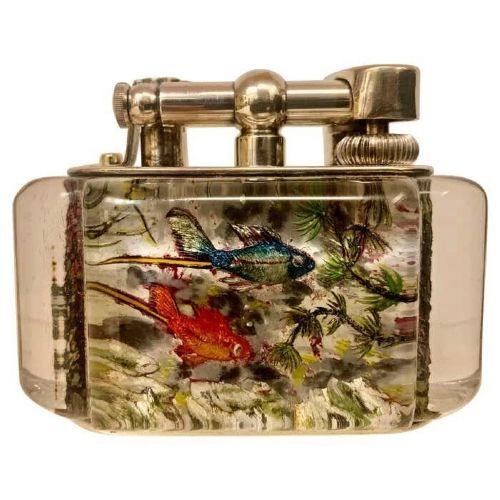
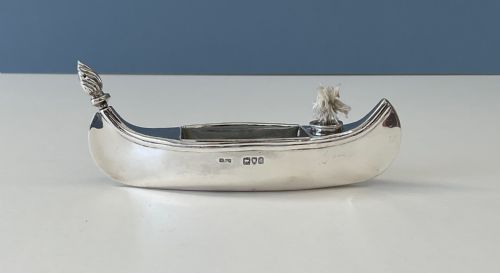
The selection ranges from Victorian novelty pieces shaped like canoes, frogs, and fire carriages to Edwardian and mid-century modern designs. You will encounter classical revival shapes alongside branded pieces by makers such as Dunhill and Hermes.
Most entries function as domestic ornaments as much as lighters, often incorporating materials like glass, lucite, and perspex alongside the metal body. They represent the social habits of smoking rooms and drawing rooms from the mid-nineteenth century through the twentieth century.
How they were made
Construction relies heavily on sterling silver or silver plate formed over structural cores, frequently combined with cast novelty elements such as animal figures or miniature vehicles. Makers employed specialised silversmithing techniques to shape sheet metal and cast detailed figures of frogs, canoes, and fire carriages.
Internal mechanisms utilise cotton, fabric wick, and fuel chambers housed securely within the decorative silver casing. Transparent elements like lucite, perspex, and glass are integrated into specific modern designs such as aquarium lighters, requiring precise framing within the silver structure.
Someone spent an evening striking a flame beside a silver frog.
What varies in quality
Quality in these pieces is dictated by the crispness of the casting and the complexity of the novelty form, where naturalistic animal shapes or architectural models demand high sculptural skill. Maker attribution to established houses like Dunhill, Mappin & Webb, or Elkington elevates the standard of execution and finish.
The degree of preservation in the silver surface and the intactness of secondary materials, such as glass panels or lucite blocks, determine the overall integrity of the object. Weight, gauge of silver, and the sophistication of the internal mechanism separate standard production items from exceptional works.
Christopher Lawrence·Joseph Braham·Hermes Paris·Mappin And Webb·Elkington
The Antique Tobacciana Silver Lighter Glossary
- Tobacciana
- Items related to the consumption of tobacco, including pipes, cigar boxes, and lighters. These objects formed an essential part of historical domestic interior design.
- Smoking Compendium
- A fitted set containing multiple smoking accessories housed together in a single box or stand. They often combine lighters, ashtrays, and match holders.
- Table Lighter
- A mechanical ignition device built on a larger scale to remain stationary on a table. They often take sculptural novelty shapes.
- Novelty Lighter
- A lighter shaped to resemble an animal, vehicle, or everyday object. Victorian and Edwardian examples are particularly noted for this whimsical approach.
- Sterling Silver
- An alloy of silver containing ninety-two point five percent silver by mass. This standard is frequently marked on quality British items.
Antique Tobacciana Silver Lighter: Frequently Asked Questions
What is a silver table lighter?
A silver table lighter is a heavy, stationary ignition device designed to stay on a desk or smoking table. Unlike pocket versions, they often feature elaborate sculptural designs.
These pieces served as both functional household tools and decorative ornaments for drawing rooms and smoking rooms.
What periods do these pieces date from?
The examples on this page span from the Victorian and Edwardian eras through the 1920s, 1950s, 1960s, and later mid-century periods. Victorian pieces frequently lean towards ornate novelty shapes.
Later pieces often reflect minimalist mid-century modern aesthetics or incorporate engineered elements like perspex and lucite.
How do I identify a novelty lighter?
Novelty lighters are cast or sculpted to represent specific objects, animals, or vehicles rather than standard geometric shapes. Common historical motifs include animals, canoes, and miniature carriages.
Makers used these playful designs to spark conversation among guests while maintaining the functional purpose of lighting pipes or cigars.