


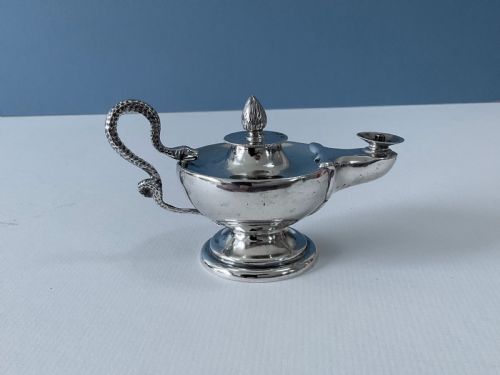


Vintage Silver Oil Lamp
A vintage silver oil lamp brings a gleam of period illumination and clever table lighting to a room, drawing the eye with its classic silhouette.
Vintage Silver Oil Lamp
When you search for a vintage silver oil lamp, you encounter items ranging from full-sized nineteenth-century paraffin burners to small sterling silver table lighters shaped like classical vessels. The selection draws heavily on Victorian and Edwardian pieces, alongside styles like Classical Revival and Art Deco.
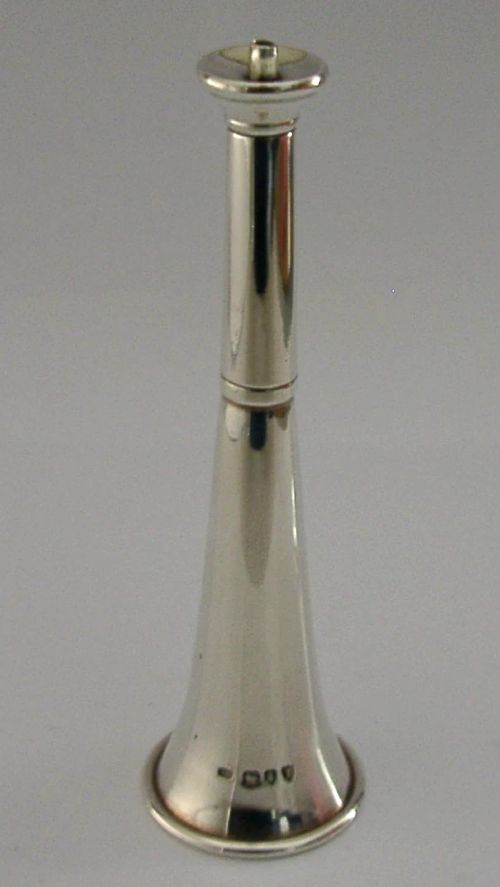
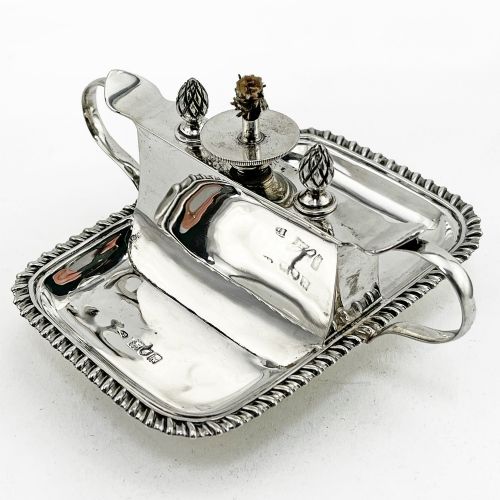
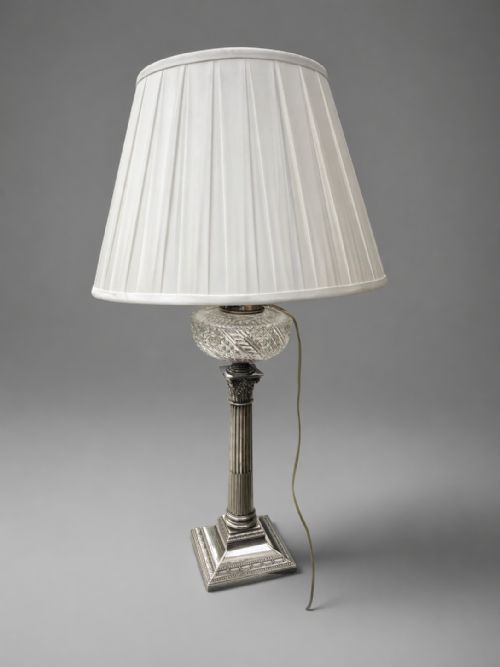
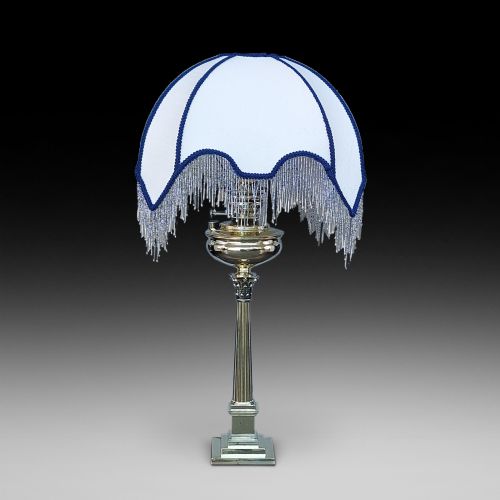
Many examples take the form of table lighters modelled on ancient lamps or hunting horns, while others stand taller with satin glass reservoirs and Corinthian columns. These objects bridge the gap between practical domestic utility and decorative metalwork.
The assortment spans sterling silver, silver plate, and old Sheffield plate, often paired with glass or brass components. You meet items that served as smoking accessories or station master lighting alongside grander domestic parlor lamps.
What varies in quality
The distinction between ordinary and superior pieces rests on the crispness of the chased decoration and the weight of the metal used in the body. Heavier gauge sterling silver and substantial silver plate retain their form and detail far better over generations of cleaning.
Purity of line and proportion also set better examples apart, especially in novelty table lighters shaped like classical lamps or hunting horns. The integration of high-grade satin glass and uncompromised burner mechanisms elevates an object from a simple receptacle to a refined collector piece.
A station master's pocket watch shares space here with hunting horns and Aladdin lamps, proving nineteenth-century travel required proper illumination.
Braham·Comyns·Elkington
The Vintage Silver Oil Lamp Glossary
- Sterling silver
- An alloy containing 92.5 percent silver by weight, highly valued for durability and lustre in domestic metalwork. It forms the primary material for many high-end table lighters.
- Old Sheffield plate
- An early form of composite metal made by fusing a thin sheet of silver to a thicker copper base. This technique produces a warm dual-tone appearance visible at worn edges.
- Peg oil lamp
- A small lamp featuring a fount designed to fit directly into the socket of a candlestick or a dedicated stand. It allows conversion of existing candleholders into paraffin burners.
- Duplex burner
- A double-wick mechanism developed in the nineteenth century to provide a brighter, steadier flame. It utilises two parallel flat wicks controlled by a shared thumbwheel.
- Argyle
- A specialised vessel featuring a double skin or internal jacket to keep gravy or liquids warm via hot water. The listings include an unusual silver-plated variant from the early nineteenth century.
Vintage Silver Oil Lamp: Frequently Asked Questions
Are vintage silver oil lamps safe to burn?
Most antique oil lamps and table lighters function primarily as decorative objects or collections today. Utilising them requires careful inspection of the burner mechanism and wick condition.
Fittings can degrade over a century or more, so collectors generally display these items rather than fill them with paraffin or fuel for regular household use.
How do I polish a silver oil lamp?
Cleaning requires a soft cloth and a gentle silver cream formulated to protect thin platings and delicate chasing. Aggressive scrubbing strips silver plate down to the underlying copper or brass.
Take care around glass reservoirs and fabric components to avoid staining or loosening glued joints during the cleaning process.
What is the difference between a table lighter and an oil lamp?
Table lighters are smaller tabletop accessories designed specifically to ignite cigars or pipes, often styled like miniature classical vessels or hunting horns. They frequently use lighter fuel or spirit systems rather than paraffin wicks.
Oil lamps stand larger and function as primary or secondary light sources for a room, featuring substantial glass or metal reservoirs intended to burn oil over extended hours.
How do I date a Victorian silver lamp?
Dating relies heavily on hallmarks stamped into the silver, which record the assay office, date letter, and maker's mark. Stylistic clues such as Corinthian columns or neoclassical motifs also point toward specific decades within the nineteenth century.
Silver plate items lack standard date letters but often bear maker stamps and design registration numbers that narrow down their period of manufacture.