




Sterling Silver Chalice
A sterling silver chalice brings together centuries of ecclesiastical devotion, commemorative tradition and domestic barware in one solid form.
Sterling Silver Chalice
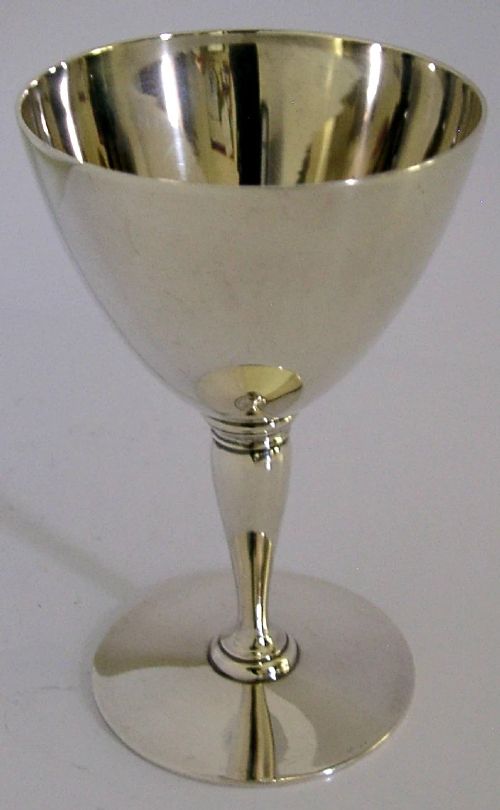
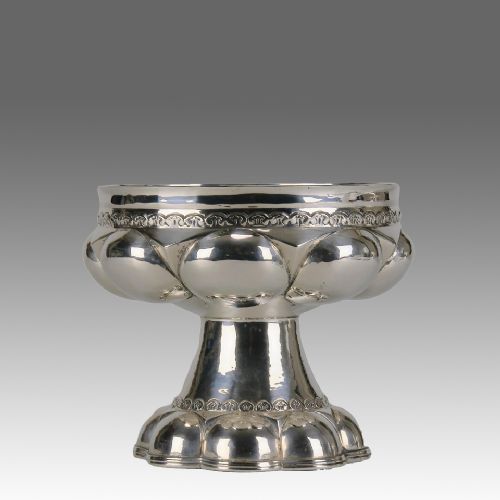
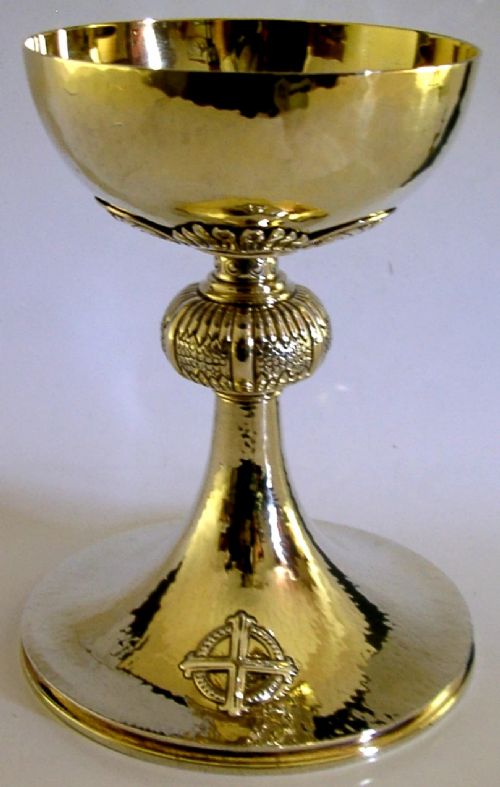
A sterling silver chalice encompasses drinking vessels, trophy cups, communion vessels and presentation pieces originating from the eighteenth century onward. Buyers discover pieces ranging from simple Georgian wine goblets to heavy Arts and Crafts communion vessels and mid-century barware.
The selection includes specialised items such as Kiddush cups, wager cups, lidded ciboria and travelling communion sets. Many examples bear inscriptions recording sporting triumphs, military service or religious presentations.
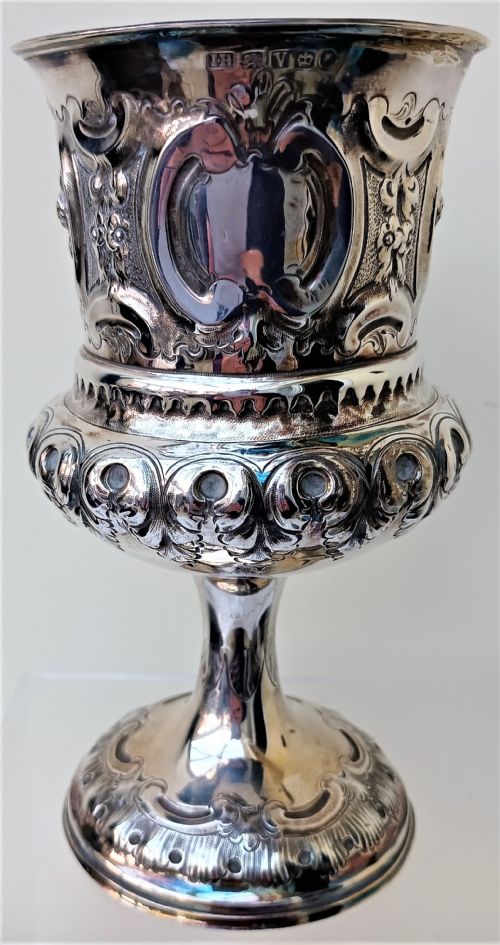
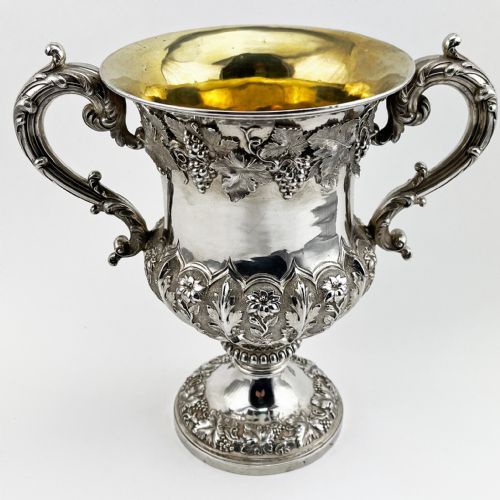
Victorian and Edwardian iterations dominate the current offerings, often displaying elaborate chasing, parcel gilt interiors or plain polished surfaces designed for display and ritual use.
Materials and construction
Makers shaped these drinking vessels from sterling silver, frequently employing silver gilt, parcel gilt or vermeil to enrich the interior bowl while leaving the exterior plain or worked. Additional components incorporate glass liners, velvet or leather cases.
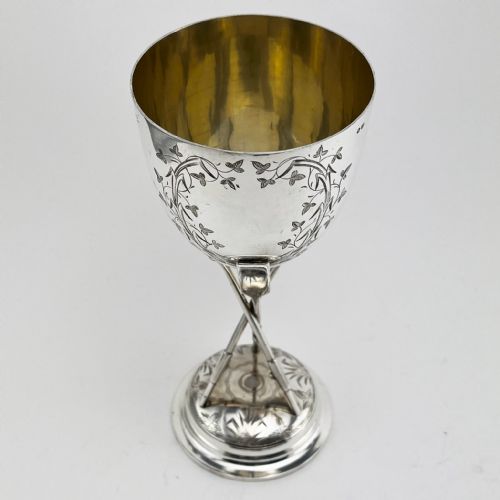
Techniques span hand-hammered Arts and Crafts planishing, Georgian bright-cut engraving, Victorian floral wriggle-work borders and cast ornamentation such as vase-shaped bodies and applied handles.
Sterling Silver Chalice Retail Price Guide 2026
Typical asking prices for sterling silver chalice among the pieces listed under this phrase on Sellingantiques today, from the lower quarter to the upper quarter. They describe what is for sale here now, not the wider market.
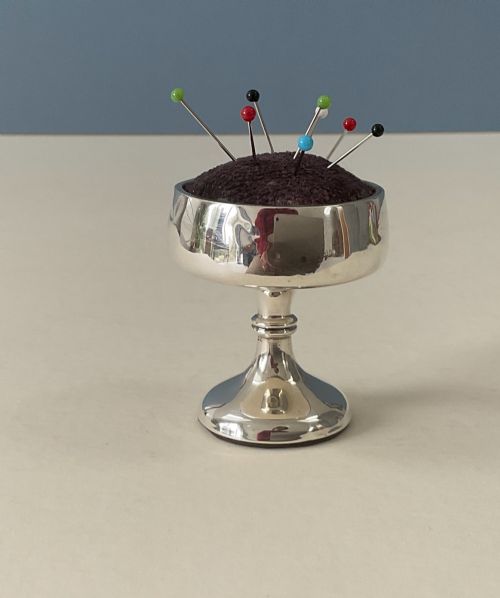
A few unexpected chalices double as novelty pin cushions or rowing trophies won by historic figures.
Evaluating craftsmanship
Substantial metal weight distinguishes heavier presentation cups and communion vessels from lighter domestic goblets and novelty pieces. Wall thickness and base stability dictate the tactile feel of the object in the hand.
The precision of hand-engraving, the crispness of cast decorative motifs, and the quality of gilding separate standard production items from master silversmith output.
Nathan and Hayes·George Unite·John Hunt and Robert Roskell·William Eaton·James Deakin and Sons·Henry Tatton and Son·Joseph Rodgers and Sons·Thomas Sutton·Charles Hougham·Henry Holland·Jones and Willis Ltd·D and J Wellby
The Sterling Silver Chalice Glossary
- Parcel gilt
- Silver objects that are partially gilt, usually on the interior of the bowl, leaving the exterior silver surface untouched. This technique protects the metal from acidic wines.
- Vermeil
- Sterling silver plated with a heavy layer of gold. It provides the visual warmth of gold while maintaining a solid silver structure.
- Kiddush cup
- A ritual goblet used in Jewish households to bless wine on Shabbat and festivals. They appear frequently in silver and silver gilt forms.
- Ciborium
- A covered chalice-like vessel designed to hold consecrated hosts in religious contexts. They often feature larger lidded capacities than standard drinking goblets.
- Planishing
- A hammering technique used in Arts and Crafts silverwork to smooth metal and leave subtle, controlled facets across the surface. It displays the direct hand of the maker.
Sterling Silver Chalice: Frequently Asked Questions
How were these chalices used historically?
These vessels served dual purposes across domestic, civic and religious spheres. Many functioned as sacramental communion cups in churches or Jewish rituals like Kiddush ceremonies.
Others acted as secular presentation pieces, sports trophies or dining table barware for wine consumption.
How do I date an antique silver chalice?
Dating relies heavily on British hallmarks stamped directly onto the silver, which identify the assay office, date letter and maker's mark. Stylistic clues such as Georgian vase-shaped bodies or Arts and Crafts planishing also indicate the period.
Inscriptions and presentation dates engraved on the metal provide additional historical context.
What is the difference between a goblet and a chalice?
While the terms often overlap in trade titles, a chalice traditionally implies a religious or ceremonial function associated with communion or ritual drinking. A goblet typically denotes a secular drinking vessel used for wine or domestic display.
Both share the elevated stem and bowl structure common to this category.
How should I clean sterling silver chalices?
Maintenance requires gentle washing with warm water and mild soap, followed by drying with a soft cloth to preserve the finish. Silver polish should be used sparingly to avoid wearing down fine engravings, parcel gilding or hallmarks.
Stored items benefit from anti-tarnish cloths or dry environments.