

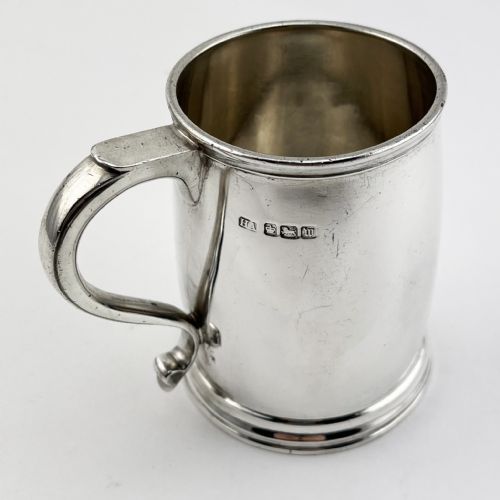


Sterling Silver Baby Beaker
These sterling silver baby beaker pieces are traditional domestic vessels crafted to mark an infant's arrival or baptism.
Sterling Silver Baby Beaker
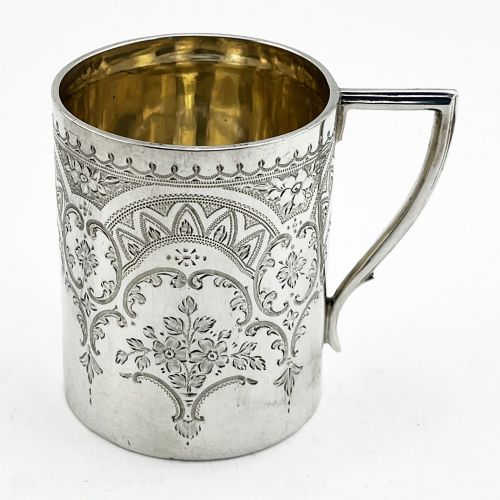
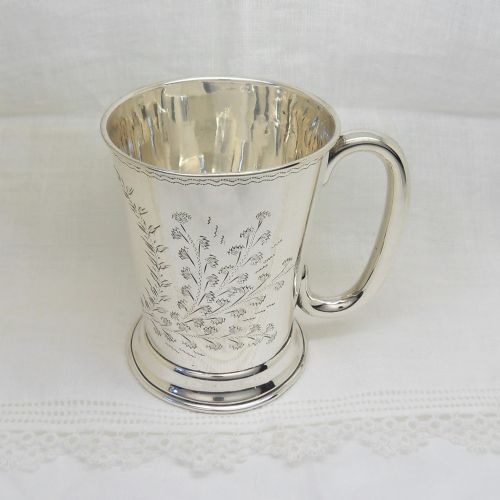
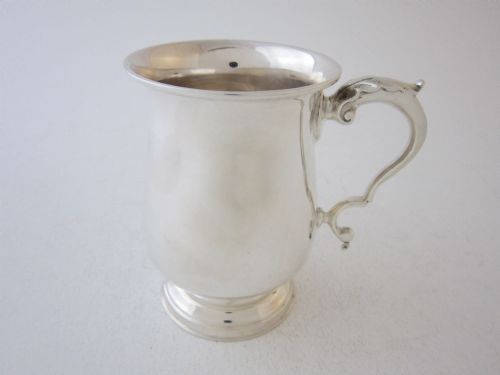
A sterling silver baby beaker represents a specialised form of christening mug or cup designed for familial presentation during the nineteenth and twentieth centuries. These vessels appear in forms such as cylindrical mugs, handled tankards, and complete boxed presentation sets.
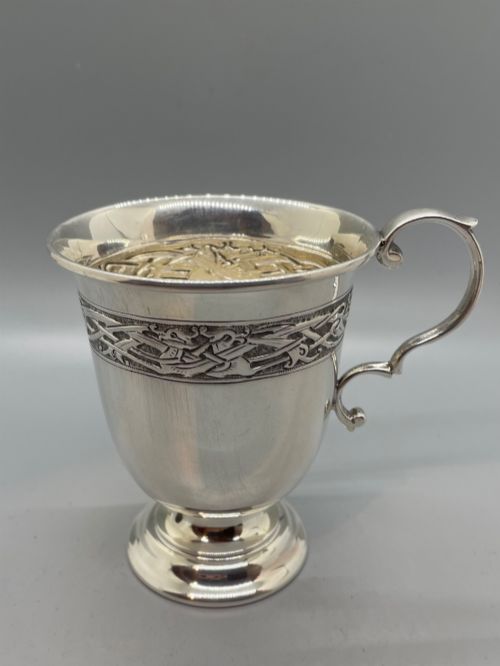
The pieces on this page span several distinct eras, including Victorian, Edwardian, and George V periods, alongside interwar and mid-century British examples. Makers utilised traditional manufacturing centres such as Birmingham, Sheffield, and Chester, with occasional international origins.
Most items survive as functional or commemorative silver drinking vessels, often bearing personal engravings, floral motifs, or maker hallmarks from their respective decades of production.
Materials and construction methods
Silversmiths formed these objects primarily from sterling silver, occasionally applying internal gold wash or silver gilt finishes to the drinking surface. Construction relied on traditional metalworking techniques such as raising, spinning, and soldering to create sturdy cylindrical bodies and applied handles.
Surface ornamentation involved hand engraving, floral embossing, and chased detailing executed by period craftsmen. Presentation items frequently included fitted leather or silk-lined boxes to house the silver vessel safely.
Sterling Silver Baby Beaker Retail Price Guide 2026
Typical asking prices for sterling silver baby beaker among the pieces listed under this phrase on Sellingantiques today, from the lower quarter to the upper quarter. They describe what is for sale here now, not the wider market.
Some Victorian babies received heavily embossed mugs destined to hold milk rather than mortgages.
Assessing quality and craftsmanship
Quality in these silver vessels rests upon the crispness of the original embossing, the weight and gauge of the metal utilised, and the precision of the maker's hallmarks. Pieces featuring well-defined floral engraving or work by notable silversmiths display superior execution.
The condition of any internal gilt finish, the structural integrity of the applied handle, and the presence of original fitted presentation packaging also influence the standing of an individual piece within its period.
Joseph Gloster·R E Stone·Tiffany and Co
The Sterling Silver Baby Beaker Glossary
- Sterling silver
- A silver alloy containing 92.5 percent pure silver by mass, forming the primary material for these vessels.
- Hallmark
- An official stamp applied to precious metals indicating the assay office, standard of purity, and year of manufacture.
- Christening mug
- A small presentation cup traditionally given to an infant to mark a baptism or naming ceremony.
- Gold wash
- A thin layer of gold applied to the interior surface of a silver vessel, also known as vermeil or silver gilt.
- Embossing
- A metalworking technique where a design is raised from the reverse side using hammers and punches.
Sterling Silver Baby Beaker: Frequently Asked Questions
What is a sterling silver baby beaker used for?
These vessels were created as traditional christening gifts, intended to serve as enduring keepsakes for a child rather than everyday tableware.
Over generations, families kept these mugs to mark significant milestones, often displaying them as decorative domestic silver.
How can I tell the date of a silver mug?
Dating relies heavily on the stamped hallmarks found on the body of the silver, which record the specific assay office and year letter.
Stylistic indicators such as Victorian floral engraving or Edwardian proportions also help place the object within a specific decade.
Are these mugs safe to use for drinking?
While manufactured as functional vessels, many collectors treat them primarily as historical display pieces due to their age and delicate engraving.
If utilised, sterling silver requires careful hand washing with mild soap to preserve the surface metal and any internal gilt finish.
What styles are common among these silver beakers?
The inventory reflects prominent design movements including Victorian, Edwardian, George V, and later mid-century British aesthetics.
Form variations range from plain cylindrical tankards to heavily embossed floral cylinders and boxed sets.