
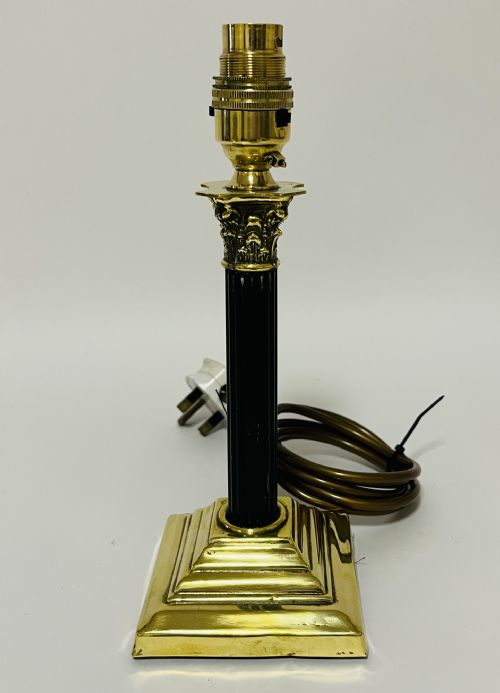
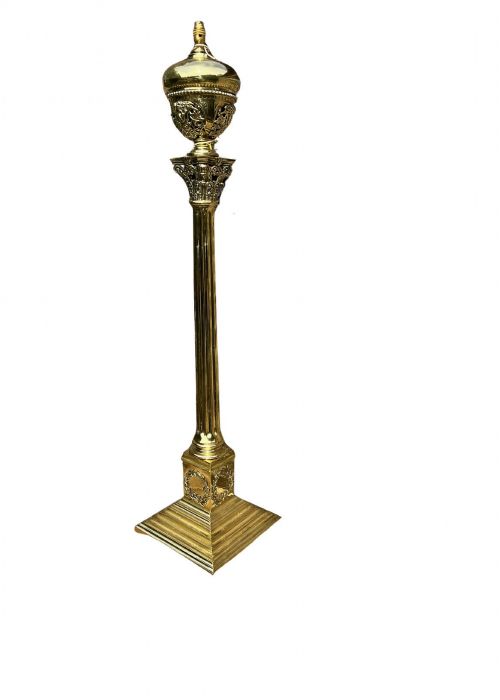
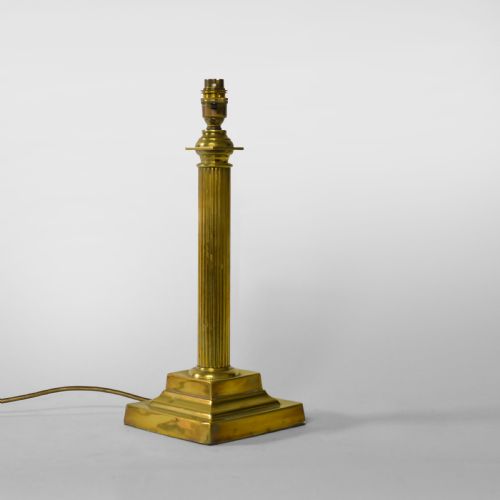


Stepped Base Column Lamp
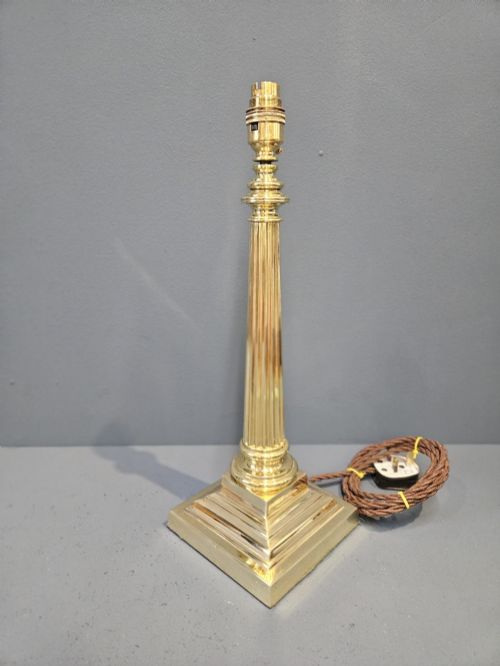
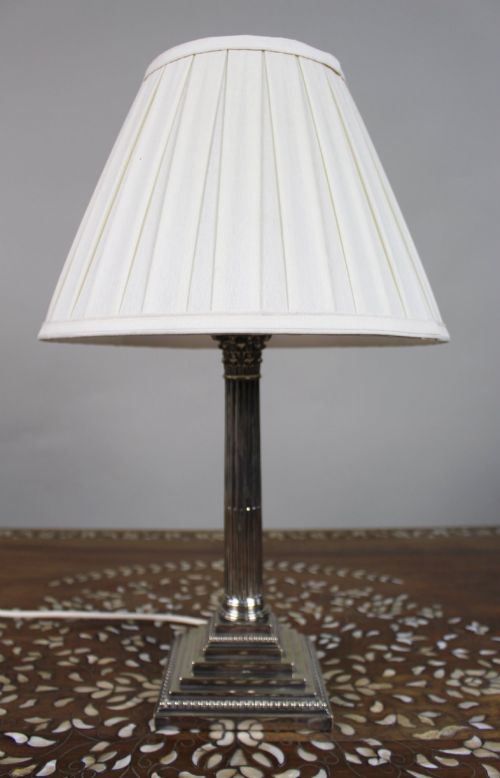
A stepped base column lamp brings classical proportion and upright presence to a room.
Stepped Base Column Lamp
The stepped base column lamp takes classical architectural forms and adapts them for domestic illumination, drawing heavily on revivalist movements. When exploring this selection, buyers encounter standard lamps, floor lamps, and table lamps that span the Victorian era, the Edwardian period, and the 1920s and 1930s.
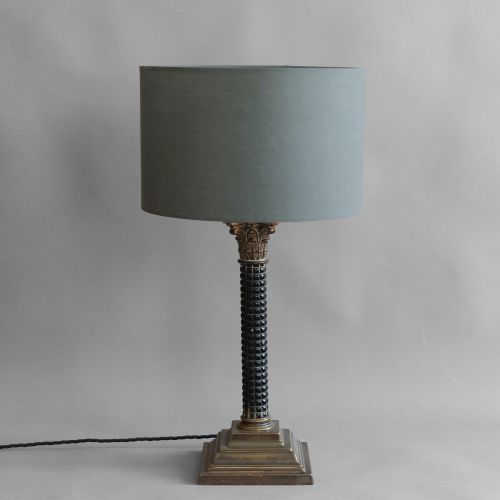
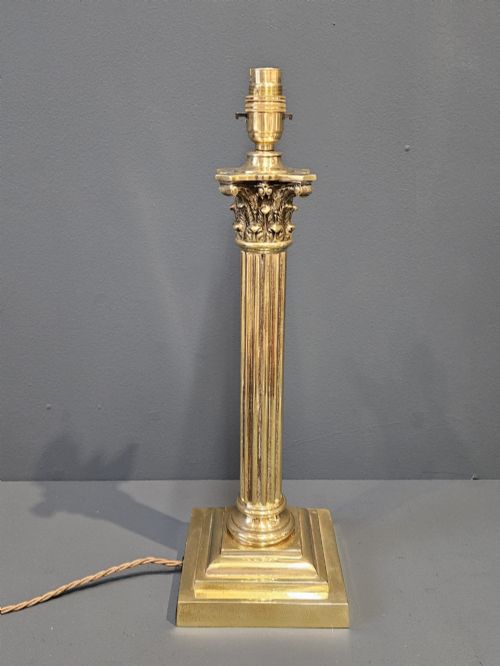
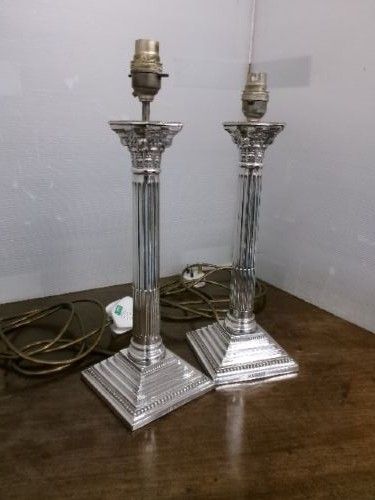
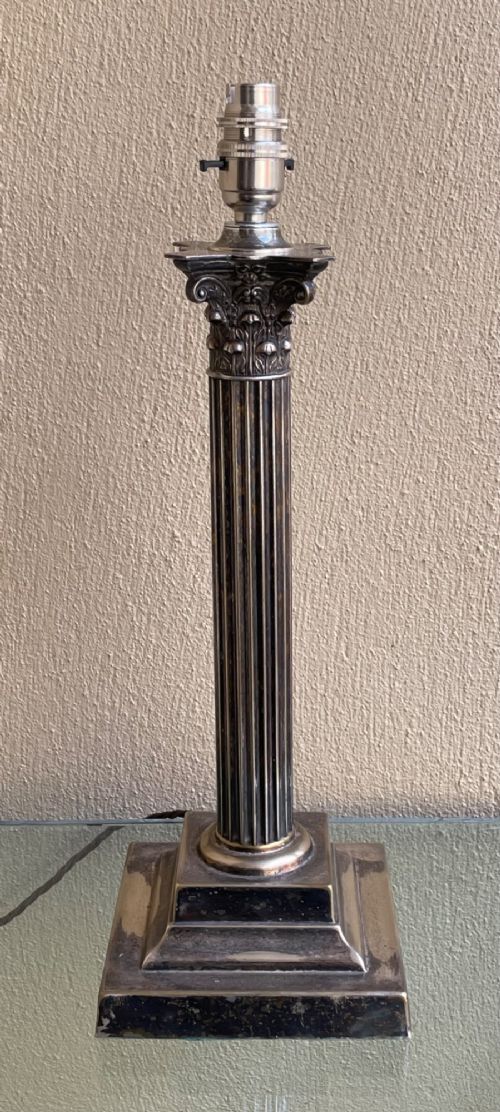
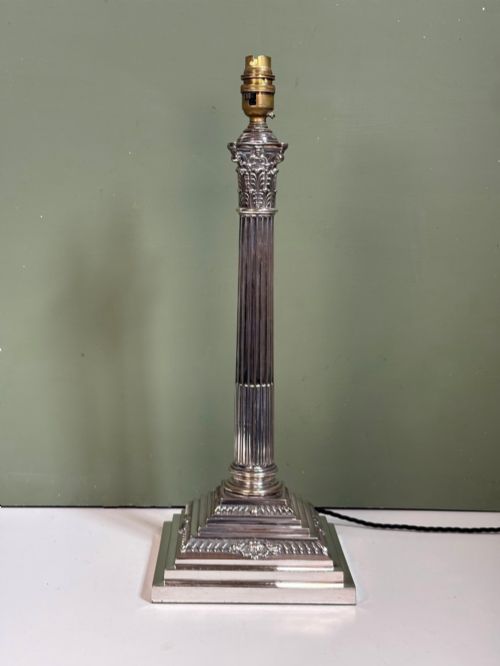
Most examples rely on the Corinthian or Ionic order, featuring fluted or reeded shafts rising from tiered square bases. These pieces frequently emerge as conversions from earlier oil lamps, retaining glass reservoirs or burners adapted for modern wiring.
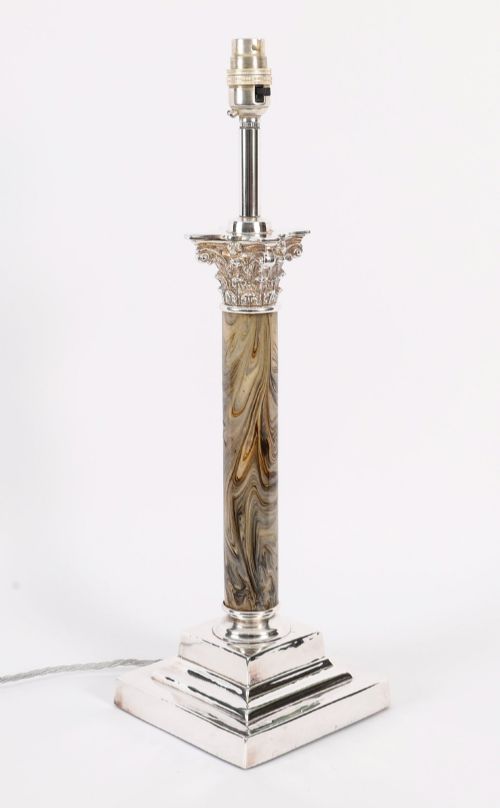
The materials span cast brass, silver plate, and sterling silver, alongside occasional combinations of onyx, marble, and toleware. Art Deco variants introduce cleaner geometric lines and contrasting materials like Macassar ebony.
How they were made
Metal columns and stepped plinths typically utilise cast brass or plated base metals, shaped through founding and turning on lathes to achieve crisp fluting and stepped profiles. Silver plating or solid sterling silver was applied to create reflective surfaces on Corinthian capitals.
Composite examples incorporate sections of onyx or marble, often mounted with ormolu enrichments, secured by internal threaded rods running through the central column. Glass reservoirs, when present, were blown or mould-cut before being fitted to the metal collars.
Wiring and electrical components are later additions, as these lamps originated as oil-burning fixtures or standard lighting before being rewired with braided fabric flex.
Some standard lamps hide telescopic brass mechanisms, allowing them to adjust in height like an old surveyor's tripod.
What varies in quality
Quality rests in the crispness of the casting on the capital and the stability of the stepped plinth. Higher grade pieces show sharp acanthus leaf carving on Corinthian capitals and substantial weight in the brass or silver plate.
Proportion dictates visual success, with superior examples maintaining balanced scale between the column diameter and the height of the stepped base. The integration of secondary materials like cut glass or onyx reveals the maker's attention to detail.
Walter Latham & Son
The Stepped Base Column Lamp Glossary
- Corinthian column
- A classical architectural order featuring an ornate capital decorated with rows of acanthus leaves. This capital is the most common terminal found on these lamps.
- Reeded column
- A shaft decorated with parallel, convex rounded mouldings that run vertically up the length of the pillar. It offers a more restrained alternative to fluted designs.
- Stepped base
- A multi-tiered plinth that decreases in size toward the column, giving the fixture visual weight and stability. It is characteristic of classical revival designs.
- Silver plate
- A layer of silver fused to a base metal core, typically brass or copper. It provides the appearance of solid silver while remaining durable for domestic use.
- Toleware
- Enamelled or painted sheet metal used for shades and bodies in specific decorative styles. It introduces flat colour and durability.
Stepped Base Column Lamp: Frequently Asked Questions
What is a stepped base column lamp?
A stepped base column lamp is a lighting fixture designed to resemble a classical architectural pillar, resting on a multi-tiered plinth. These pieces borrow forms from ancient Greek and Roman architecture.
They appear primarily as table lamps or tall standard lamps in brass, silver plate, and occasionally marble or onyx.
Were these always electric lamps?
Most older examples started life as oil lamps before being converted to electricity during later decades. You can often spot glass reservoirs or burner mechanisms incorporated into the design.
Modern wiring and braided fabric flex are subsequently added to bring them up to current standards.
How do I date a column lamp?
Dating relies on stylistic clues, materials, and construction methods visible in the metalwork and base. Victorian examples tend to feature ornate Corinthian capitals and heavy cast brass.
Later pieces from the 1920s and 1930s often show Art Deco influences with simpler geometric lines and contrasting materials like marble.
Where should I place a standard lamp?
Tall standard lamps work effectively in corners of reception rooms or beside seating areas to provide ambient lighting. Their vertical columns draw the eye upward and add architectural presence.
Table lamp versions suit side tables, desks, and sideboards where they introduce a focused pool of light.