


Steamship Canvas Art
Steamship canvas art brings home the painted record of ocean liners, rescue vessels and bustling ports from the nineteenth and twentieth centuries.
Steamship Canvas Art
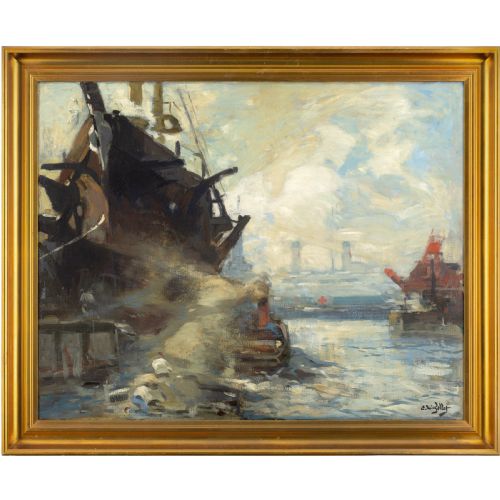
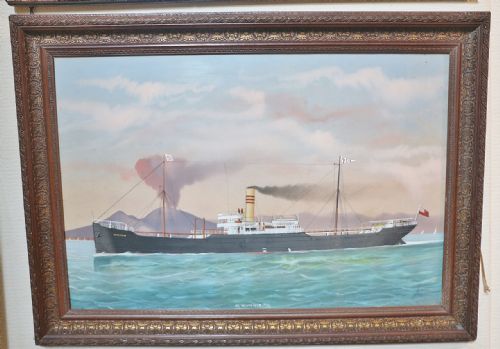
Steamship canvas art comprises oil paintings on canvas capturing maritime scenes, port views and ship portraits from periods spanning the nineteenth century through to the mid-twentieth century. You will encounter works rendered in styles such as Victorian Maritime, Edwardian Maritime, Impressionism and Maritime Realism.
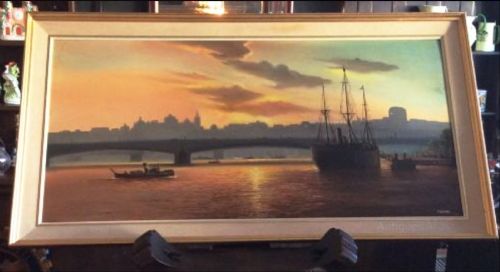
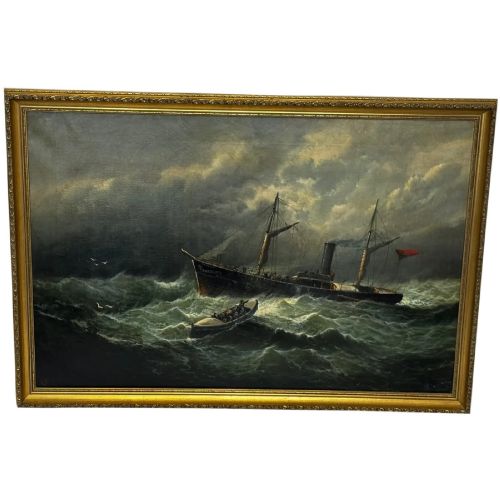
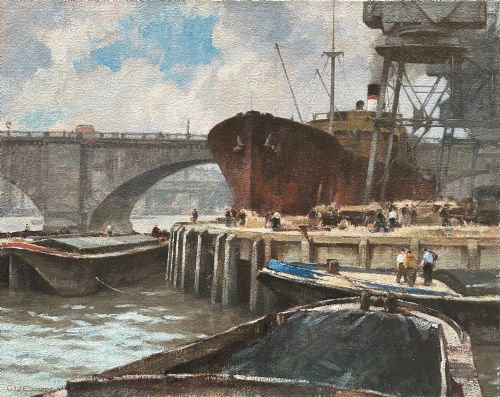
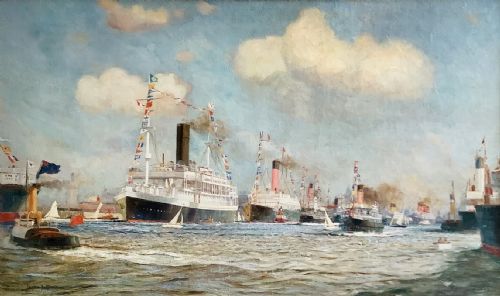
The subjects range from named vessels like the RMS Lusitania and RMS Queen Mary to panoramic scenes along the River Thames near London Bridge and Waterloo Bridge. These canvases document historical vessels, including hospital ships in wartime, polar expedition ships and commercial steamers.
Origin points across the listings include British, Anglo Chinese, Neapolitan and American schools, reflecting how marine art was produced internationally. Works appear from decades such as the eighteen-eighties, nineteen-hundreds, nineteen-tens, nineteen-thirties, nineteen-fifties and nineteen-sixties.
Materials and construction
The works are executed in oil paint or oil on canvas, applied by artists onto canvas supports that are frequently housed within wooden or giltwood frames. The combination of oil pigments allows for detailed rendering of water, smoke from funnels and atmospheric sky conditions.
Canvas as a medium provides a stable yet textured surface for maritime scenes, accommodating both detailed ship portraits and broader impressionistic harbour views. Gilt and wood framing complements the paintings, offering structural support and historical context to the piece.
Listings feature works spanning the nineteenth century through to the nineteen-sixties, utilising oil paint on canvas within wooden and giltwood frames.
Evaluating quality and execution
Quality in these maritime paintings rests upon the precision of the vessel depiction, the handling of water and light, and the skill demonstrated in the brushwork. Works by named artists or specific schools often show greater nuance in capturing the architectural details of steamers and the movement of heavy seas.
The preservation of the oil paint surface and the integrity of the canvas support influence the overall standard of a piece. Finer examples maintain crisp definitions of rigging, hull structures and coastal or port backgrounds without disruptive overpainting.
Eugène Louis Gillot·William Broome·Cyril Walduck Edwards·Charles William Wyllie·Edward Fletcher·John Hayes·Johan Jens Neumann·James Scrimgeour Mann
The Steamship Canvas Art Glossary
- Oil on canvas
- Pigments bound in a drying oil medium applied directly to a woven fabric support. This combination is standard across the marine paintings found in these listings.
- Giltwood
- Wood that has been coated with a thin layer of gold leaf or gilt finish. Frames of this material frequently encase nineteenth and twentieth-century maritime canvases.
- Pierhead painting
- A genre of ship portraiture often commissioned by captains or shipowners to record a specific vessel accurately. These works typically show the ship entering or leaving a specific port.
- Maritime Realism
- An artistic approach focusing on the accurate, detailed depiction of ships, water and coastal environments. This style appears alongside Impressionist and Post-Impressionist interpretations in the collection.
Steamship Canvas Art: Frequently Asked Questions
What subjects appear in steamship canvas art?
The subjects include named ocean liners, hospital ships, polar expedition vessels, and commercial steamers navigating waters from the River Thames to Italian coasts.
Artists also recorded busy harbour views, such as the Pool of London, alongside dramatic portrayals of ships in heavy seas.
How do I identify the period of a painting?
Dating relies on the depicted vessels, artist signatures, clothing styles in port scenes, and stylistic approaches ranging from Victorian maritime to twentieth-century British art.
Framing materials like giltwood and canvas characteristics further help place a work within nineteenth or twentieth-century eras.
Where were these maritime paintings created?
The pieces originate from various regional schools, including British, American, Neapolitan, and Anglo Chinese workshops.
Harbour scenes and ship portraits were produced to document local port activity as well as international maritime routes.
How should I display a canvas painting?
Paintings on canvas require hanging away from direct sunlight and fluctuating humidity to protect the oil paint and wooden frames.
Ensuring stable room conditions preserves the structural integrity of both the canvas support and the original giltwood surround.