


Statement Opal Ring
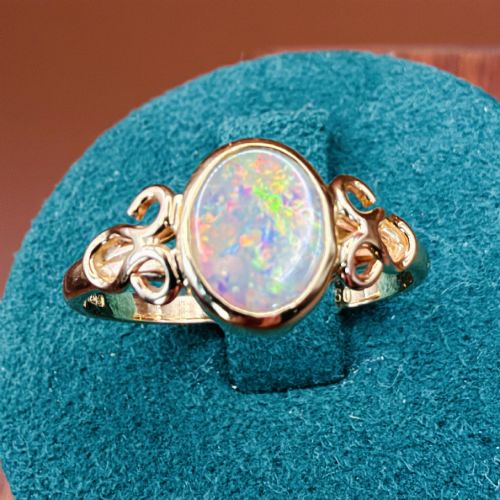
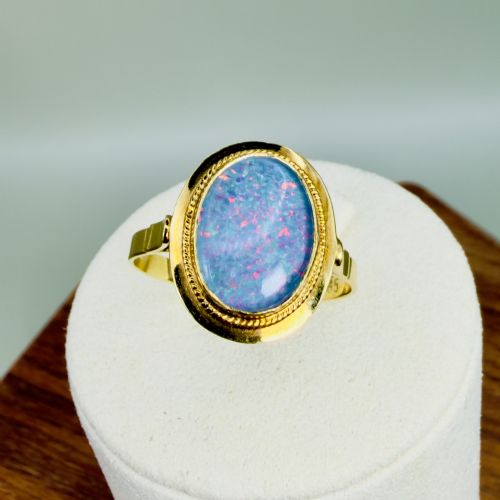
A statement opal ring brings together shifting iridescent fire and precious metal in a prominent hand-crafted design.
Statement Opal Ring
A statement opal ring commands attention through its generous stone size and striking presence on the hand. When you search for a statement opal ring, you encounter designs ranging from single bold solitaires to elaborate multi-gem clusters.
The pieces listed span multiple eras, including Victorian, Art Deco, Retro, and Mid-Century periods. You are most likely to meet gold or platinum settings holding substantial opals flanked by diamonds or coloured stones.
Makers utilised various forms such as cocktail rings, dress rings, and traditional clusters. Each piece displays the distinct character of its period style, from Continental Art Nouveau lines to robust mid-century mountings.
How they were made
Goldsmiths constructed these mountings primarily in yellow gold, white gold, 14ct gold, 18ct gold, and platinum. Stones are secured in settings such as bezels or raised claws designed to showcase the central play of colour.
Many examples incorporate accent gems like diamonds, emeralds, sapphires, and garnet. These secondary stones are flush-set, grain-set, or claw-set around the main opal to enhance the overall visual weight.
Periods represented include the 19th century, Victorian era, 1900, 1930, Art Deco, 1940, 1950, Retro, Mid-Century, and 1960.
What varies in quality
The brilliance and distribution of the colour play within the opal determine much of the visual appeal. Stones displaying vibrant flashes across the entire surface elevate the piece significantly.
The weight and purity of the precious metal mount, alongside the quality and integration of any surrounding diamonds, set the finer examples apart from standard dress jewellery.
The Statement Opal Ring Glossary
- Solitaire
- A ring featuring a single prominent gemstone set into the metal band. This setting style focuses all visual attention entirely on the central opal.
- Cluster ring
- A design where a central stone is surrounded by a group of smaller gems. This configuration maximises overall finger coverage and sparkle.
- Boulder opal
- An opal found embedded in its host ironstone matrix, which is often left intact on the back. This natural backing adds structural strength and creates a darker background that intensifies the stone's internal fire.
- Bezel set
- A method where a thin strip of metal wraps entirely around the edge of the gemstone to hold it securely. It offers a smooth profile compared to traditional prongs.
Statement Opal Ring: Frequently Asked Questions
How do I care for my opal ring?
Opals contain natural water content and possess a softer mineral structure than diamonds. Avoid harsh chemicals, ultrasonic cleaners, and sudden temperature changes.
Remove the ring when doing heavy manual work to protect both the stone and the precious metal setting from impact.
What periods do these rings come from?
The available selection spans from the nineteenth century through the Victorian era, Art Deco period, and mid-twentieth century. Each decade brought distinct mounting styles and gemstone combinations.
Mid-century and retro pieces often feature bolder geometric lines, while Victorian examples lean towards intricate cluster arrangements.
Are these rings suitable for daily wear?
While durable enough for regular use, opals require more mindful wear than harder gemstones like sapphires or diamonds. Bezel settings offer better protection for daily routines than high raised claws.
Consider reserving larger cocktail designs for special occasions to minimise accidental knocks against hard surfaces.
What metals are used in the settings?
Jewellers utilised yellow gold, white gold, 14ct gold, 18ct gold, and platinum across these eras. The choice of metal often reflects the prevailing fashion of the ring's creation period.
Platinum and white gold gained significant favour during the Art Deco years, while yellow gold dominated Victorian and mid-century designs.