
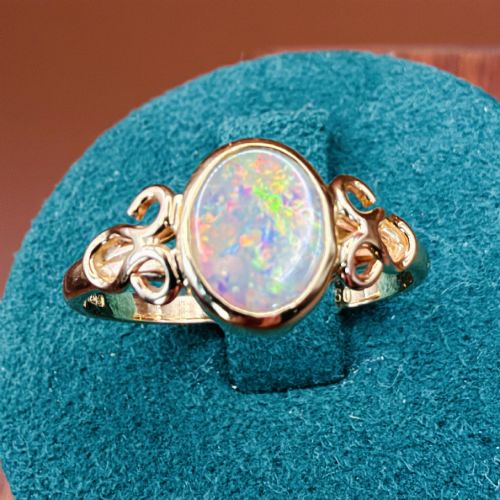
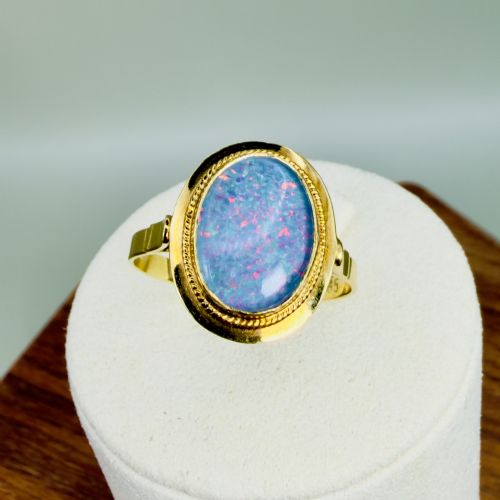
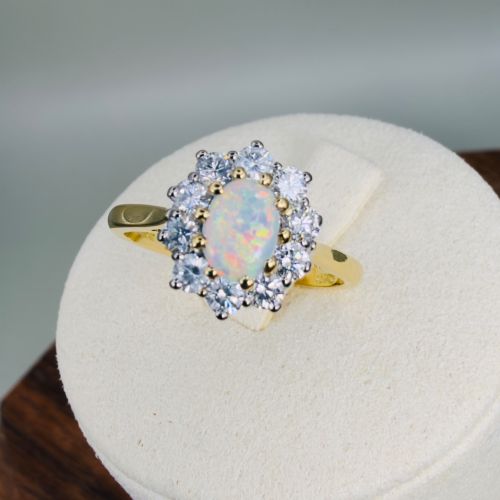
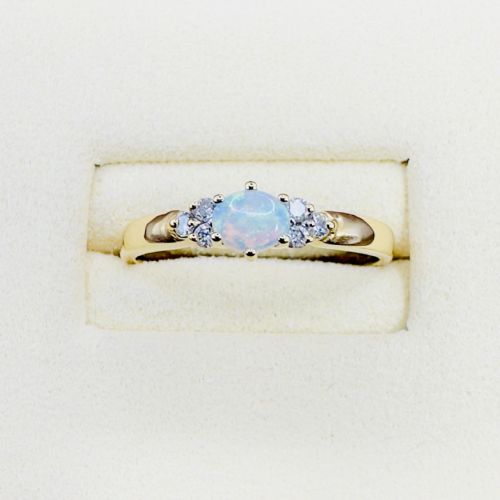
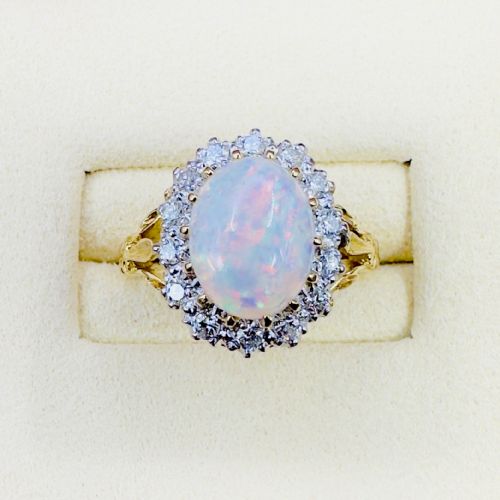


Oval Cabochon Opal Ring
An oval cabochon opal ring brings together smooth, domed stones and warm gold settings from the Victorian era to the mid-twentieth century.
Oval Cabochon Opal Ring
An oval cabochon opal ring is a piece of finger jewellery featuring a polished, rounded opal stone rather than a faceted gem. When people search for an oval cabochon opal ring, they find a selection spanning the Victorian period through the Art Deco era and into the mid-twentieth century.
The pieces listed here appear in various configurations, from simple solitaire mountings to more elaborate cluster designs framed by diamonds or sapphires. The central opals themselves show considerable diversity, including white stones, dark black opals, boulder opals, and water opals set in gold.
The most common examples on this page are mid-century gold cluster rings and earlier Victorian solitaire designs. Each piece highlights the natural play of colour characteristic of genuine opals, secured in traditional claw or bezel settings.
How they were made
Jewellers shaped natural opals into smooth, rounded cabochons to maximise the shifting colours within the stone rather than cutting facets. These stones were then mounted in various grades of gold, including nine-carat, fourteen-carat, and eighteen-carat yellow and white gold.
Makers secured the central opals and surrounding diamonds or sapphires using traditional techniques such as bezel settings that enclose the stone or claw settings that hold it with individual metal prongs.
What varies in quality
The quality of an oval cabochon opal ring depends primarily on the optical intensity and colour play within the stone itself. Finer examples display vivid flashes of multiple spectral colours that remain visible from various viewing angles.
Quality also rests in the craftsmanship of the surrounding metalwork and the matching of any accompanying diamonds or sapphires. Substantial gold weight in the shank and secure, precise setting work distinguish the finer pieces in this range.
The Oval Cabochon Opal Ring Glossary
- Cabochon
- A gemstone shaped and polished with a smooth, rounded surface rather than faceted edges. This style highlights the internal colour play of opals.
- Solitaire
- A ring featuring a single prominent gemstone without accompanying side stones. This setting places visual emphasis entirely on the central opal.
- Cluster ring
- A ring design where a central stone is surrounded by a group of smaller gemstones, often diamonds or sapphires. This arrangement creates a larger overall visual presence on the hand.
- Boulder opal
- An opal found embedded in its host ironstone matrix, which is often left intact on the back of the stone. This type typically displays strong colour against a dark background.
- Bezel setting
- A method of holding a gemstone in place with a thin collar of metal that folds over the edges of the stone. It offers secure protection for softer gems like opals.
Oval Cabochon Opal Ring: Frequently Asked Questions
How do I care for my opal ring?
Opals contain natural water content and have a lower hardness rating than diamonds, making them sensitive to sudden temperature changes and harsh chemicals. Remove the ring before washing up, gardening, or using household cleaners.
Clean the stone gently with a soft cloth and warm soapy water, avoiding ultrasonic jewellery cleaners and harsh abrasives that can damage the surface.
Can I wear an antique opal ring daily?
Many people wear these rings daily, but older settings require mindful handling to preserve their condition over time. Consider removing the piece during heavy manual work or strenuous physical activity.
Regular inspection of the claws or bezel by a professional jeweller helps ensure the stone remains securely held within the gold mount.
What is the difference between white and black opals?
White opals display their play of colour against a lighter body tone, ranging from milky white to pale grey. They often produce soft, delicate flashes of spectral hues.
Black opals feature a dark body tone, ranging from deep grey to jet black, which creates a high-contrast background that makes the colours appear much more vibrant and intense.
How can I tell a Victorian opal from a mid-century piece?
Victorian rings, dating from the nineteenth century, often utilise distinct handcrafted mounting styles, sometimes featuring heavy claw settings or engraved gold shanks. The gold purity marks on these older pieces may also differ from modern standards.
Mid-century pieces from the 1950s and 1960s frequently incorporate standardised cluster designs and specific hallmarks that reflect twentieth-century manufacturing methods.