

Vintage Opal Jewellery
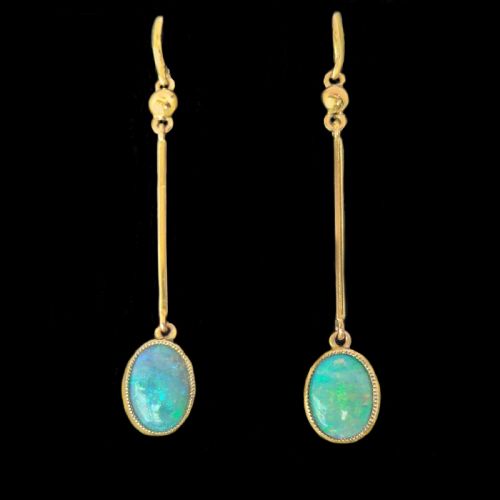
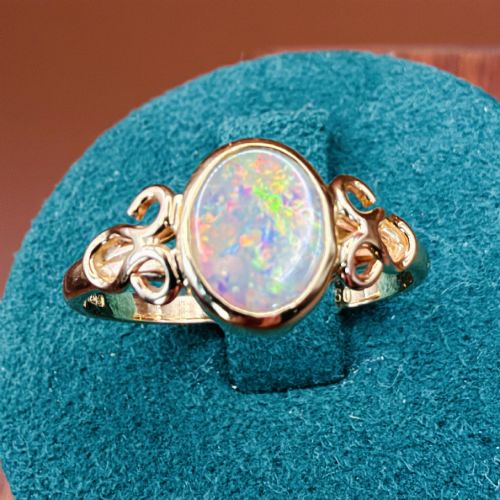
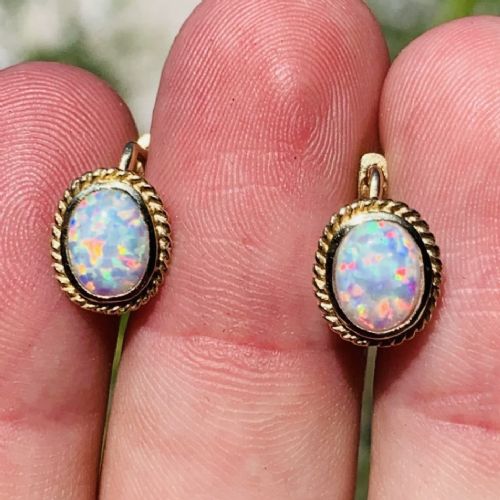
These vintage opal jewellery pieces bring together the play of colour in natural stones with gold settings from the Victorian period onwards.
Vintage Opal Jewellery
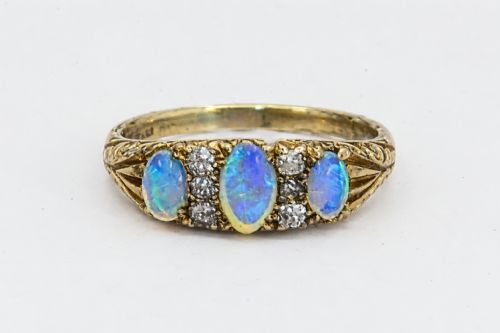
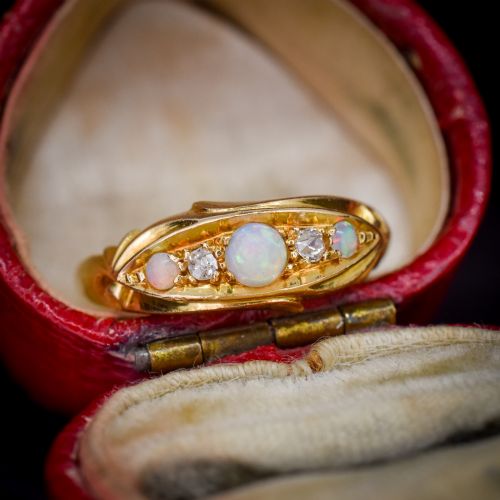
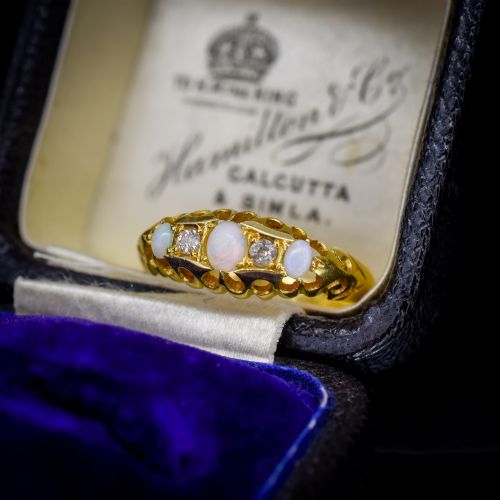
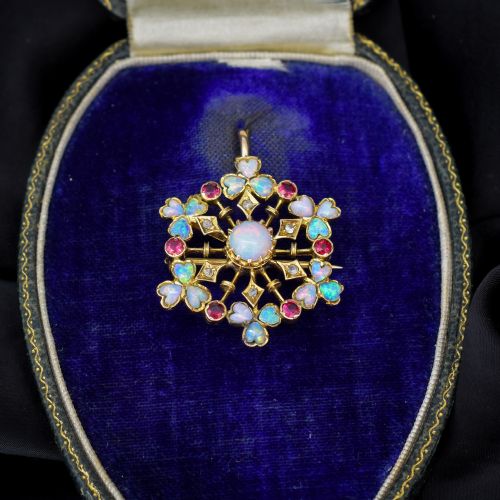
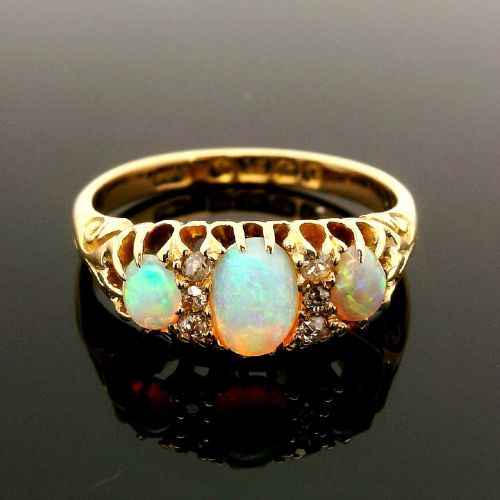
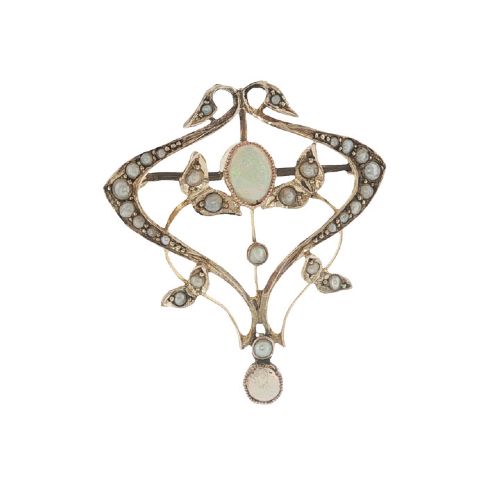
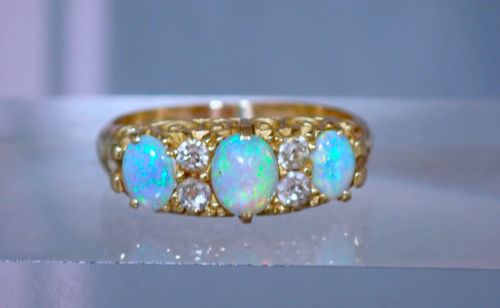
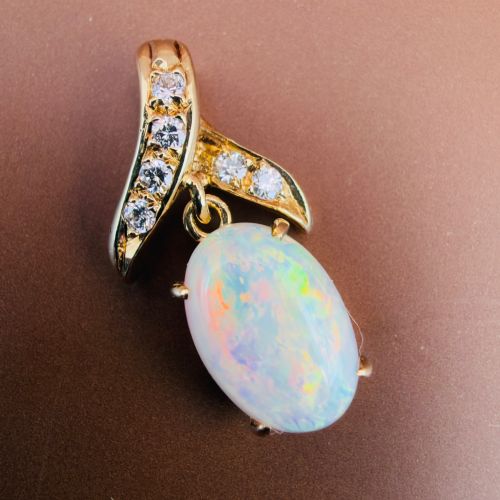
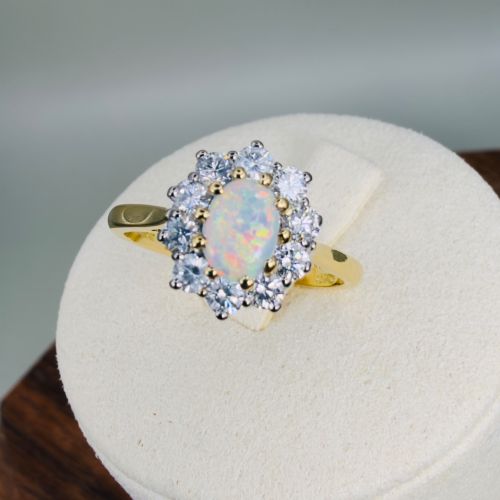
Boat rings and cluster rings dominate the ring category, frequently set in 18ct or 9ct yellow gold with surrounding diamonds. Pendants and necklaces range from delicate Edwardian festoons to large black opal doublets suspended from gold chains. Brooches often take floral or bar forms, incorporating gemstones alongside the central opals.
Materials and construction methods
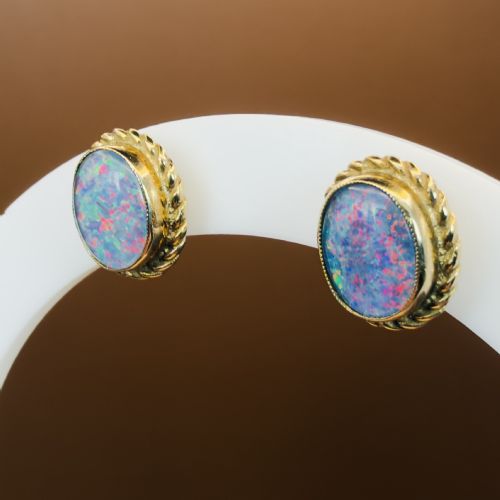
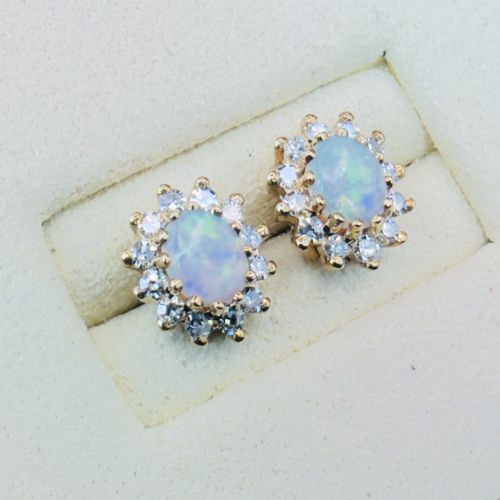
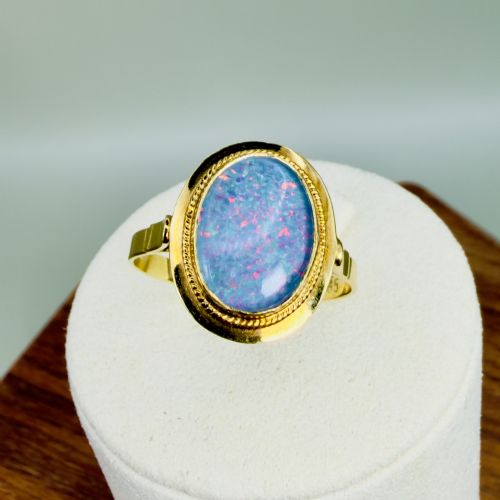
The pieces rely on natural, solid, black, boulder, and fire opals, as well as opal doublets, shaped into cabochons and oval cuts. These stones are mounted in 18ct gold, 9ct yellow gold, 14ct gold, silver, platinum, and 18ct white gold settings. Goldsmiths frequently paired the stones with supporting diamonds, rubies, pearls, turquoise, emeralds, and paste diamonds.
Techniques visible in the construction include bezel settings, claw settings, and detailed filigree work. Makers utilised traditional casting and hand-working methods to form boat ring profiles, cluster frames, and articulated drop earrings or fringe necklaces.
Vintage Opal Jewellery Retail Price Guide 2026
Typical asking prices for vintage opal jewellery among the pieces listed under this phrase on Sellingantiques today, from the lower quarter to the upper quarter. They describe what is for sale here now, not the wider market.
Some Edwardian makers hid tiny leaf motifs beneath their opal claws, whispering nature directly to the finger.
Quality variations in the range
Quality separates pieces by the optical play of colour within the opal and the weight of the precious metal used in the mount. Higher-tier examples feature solid natural stones with vibrant, shifting spectral colours and robust 18ct gold or platinum frames.
The precision of the supporting diamond work and the complexity of the gold smithing, such as fine filigree or pierced galleries, distinguish finer specimens. Doublets and lighter 9ct gold settings represent different tiers of production from the mid-century period.
Knoll and Pregizer·The Gaskins
The Vintage Opal Jewellery Glossary
- Cabochon
- A gemstone shaped and polished with a smooth, rounded surface rather than faceted. This cut displays the play of colour in opals most effectively.
- Boat ring
- A ring setting shaped like an elongated boat or navette form, popular in the Edwardian and Victorian periods. It typically holds a row of graduated stones.
- Doublet
- A composite stone made of a thin slice of natural opal glued to a darker backing material, such as ironstone, to enhance the depth of colour.
- Festoon
- A necklace featuring a curved drape of chains, swags, or pendants that sit across the collarbone. Edwardian examples often incorporate fringe drops.
- Trilogy
- A ring or pendant featuring three stones set side by side, historically representing the past, present, and future.
Vintage Opal Jewellery: Frequently Asked Questions
How do I care for my opal jewellery?
Opals contain water and require gentle treatment to prevent drying out or cracking. Avoid exposing them to harsh chemicals, ultrasonic cleaners, and sudden temperature changes.
Store your pieces separately in soft pouches to prevent scratching from harder gemstones like diamonds. Clean them simply with a soft, damp cloth and mild soap when necessary.
What is the difference between solid opals and doublets?
Solid opals consist of a single piece of natural opal material cut and polished from the rough. They feature throughout Victorian, Edwardian, and later jewellery.
Doublets are assembled from two layers, bonding a thin slice of genuine opal to a darker backing to simulate the rich appearance of solid black opal. This technique provided a larger visual impact at a different production level.
How can I tell an Edwardian opal ring from a Victorian one?
Victorian pieces often display heavier gold work, deeper bezels, and romantic motifs like intertwined bands or bar brooches. The stones are typically secured in closed-back or heavy prong settings.
Edwardian designs tend to be lighter, incorporating platinum or yellow gold with delicate millegrain edges and lacework metal patterns. They frequently pair opals with small cluster diamonds in boat ring configurations.