
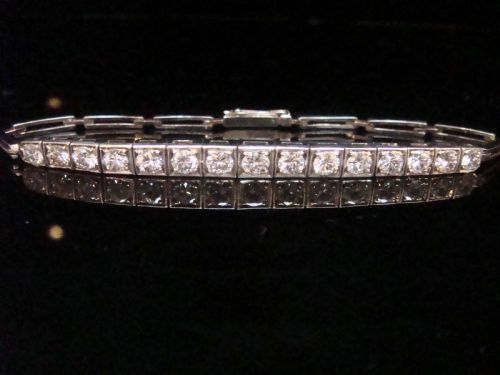


18ct White Gold Bracelet
An 18ct white gold bracelet brings together precious metal and gemstones across Edwardian, Art Deco and Mid-Century periods.
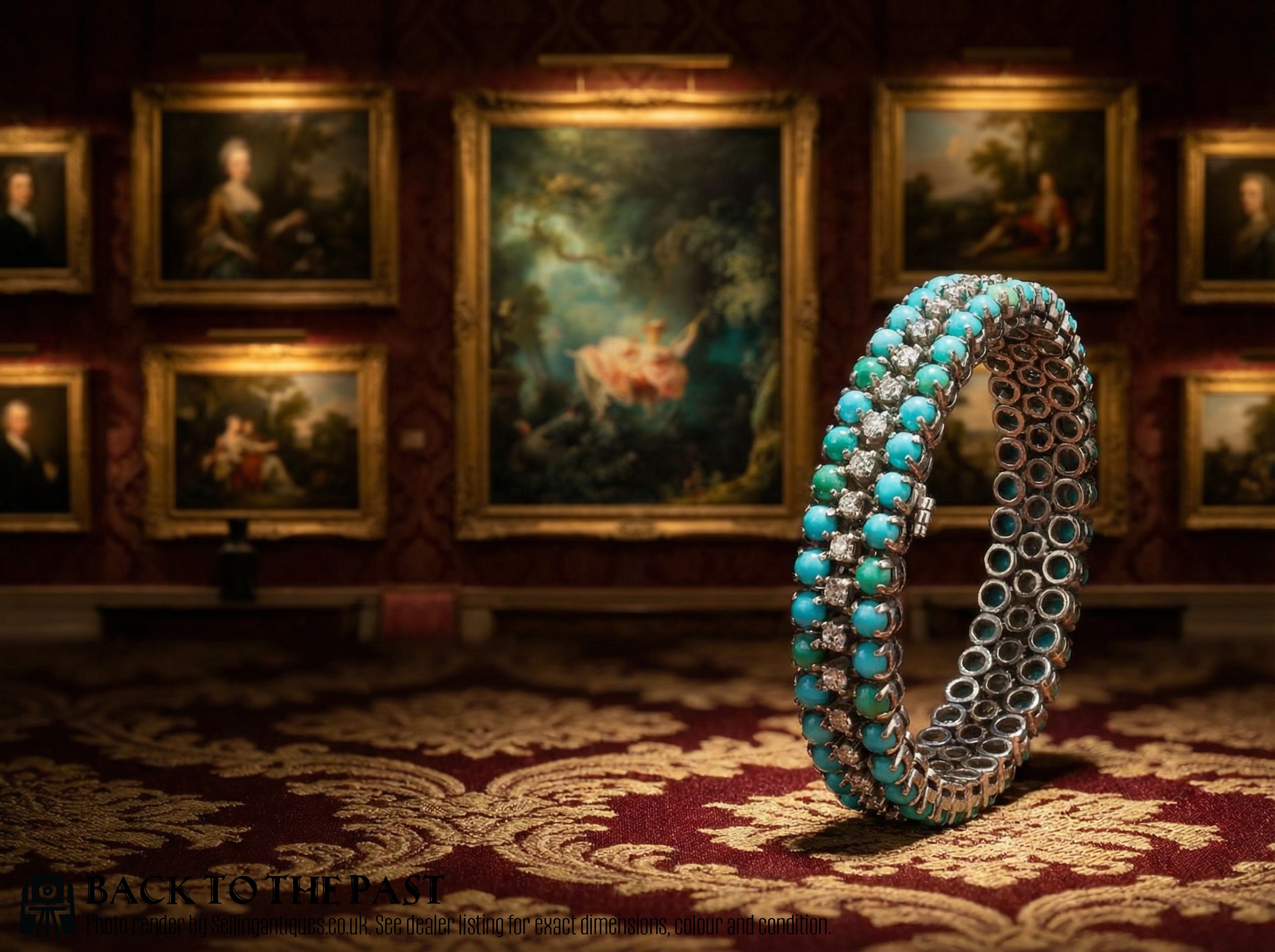
18ct White Gold Bracelet
An 18ct white gold bracelet spans delicate Edwardian line pieces through to chunky Mid-Century cocktail watches and gemstone designs. You encounter sapphire, ruby, diamond and white opal examples set within structured metal frameworks from various decades.
The selections range from French Belle Epoque bangles to 1960s mechanical timepieces incorporating precious gems. These items serve both as functional timekeepers and decorative wrist ornamentation created from distinct historical eras.
Materials and construction
Goldsmiths utilised 18ct white gold alongside platinum to mount brilliant and old cut diamonds securely. Coloured stones including rubies, sapphires and white opals integrate with metalwork via precise claw and channel settings.
Makers combined traditional hand fabrication with structured link arrangements to produce flexible line bracelets and rigid bangle formats. Gemstones are frequently paired with accent diamonds to heighten visual contrast across the face of the jewel.
Some delicate cocktail watches hide their faces behind sliding diamond doors so you forget what time it is entirely.
Assessing quality in the metal and stones
Excellence rests in the calibration of the gemstones and the crispness of the white gold fabrication. Stones with matching colour saturation and high carat weights elevate a piece above standard production.
The integrity of the clasp mechanism and the precision of stone settings determine durability. Finer examples display meticulous claw work that holds complex diamond and sapphire arrangements without excess metal bulk.
The 18ct White Gold Bracelet Glossary
- 18ct White Gold
- An alloy of gold containing seventy-five percent pure gold mixed with white metals such as palladium or silver. This composition provides a durable silvery base for diamond and gemstone mounting.
- Line Bracelet
- A flexible wrist ornament featuring a continuous row of symmetrically set gemstones of matching size. These pieces are frequently articulated for smooth movement around the wrist.
- Old Cut Diamond
- A historical diamond cutting style characterised by a small table, high crown and open culet. These stones display distinctive broad flash patterns under candle or low light.
- Cocktail Watch
- A ladies timepiece designed primarily as jewellery rather than a practical instrument. These items conceal watch dials behind gemstone or hinged metal covers.
18ct White Gold Bracelet: Frequently Asked Questions
How do I care for an 18ct white gold bracelet?
Clean the metal and stones gently using warm soapy water and a soft brush to remove everyday oils. Avoid harsh chemical dips, particularly if the piece incorporates softer gems like white opal or turquoise.
Store the item separately in a lined box to prevent scratching between the diamonds and softer surrounding metals. Regular checks by a jeweller ensure the stone settings remain secure.
What periods do these bracelets come from?
The available pieces originate from the Edwardian, Art Deco and Mid-Century eras, spanning from the early twentieth century through the 1960s. Each period carries distinct design signatures, from delicate lace-like Edwardian platinum work to geometric Art Deco lines.
Later Mid-Century examples often merge timekeeping functions with decorative diamond settings. Knowing the period helps identify specific setting techniques and stone cuts typical of that decade.
Are these bracelets suitable for daily wear?
While 18ct white gold provides a sturdy foundation, vintage and antique bracelets require mindful handling during daily activities. Delicate line bracelets and older stone settings benefit from occasional rest during strenuous tasks.
Items featuring softer stones like opals or turquoise demand extra care to avoid impact damage. Solid gold and diamond variations generally tolerate regular wear better than intricate antique filigree.