



Star Setting Diamond Ring
A star setting diamond ring places the stone flush within a hand-carved celestial burst, offering both everyday practicality and deep historical character.

Star Setting Diamond Ring
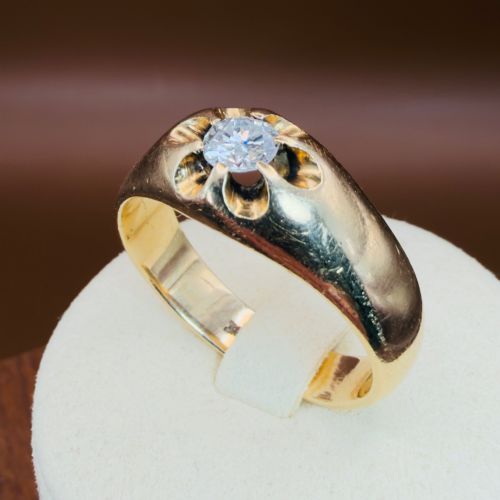
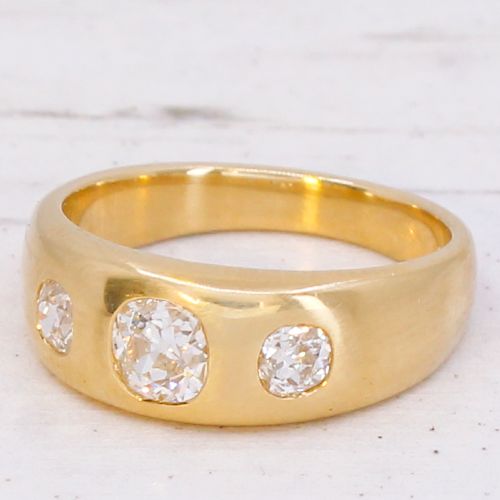
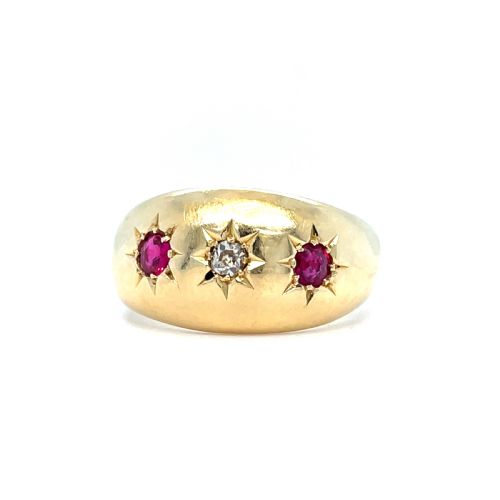
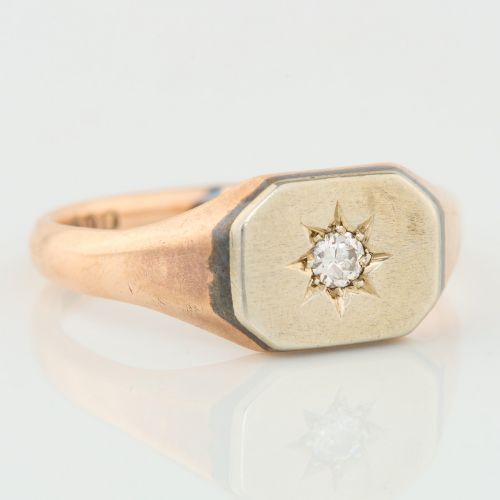
A star setting diamond ring integrates the gemstone directly into the metal band, surrounded by hand-engraved rays that mimic a twinkling star. These pieces span the Victorian, Edwardian, and Art Deco periods, encompassing various iterations from flush gypsy bands to elevated illusion settings.
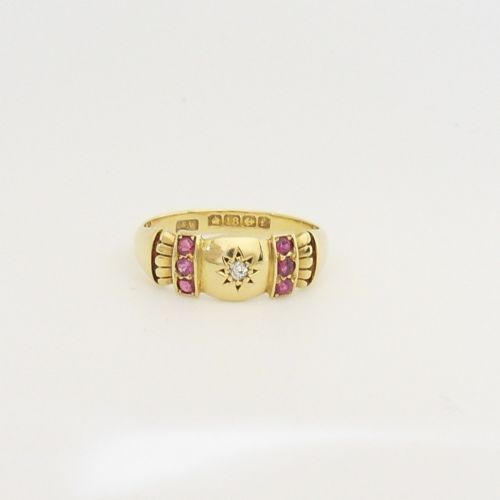
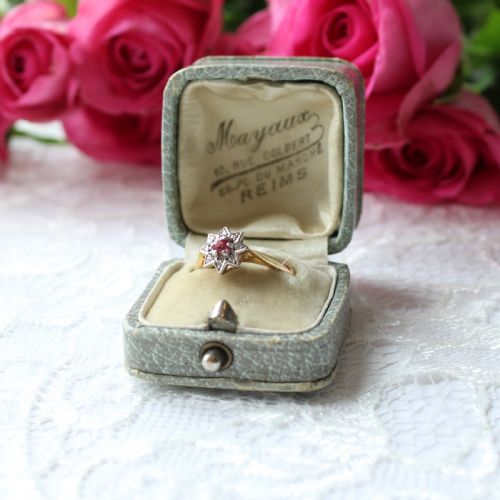
The versions most commonly encountered on this page date from the nineteenth century through the mid-twentieth century. They frequently combine yellow gold with old cut diamonds, sometimes accompanied by rubies, sapphires, pearls, or enamel.
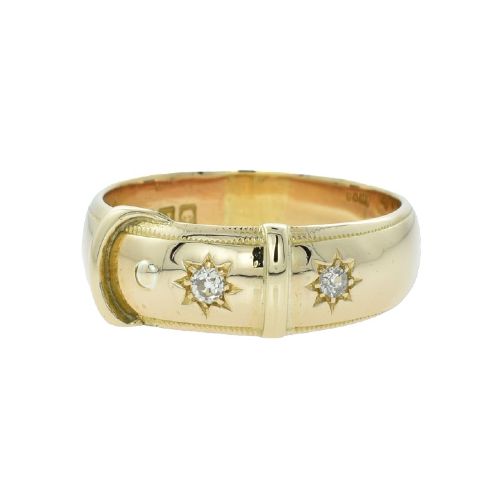
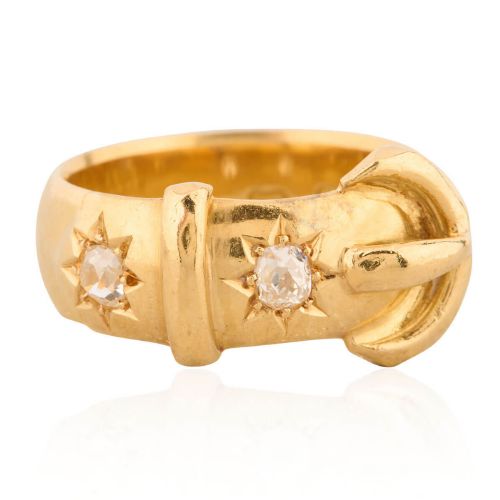
Designs range from simple signet and solitaire rings to ornate multi-stone trilogy layouts, buckle motifs, and mourning jewellery. Each object demonstrates how artisans combined structural durability with intricate surface engraving.
Materials and Technique
Goldsmiths utilised 18ct yellow gold, 9ct gold, and occasionally platinum or palladium, casting or hand-forging the heavy bands needed to secure flush stones safely. Old cut diamonds and rose cut stones were then pushed into the metal and burnished tightly in place.
Engravers used sharp gravers to cut radiating starburst patterns around the diamond bezel, creating a reflective facet that amplified the visual spread of the stone. Additional materials such as black onyx, enamel, and coloured gemstones were integrated using traditional bezel and flush techniques.
The inventory on this site spans the Victorian, Edwardian, and Art Deco periods, utilising 18ct yellow gold, 9ct gold, platinum, and palladium.
Judging Quality
Quality rests primarily on the crispness of the hand-engraved starburst rays and the precision with which the metal is pushed over the diamond girdle. Finer examples maintain deep, sharp engraving lines that retain their geometry despite decades of wear.
Proportion and metal weight heavily influence distinction, as heavier 18ct gold bands provide a more substantial foundation for the flush setting than lighter counterparts. The choice of diamond, particularly old cut stones with lively facets, dictates the optical brilliance at the centre of the engraved star.
The Star Setting Diamond Ring Glossary
- Gypsy ring
- A style of ring where the gemstone is set flush into the thick band, sloping gently downward towards the metal edge. This design became extremely popular during the Victorian period for daily wear.
- Star setting
- A mounting technique where small engraved V-shaped channels radiate outward from a flush-set gemstone. It creates the optical illusion of a four-, six-, or eight-pointed star.
- Old cut
- A precursor to the modern brilliant cut diamond, featuring a smaller table, higher crown, and a noticeable open culet. These stones display softer, broader flashes of light under candlelight.
- Illusion setting
- A metal head designed around a diamond to make the stone appear larger than its actual carat weight. It often uses a faceted plate of white metal or platinum over yellow gold.
- Trilogy ring
- A ring featuring three main gemstones, traditionally representing the past, present, and future. In these listings, they frequently combine old cut diamonds with sapphires or rubies.
Star Setting Diamond Ring: Frequently Asked Questions
Can I wear a star setting diamond ring daily?
The flush mounting protects the diamond girdle from knocks, making these bands exceptionally well-suited for everyday wear. The stone sits level with the surrounding metal rather than protruding in a high claw.
However, the weight and thickness of the original gold band should guide your usage. Heavier Victorian and Edwardian examples easily withstand daily tasks, while lighter antique variants benefit from occasional removal during heavy manual work.
How do I identify a Victorian star setting ring?
Victorian examples typically feature warm 18ct yellow gold with substantial shanks and hand-stamped hallmarks denoting British assay offices such as Chester or Birmingham. The engraved starbursts often display subtle irregularities unique to hand-tooling.
Another indicator is the use of old cut diamonds with distinct open culets visible through a loupe. Mourning variants from this era may also incorporate black enamel or woven hair compartments alongside the star motif.
What is the difference between gypsy and star settings?
A gypsy setting refers broadly to any ring where the gemstone is flush with the surface of a tapering metal band. This structural form protects the girdle entirely within the shank.
A star setting is a specific decorative addition applied to that flush mount. Artisans engrave radiating lines outward from the stone to form a starburst pattern, enhancing the visual impact of the embedded diamond.
Are these rings handmade?
The majority of pieces from the Victorian and Edwardian eras were individually handmade or produced in small artisan workshops. Goldsmiths cast or forged the heavy gold bands before hand-engraving each individual starburst pattern.
Hand-tooling means no two engraved star motifs are identical. Tool marks and slight asymmetries under magnification confirm the traditional craftsmanship used to shape the metal.