


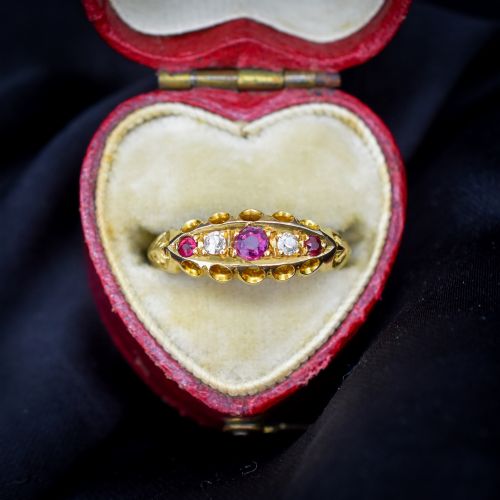
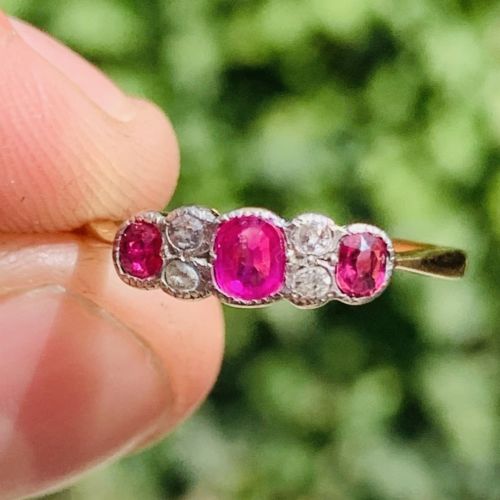
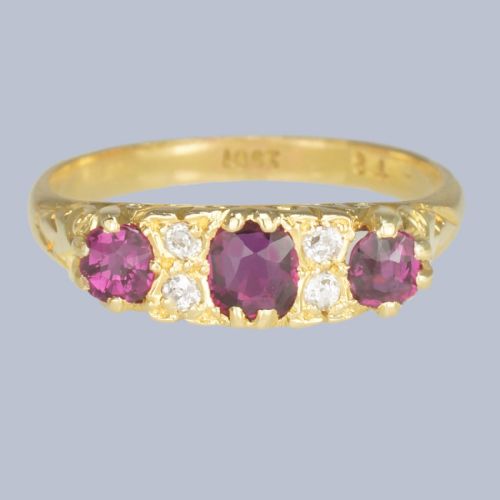
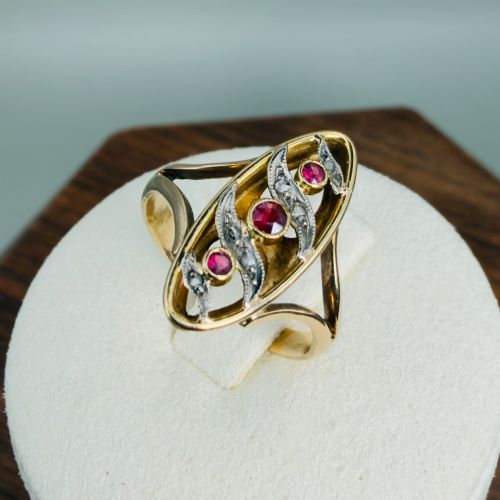
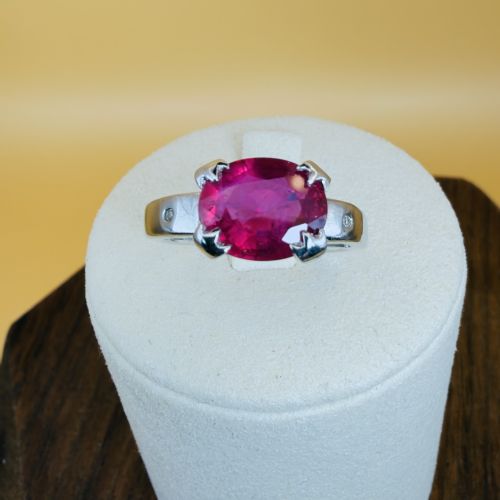
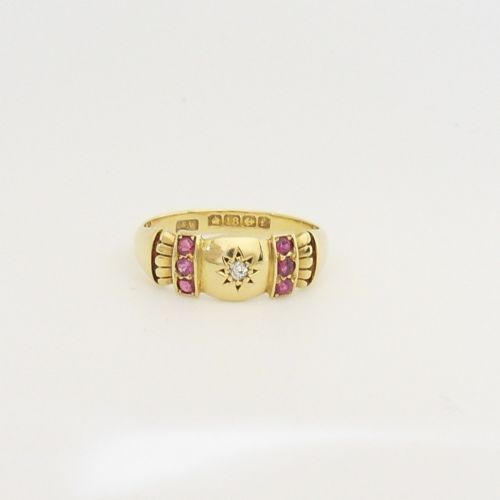
Ruby Diamond Band Ring
A ruby diamond band ring brings together rich red corundum and brilliant stones in enduring gold and platinum settings.

Ruby Diamond Band Ring
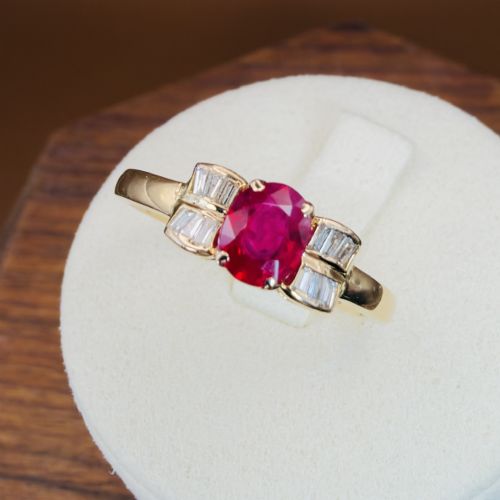
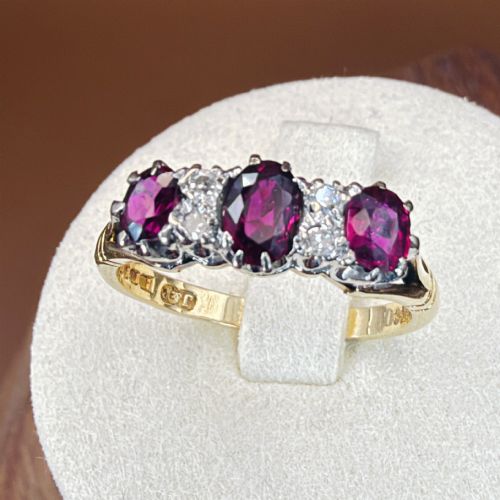
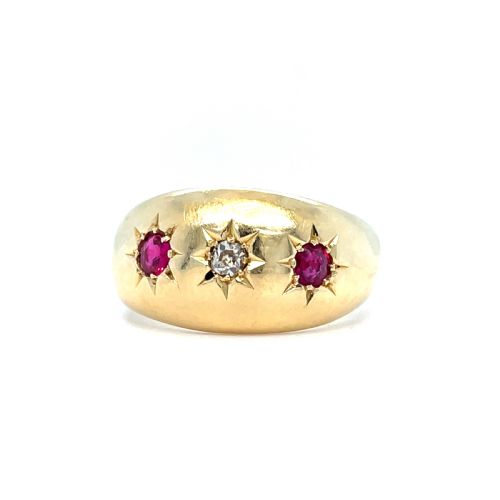
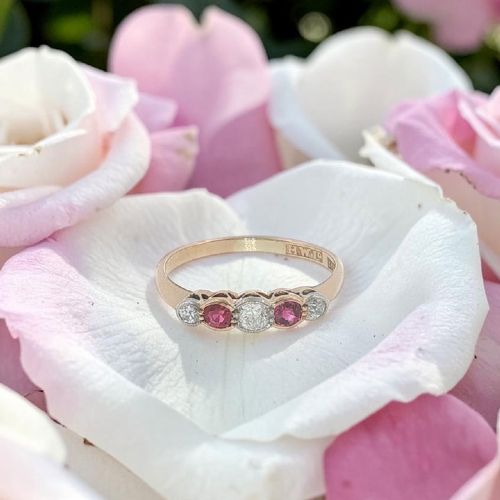
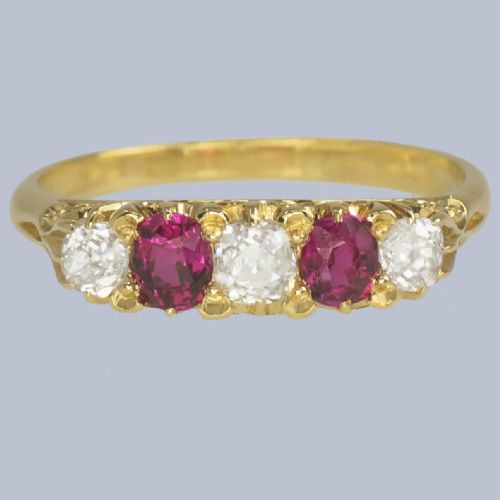
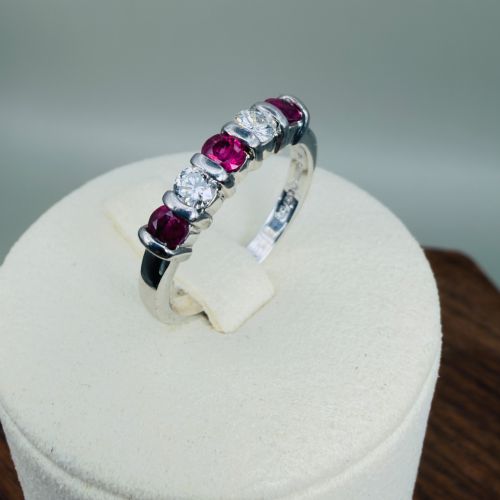
A ruby diamond band ring combines red corundum and diamonds set into bands of yellow gold, white gold, or platinum. The listings show forms ranging from Victorian and Edwardian gypsy and starburst settings to Art Deco, mid-century, and later twentieth-century styles.
Buyers will most frequently meet nineteenth-century and early twentieth-century examples alongside mid-century clusters and five-stone arrangements. These pieces span periods from the late nineteenth century through the 1960s, reflecting shifts in goldsmithing and gemstone cutting over decades.
Variations in quality
Quality rests on the depth of colour in the rubies and the clarity and cut of the diamonds. Burmese origins and specific carat weights noted in reports distinguish exceptional stones.
The precision of the setting work, the preservation of original hallmarks, and the weight of the gold mount also separate standard examples from finer collector pieces.
Ruby Diamond Band Ring Retail Price Guide 2026
Typical asking prices for ruby diamond band ring among the pieces listed under this phrase on Sellingantiques today, from the lower quarter to the upper quarter. They describe what is for sale here now, not the wider market.
Listings feature 18ct yellow gold, 18ct white gold, and platinum across Victorian, Edwardian, Art Deco, and mid-century periods.
The Ruby Diamond Band Ring Glossary
- Gypsy ring
- A style where stones are flush-set directly into the metal band, popular during the Victorian and Edwardian eras. This technique creates a smooth surface profile.
- Starburst
- A setting design where engraving radiates outward from a central stone to resemble twinkling light. It is commonly found on late nineteenth- and early twentieth-century rings.
- Trilogy ring
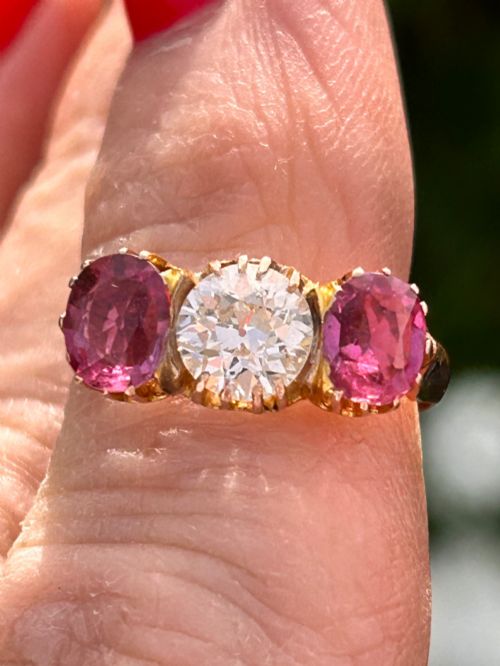
- A ring featuring three main gemstones, often representing the past, present, and future. They frequently pair a central ruby flanked by diamonds.
- Navette
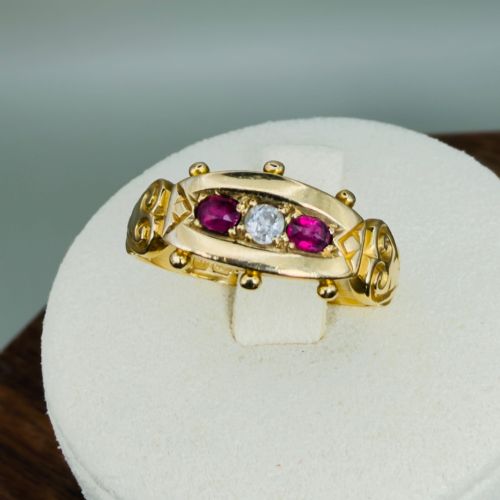
- A boat-shaped setting style that tapers to points at either end. This elongated form was favoured in Art Nouveau and Edwardian pieces.
- Old cut
- A hand-faceted diamond cut characteristic of older periods, featuring a smaller table and a higher crown than modern brilliant cuts.
Ruby Diamond Band Ring: Frequently Asked Questions
How do I care for a ruby diamond band ring?
Rubies and diamonds are durable, but gold and platinum settings require gentle cleaning with warm soapy water and a soft brush.
Store the ring separately from other jewellery to prevent scratching softer metals and gemstones.
Can I wear a ruby diamond band ring daily?
Eighteen-carat gold and platinum provide a durable foundation for everyday wear, though older or flush-set pieces benefit from occasional checks by a jeweller.
Remove the ring during heavy manual work to protect the claws and band.
How can I tell the period of my ring?
Hallmarks for specific assay offices like Chester and Birmingham, alongside setting styles such as gypsy or starburst, help date pieces.
Design motifs like navette shapes or old-cut diamonds further point towards Victorian, Edwardian, or mid-century origins.
What is the difference between a cluster and a band ring?
A band ring maintains a uniform width around the finger with flush or low-profile stones.
A cluster ring arranges stones in a concentrated grouping around a central focus, creating a wider face.