






Star Flush Set Ring
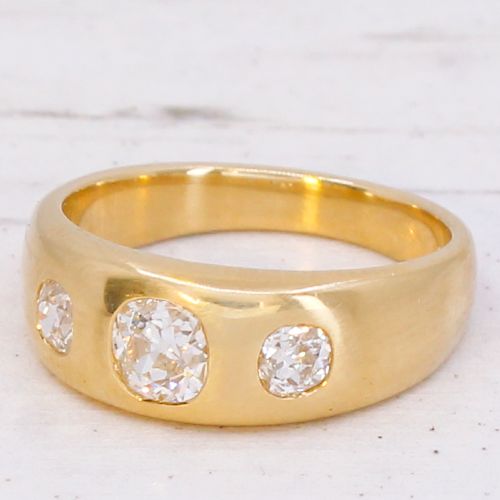
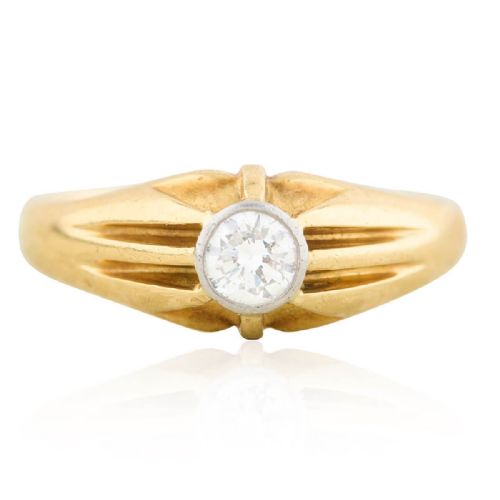
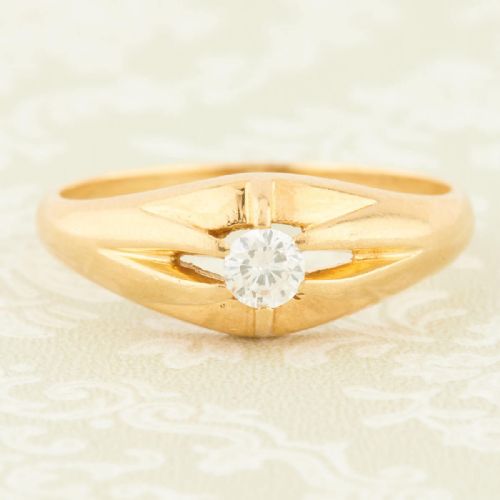
A star flush set ring sits flat to the hand, holding sparkling diamonds or gems securely within rich gold bands.
Star Flush Set Ring
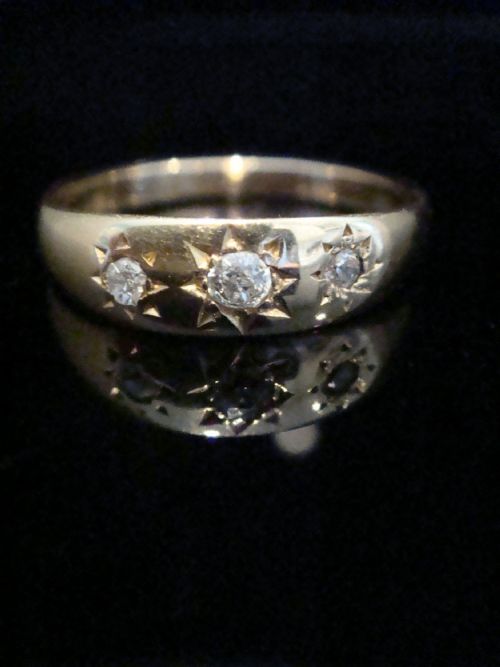
A star flush set ring brings together low-profile bands and celestial engraving, making these pieces robust everyday jewellery. You will frequently encounter Victorian and Edwardian examples featuring smooth, tapered gold bands designed to protect the stones.
The selections here span nineteenth-century origins into mid-twentieth-century designs, showing durable construction suited to modern wear. Most pieces on this page incorporate traditional gypsy settings where gemstones sit level with the metal surface.
Makers utilised distinct starburst engravings around the central stones, creating the characteristic celestial motif that defines the category. These designs range from simple single-stone rings to multi-stone arrangements featuring rubies and sapphires.
How they were made
Goldsmiths constructed these rings using high-purity yellow gold, including distinct fifteen-carat and eighteen-carat alloys. Stones were pushed directly into thick metal channels and secured with precision hand-beveled bezels.
Artisans hammered starburst rays outward from the gemstone settings using gravers, producing sharp geometric facets that catch the light. This technique required immense skill to ensure the flush-set diamonds or rubies remained firmly anchored without traditional prongs.
Listings feature yellow gold ranging from fifteen to eighteen carats, alongside platinum-free gold alloys from the nineteenth and twentieth centuries.
What varies in quality
The crispness of the hand-engraved starburst rays dictates the visual impact of each piece, separating masterwork execution from simpler production. Fine examples display deep, sharp incisions that radiate evenly around the flush-set stones.
Gold weight and band thickness heavily influence durability, as heavier eighteen-carat mounts resist warping far better than worn down alternatives. The cut and clarity of the old-cut diamonds also determine the overall brilliance of the face.
The Star Flush Set Ring Glossary
- Flush setting
- A gemstone mounting technique where the stone is set level with the surrounding metal surface. This protects the girdle of the stone from knocks.
- Gypsy ring
- A style of ring featuring a thick band that tapers toward the back, with stones embedded directly into the solid metal. They gained immense popularity during the Victorian era.
- Old cut diamond
- A precursor to the modern brilliant cut, characterised by a smaller table, higher crown, and open culet. These stones display a softer, chunkier scintillation under candlelight.
- Belcher setting
- A type of mounting where the metal is drawn up from the shank in rounded claws or prongs to hold the gemstone. It shares similarities with flush settings in achieving a raised yet secure profile.
Star Flush Set Ring: Frequently Asked Questions
Can I wear my star flush set ring every day?
The flush setting protects the stones from catching on clothing, making these rings exceptionally durable for daily wear. Their low profile prevents accidental impacts from loosening the gems.
However, older gold bands thin down over decades of wear, so a jeweller should inspect the thickness of the shank periodically. Careful maintenance ensures the structural integrity remains sound for continuous use.
How do I identify a Victorian star flush set ring?
Victorian examples typically feature rich fifteen-carat or eighteen-carat yellow gold with hand-graved starburst patterns surrounding old-cut diamonds. They often incorporate multi-stone layouts featuring rubies or sapphires.
Examining the engraving technique and gold hallmarks helps confirm the period. Hand-carved starbursts show slight irregularities unique to nineteenth-century tool work.
What is the difference between a gypsy ring and a solitaire?
A gypsy ring embeds the gemstone flush within the solid taper of the band itself, leaving no exposed prongs. A solitaire positions the stone in a raised basket or claw mount above the shank.
This flush construction gives gypsy rings a smooth, integrated appearance across the hand. Solitaires rely on height to maximise light entry through the sides of the stone.
What stones are typically found in these rings?
Old-cut diamonds form the primary gemstones in these pieces, frequently accompanied by natural rubies and sapphires. Makers often arranged them in three-stone or five-stone configurations.
These coloured gemstones add vibrant contrast to the polished yellow gold backgrounds. The combination of diamonds and rubies remains a signature look of the period.