






Gold Starburst Ring
A gold starburst ring captures celestial design in precious metal, offering enduring appeal for those seeking antique and vintage statement jewellery.
Gold Starburst Ring
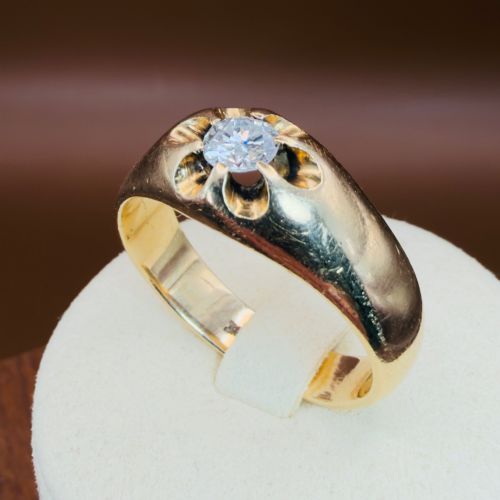
A gold starburst ring brings together celestial motifs and precious metals across multiple historical periods. Buyers seeking this style encounter pieces ranging from Victorian and Edwardian examples to Art Deco and Mid-Century designs.
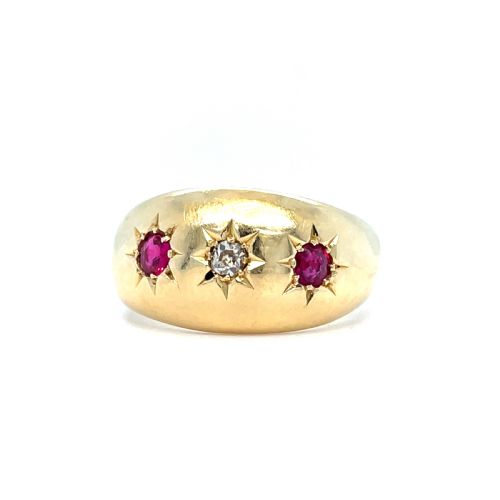
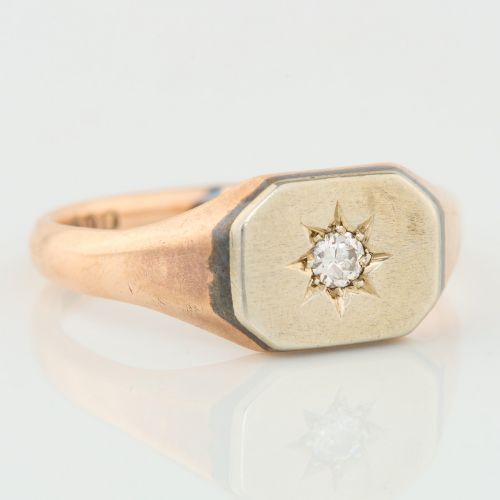
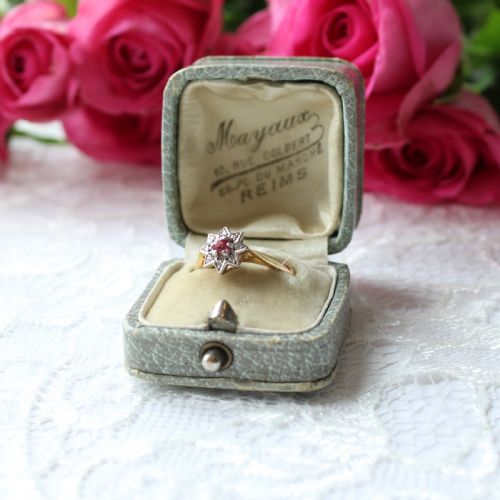
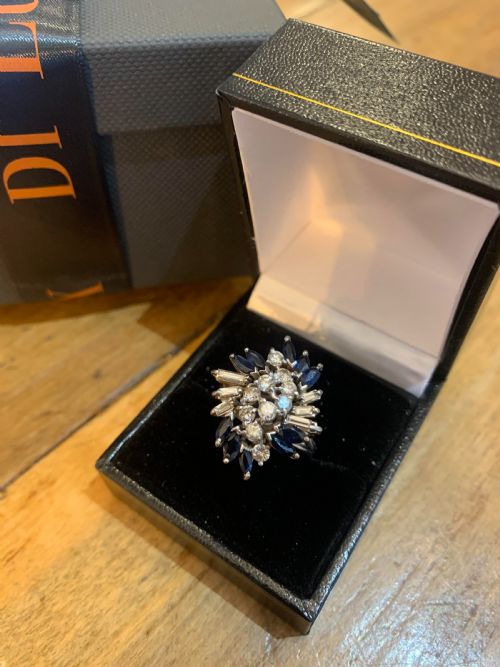
The selection includes specific configurations like cluster bands, gypsy settings, and signet forms. These variations reflect the changing tastes in gemstone arrangement from the nineteenth century through to the mid-twentieth century.
Materials and Construction
Goldsmiths utilised 18ct yellow gold, 18ct white gold, and 9ct gold as the foundational metals for these pieces. Platinum settings also appear in specific Art Deco designs to secure the central stones.
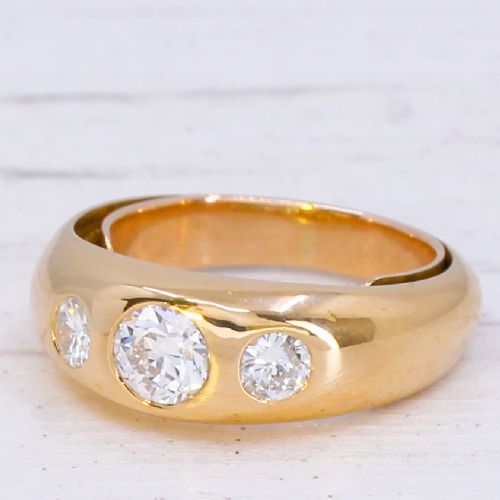
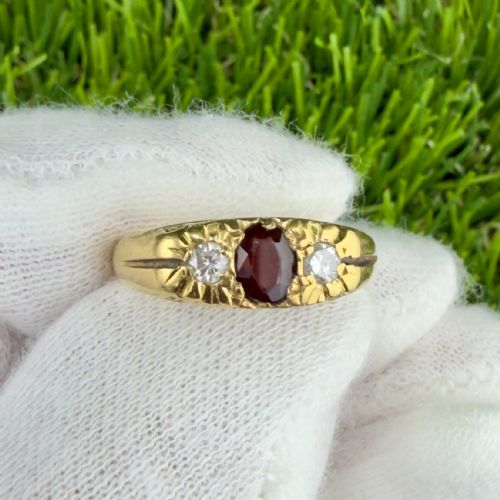
Diamonds, rubies, sapphires, garnets, and emeralds are flush or prong set into the metal to create the radiating star pattern. Cabochon cuts and old cut diamonds are frequently integrated into these celestial layouts.
Materials recorded across these listings include 18ct yellow gold, 9ct gold, diamonds, rubies, sapphires, garnets, and platinum.
Assessing Quality and Execution
The precision of the star motif engraving and the symmetry of the stone setting dictate the overall refinement of the piece. Superior examples display crisp lines and secure stone placements that withstand daily wear.
The choice of gemstones and the weight of the gold band determine the substance of the ring. Heavier 18ct gold mounts carrying well-matched rubies or old cut diamonds represent the higher tier of surviving pieces.
The Gold Starburst Ring Glossary
- Starburst
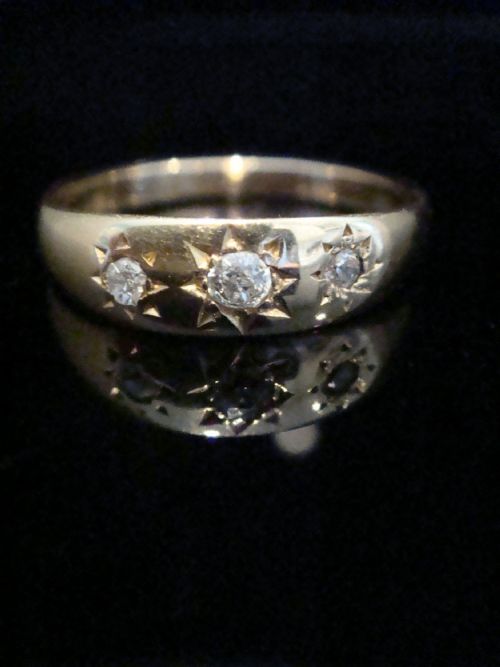
- A design motif featuring radiating lines or stones resembling a shining star. This pattern is central to the aesthetic of the pieces found in this collection.
- Gypsy ring
- A style where stones are flush-set into a heavy metal band that tapers towards the back. This setting style protects the girdle of the stone within the metal.
- Old cut diamond
- A hand-faceted diamond shape popular in antique jewellery before modern brilliant cutting standards were established. These stones typically feature smaller tables and higher crowns.
- Cluster ring
- A ring design featuring a central gemstone surrounded by a group of smaller stones. This arrangement maximises visual impact and light reflection.
- Trilogy ring
- A ring set with three stones, often interpreted to represent the past, present, and future. They frequently combine diamonds with rubies or sapphires.
Gold Starburst Ring: Frequently Asked Questions
What periods do these rings come from?
The pieces span from the 19th century through the Victorian, Edwardian, and Art Deco eras into the mid-20th century. Each period introduces distinct manufacturing techniques and stylistic proportions.
Design elements shift from heavy Victorian gypsy bands to geometric Art Deco platinum settings and 1950s clusters.
How do I care for an antique gold starburst ring?
Regular gentle cleaning with warm soapy water and a soft brush helps maintain the gold and gemstones. Avoid harsh chemical dips, particularly if the piece contains softer stones or enamel.
Storing the ring separately prevents scratching from other items in your collection.
What metals are used in these designs?
Goldsmiths primarily worked with 18ct yellow gold, 9ct gold, and 18ct white gold. Platinum is also found securing stones in specific periods.
The metal purity often relates to the period of origin and the intended durability of the mount.
Are these rings suitable for daily wear?
Many of these pieces were designed for everyday use, particularly flush-set gypsy bands that protect the stones. Heavier gold bands offer the structural integrity needed for regular wear.
Prong-set cluster designs require more care to avoid catching the settings on clothing.