

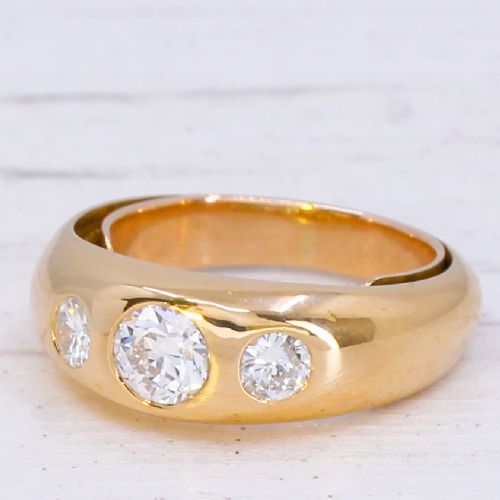


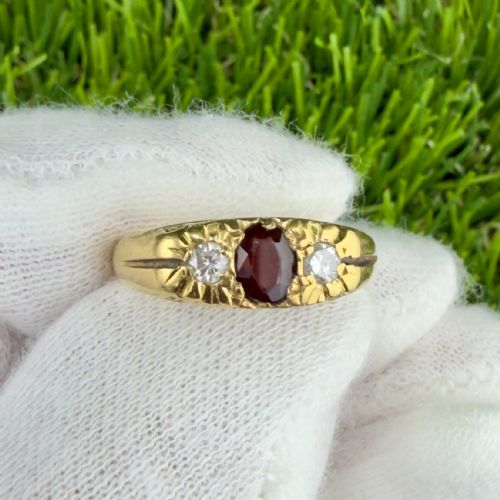

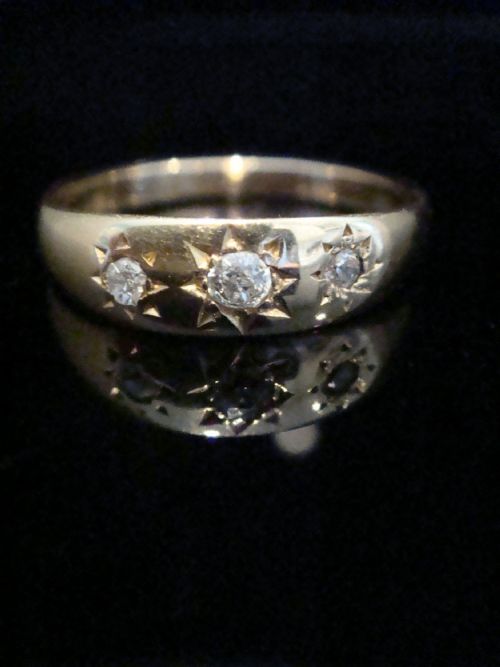


Starburst Set Ring
These starburst set ring designs capture light through brilliant cluster settings, offering a lasting piece of antique or vintage jewellery to wear daily.
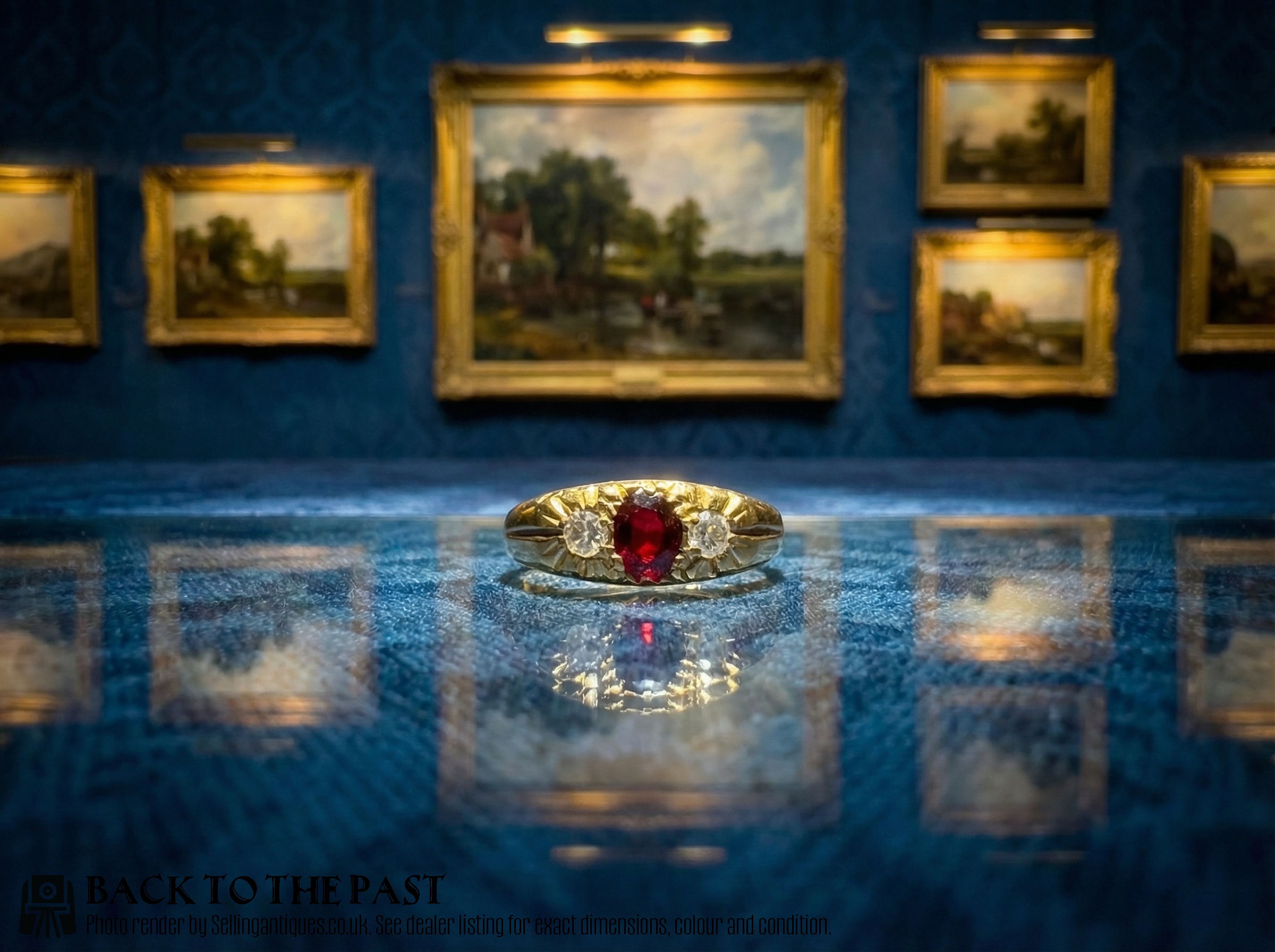
Starburst Set Ring
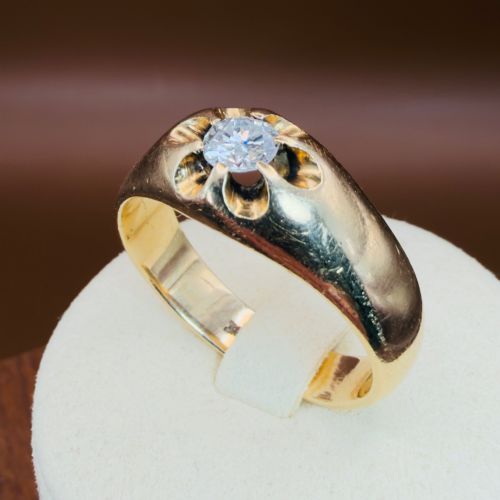
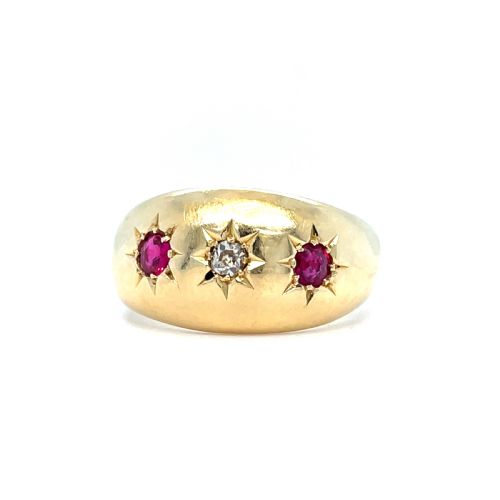
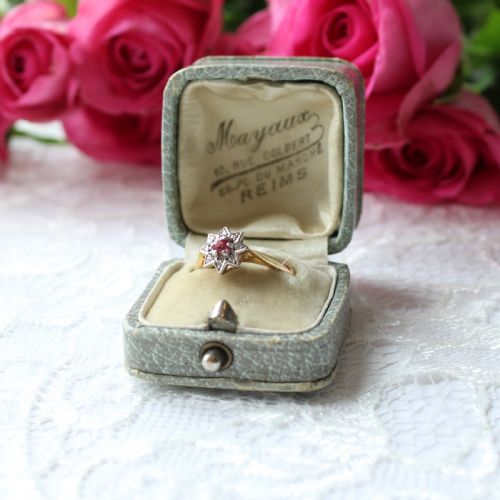
Most examples found here appear as gypsy rings or cluster formations in yellow gold settings. Stones such as diamond, ruby, sapphire and garnet take centre stage within these celestial designs.
Materials and construction
Goldsmiths utilised eighteen carat and nine carat yellow gold alongside platinum settings to secure the stones. Older examples frequently employ flush gypsy settings where stones sit level with the heavy gold band.
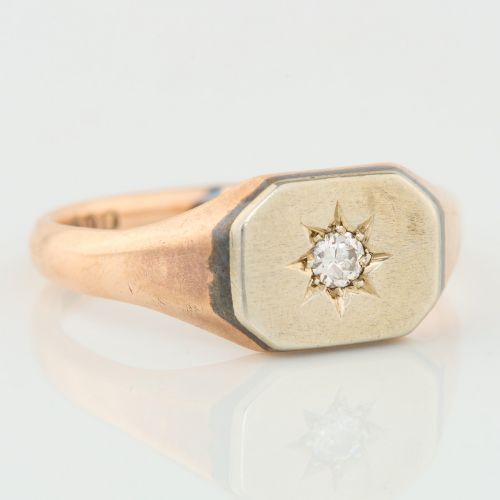
Engravers cut precise star rays radiating outward from the central diamond or coloured gem. Old cut diamonds dominate these pieces, imparting the characteristic hand-faceted sparkle unique to antique jewellery.
The listings span eight distinct periods, from the nineteenth century through Victorian, Edwardian, Art Deco and mid-century decades.
Variations in quality
Quality rests upon the crispness of the hand-engraved starburst rays and the weight of the gold band. Heavier rings with substantial gram weights display superior durability and retain their structural integrity over decades of wear.
The selection of stones also dictates standard, with well-matched rubies, sapphires or old cut diamonds elevating the piece. Finer examples maintain deep, sharp star chasing that shows minimal wear from the passage of time.
The Starburst Set Ring Glossary
- Gypsy ring
- A ring style where stones are flush-set directly into the thick band of the metal. This secure mounting became popular during the Victorian period for everyday wear.
- Star set
- A gem setting technique featuring hand-engraved star facets radiating from a central stone. This pattern tricks the eye into perceiving a larger sparkle.
- Old cut
- A diamond facet style hand-polished before modern machine-cutting standards emerged. These stones possess smaller tables and deeper pavilions that glow warmly under candlelight.
- Trilogy ring
- A ring featuring three distinct stones set in a row to represent the past, present and future. They frequently incorporate starburst motifs around the central gems.
Starburst Set Ring: Frequently Asked Questions
Can I wear my starburst set ring daily?
Gypsy settings and robust gold bands make these rings exceptionally practical for daily wear. The flush mounting protects the girdle of the stone from accidental knocks.
Heavier specimens handle routine activity well, though delicate antique examples still benefit from removal during heavy manual tasks.
How do I date an antique starburst ring?
Dating relies on hallmarks, band profiles and the cutting style of the central diamonds. Victorian and Edwardian pieces often feature heavy yellow gold with hand-chased starburst patterns.
Later mid-century iterations display cleaner lines and different alloy proportions while retaining the celestial aesthetic.
What is a celestial ring design?
Celestial designs incorporate motifs like stars, sunbursts and crescent moons into the metalwork. Jewellers utilised these heavenly themes heavily during the late nineteenth and early twentieth centuries.
The engraving surrounds the stones to mimic the twinkle of distant stars in the night sky.
Are old cut diamonds different from modern stones?
Old cut diamonds feature smaller tables, higher crowns and open culets compared to modern brilliant cuts. Artisans shaped these stones entirely by hand to maximise their performance under candlelight.
This historical cutting method gives each gem a distinctive, personal character.