
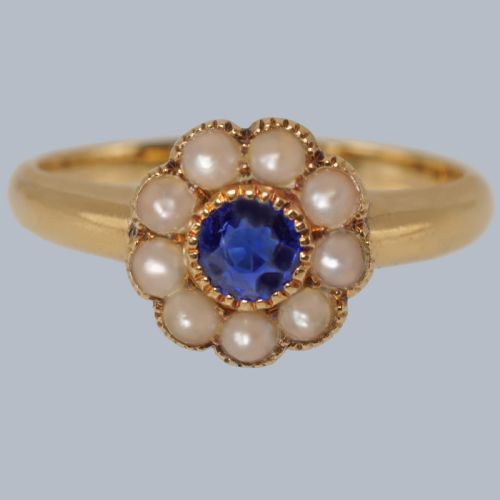


Gold Sapphire Band
When you search for a gold sapphire band, you are looking at rings uniting deep blue stones with enduring precious metals.
Gold Sapphire Band
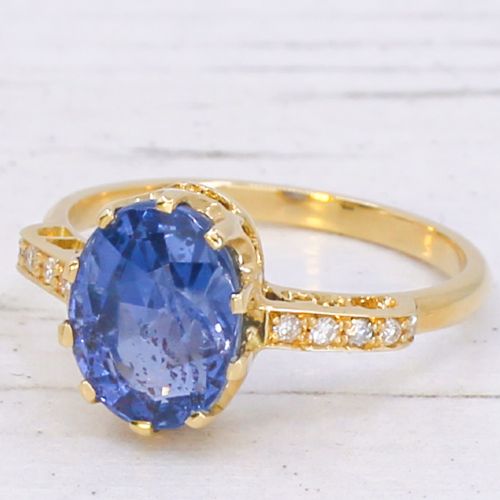
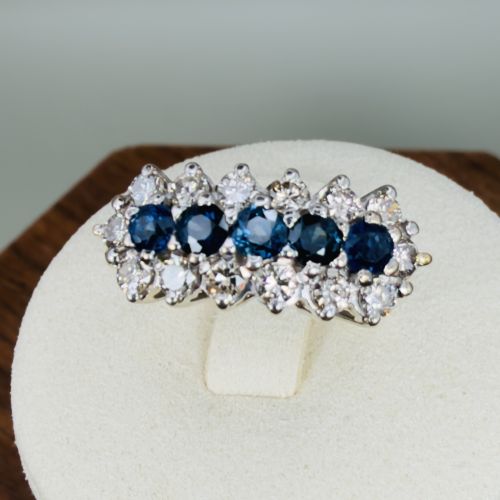
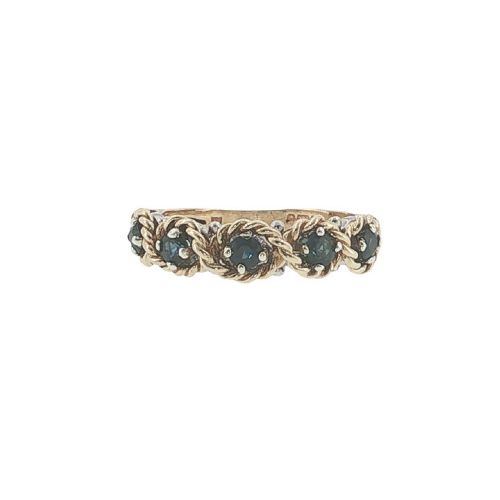
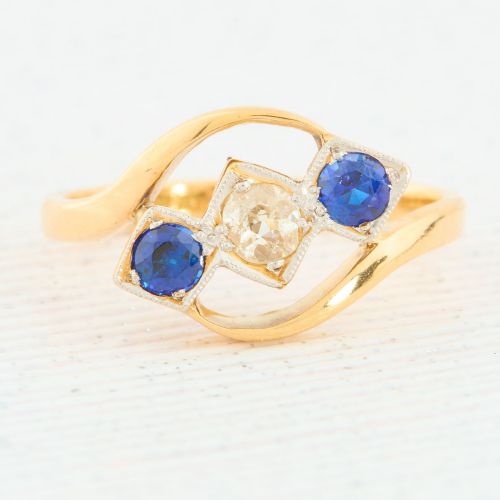
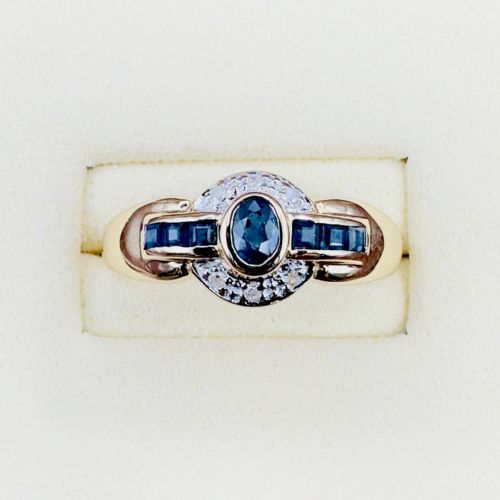
A gold sapphire band brings together rich blue stones and warm yellow or white precious metals in forms ranging from traditional cluster settings to low-profile gypsy designs. These rings span periods from the Victorian and Edwardian eras through the Art Deco movement and mid-century decades, reflecting changing tastes in jewellery design.
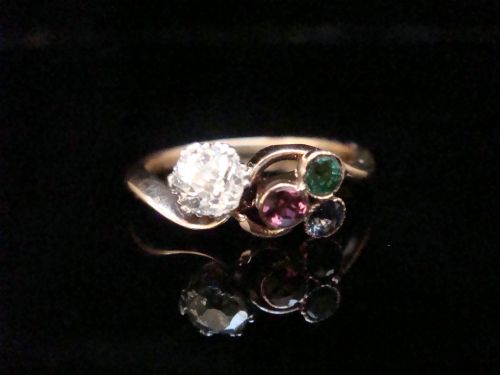
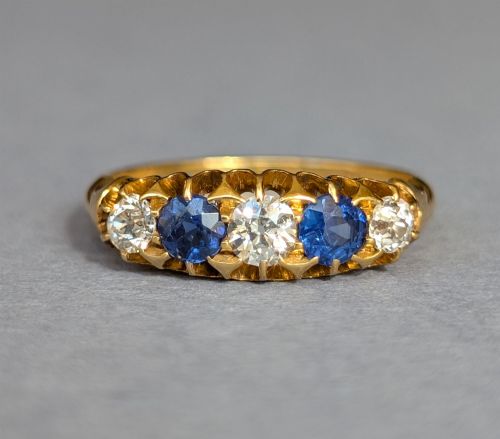
The most common versions met on this page include 18ct yellow gold and 9ct gold bands set with sapphires alongside diamonds, pearls, or emeralds. You will encounter boat rings, half eternity bands, and multi-stone configurations that sit smoothly against the finger.
How they were made
Goldsmiths constructed these bands primarily using 18ct gold, 9ct gold, and platinum, often combining yellow gold shanks with platinum settings to enhance the brilliance of diamonds. Stones were secured using traditional claw settings, flush gypsy mountings, or geometric platinum arrangements typical of the Art Deco period.
Craftsmen utilised hand-cut stones, including old cut diamonds and oval, princess, or unheated sapphires sourced from regions such as Ceylon and Kashmir. Hallmarks stamped into the metal indicate assay offices in London, Birmingham, and Chester.
Double serpent rings wrap twin gold snakes around sapphire and diamond heads, whispering Victorian symbolism directly to your hand.
What varies in quality
The distinction between tiers rests upon the origin and treatment of the sapphires, with unheated stones from locations like Ceylon or Kashmir commanding greater attention from collectors. The clarity and cut of accompanying old cut diamonds further elevate a piece.
Execution of the metalwork, from hand-engraved shoulders to robust gypsy mountings and distinct hallmarks, defines the standard of construction across different eras.
The Gold Sapphire Band Glossary
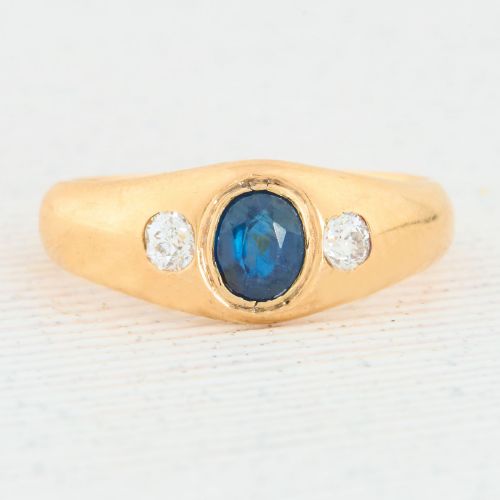
- Gypsy ring
- A style where stones are flush-set directly into the heavy gold band, popular during the Victorian and Edwardian periods.
- Boat ring
- A setting shaped like a small boat hull that curves across the finger, frequently holding a row of graduated gems.
- Half eternity band
- A ring set with a continuous line of gemstones across the top half of the metal band.
- Old cut
- A hand-faceted diamond cut predating modern brilliant standards, characterised by a smaller table and high crown.
- Trilogy ring
- A three-stone ring traditionally symbolising the past, present, and future.
Gold Sapphire Band: Frequently Asked Questions
What is a gold sapphire band?
A gold sapphire band is a finger ring combining a precious metal band of yellow or white gold with blue sapphire gemstones, often accompanied by diamonds.
These pieces range from antique Victorian multi-stone designs to mid-century half eternity bands.
How do I wear a gypsy ring?
Gypsy rings feature flush-set stones that sit level with the metal surface, making them remarkably smooth and practical for everyday wear.
Their low profile means they catch less on clothing than traditional claw-set cluster rings.
How can I tell an Edwardian ring?
Edwardian rings often utilise platinum settings combined with yellow gold, frequently incorporating delicate filigree or airy cluster arrangements.
Official assay hallmarks stamped inside the band can also confirm the exact year of manufacture.
What does unheated sapphire mean?
An unheated sapphire is a natural gemstone that has undergone no artificial thermal enhancement to improve its colour or clarity.
These untreated stones are sought after by collectors for their natural provenance.