


Edwardian Sapphire Band
An edwardian sapphire band brings together rich blue gemstones and diamonds set in yellow gold or platinum.
Edwardian Sapphire Band
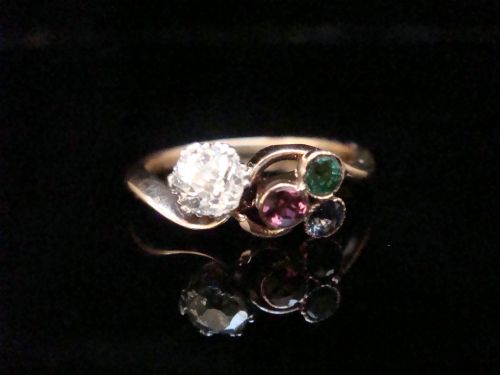
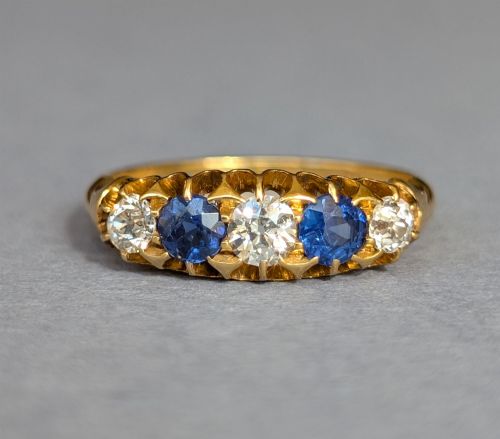
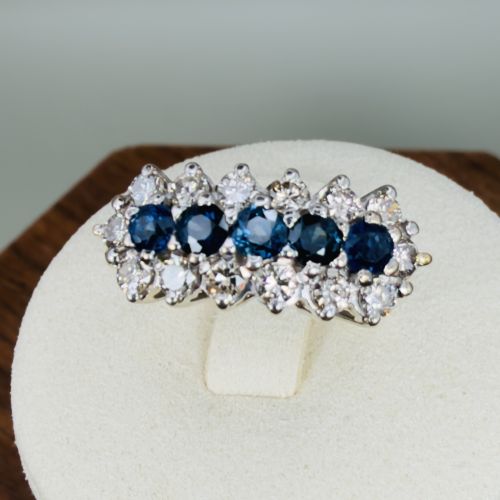
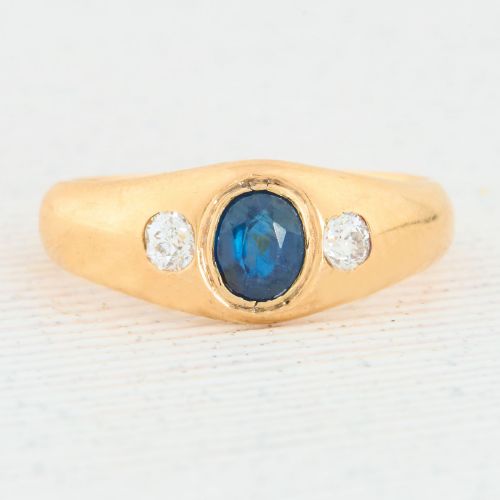
When searching for an edwardian sapphire band, a buyer encounters rings featuring blue sapphires paired with diamonds in 18ct gold or platinum. These rings take forms such as five-stone rings, boat shapes, cluster designs, and gypsy mounts originating from the early twentieth century and late nineteenth century.
The pieces on this page span periods including the Edwardian era, Victorian era, and Art Deco, alongside related styles like Art Nouveau and George V. Most selections utilise yellow gold or platinum settings that highlight the natural blue tones of the sapphires.
Materials and Construction
The construction relies on 18ct gold, 18ct yellow gold, rose gold, and platinum to secure the stones. Goldsmiths utilised traditional techniques such as gypsy settings, claw settings, and rubover mounts to hold the sapphires and diamonds.
Stones cut in old-cut, oval, or baguette styles are integrated into multi-stone bands, boat rings, and cluster formations. The integration of platinum with gold marked a technical shift during the Edwardian period that allowed for lighter, stronger settings.
Listings feature 18ct gold, yellow gold, rose gold, and platinum combined with sapphire, diamond, emerald, and tourmaline.
Distinctions in Quality
Quality rests upon the origin and clarity of the sapphires, with Kashmir and Burmese stones representing the upper tier of the range. The cut and brilliance of the accompanying old-cut diamonds also separate standard examples from finer specimens.
The Edwardian Sapphire Band Glossary
- Gypsy ring
- A style where the stones are flush-set directly into the thick band of the metal. This mounting style protects the girdle of the sapphire.
- Boat ring
- A curved, navette-like mounting configuration that tapers toward the ends of the band. This shape accommodates a central stone flanked by smaller gems.
- Trilogy ring
- A ring set with three principal stones representing a past, present, and future motif. In these pieces, a central sapphire is typically flanked by two diamonds.
- Old-cut diamond
- A hand-faceted diamond cut prior to the standardisation of the modern brilliant cut in 1919. These stones feature smaller tables and higher crowns.
- Platinum
- A dense, durable white metal utilised in jewellery manufacturing from the Edwardian period onward. Its strength enabled jewellers to create delicate wirework and settings.
Edwardian Sapphire Band: Frequently Asked Questions
What defines an edwardian sapphire band?
An edwardian sapphire band typically incorporates blue sapphires and old-cut diamonds mounted in 18ct yellow gold or platinum. These pieces utilise styles ranging from five-stone rows to cluster and gypsy settings.
Such rings reflect the decorative preferences of the early twentieth century, prioritising delicate metalwork and contrasting gemstone colours.
How were these rings worn originally?
These bands served as engagement rings, dress rings, or stacking bands worn alongside other personal jewellery. The robust construction of gypsy and rubover mounts suited daily wear.
Owners often selected specific stone arrangements to mark personal occasions or family milestones during the Edwardian and Victorian eras.
How do I care for a vintage band?
Caring for an antique ring involves gentle cleaning with warm soapy water and a soft brush to remove everyday debris from the settings. Avoid harsh ultrasonic cleaners that can dislodge stones from antique claws.
Regular inspection by a jeweller ensures that the gold or platinum claws remain secure around the sapphire and diamond elements.
How can I tell the period apart?
Dating relies on examining hallmarks stamped into the interior of the shank, which often denote assay offices such as London, Birmingham, or Chester. Maker marks and style indicators like platinum detailing point directly to the Edwardian era.
Victorian precursors often heavier yellow gold mounts, while later Art Deco pieces introduce geometric precision and calibrated stones.