
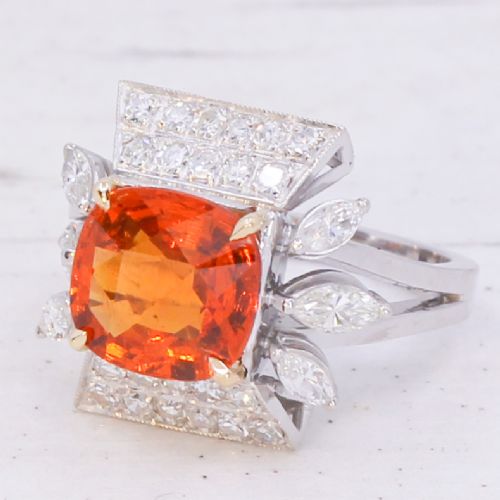
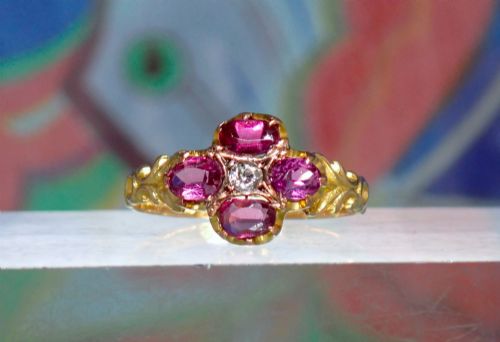
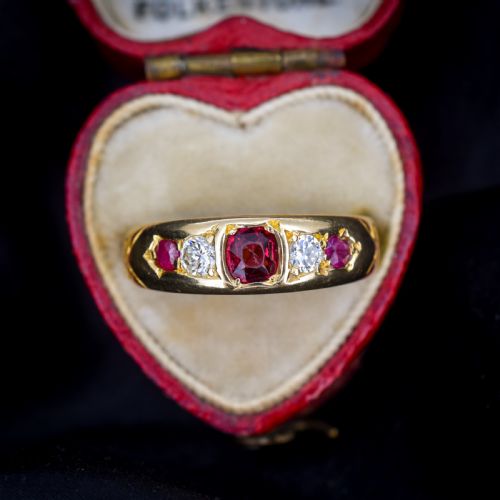


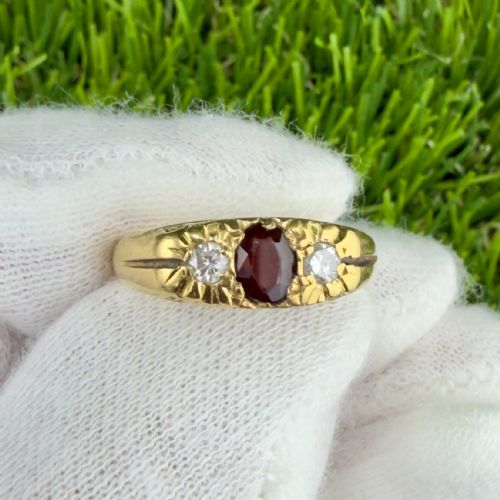


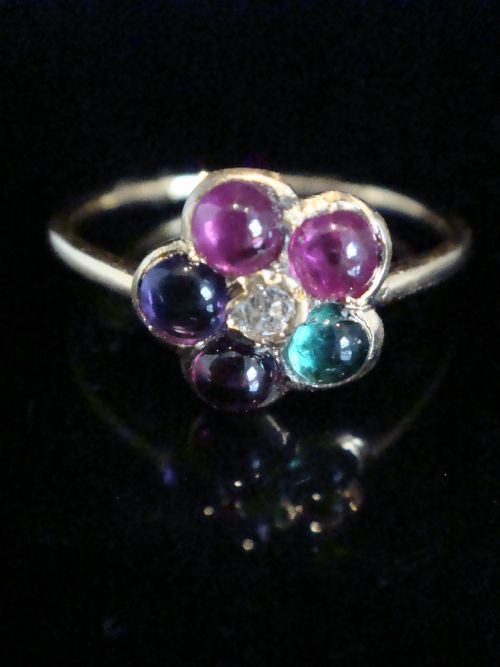


Garnet and Diamond Ring
A garnet and diamond ring pairs deep red or green stones with bright diamonds, offering a mix of colour and sparkle found across various periods.
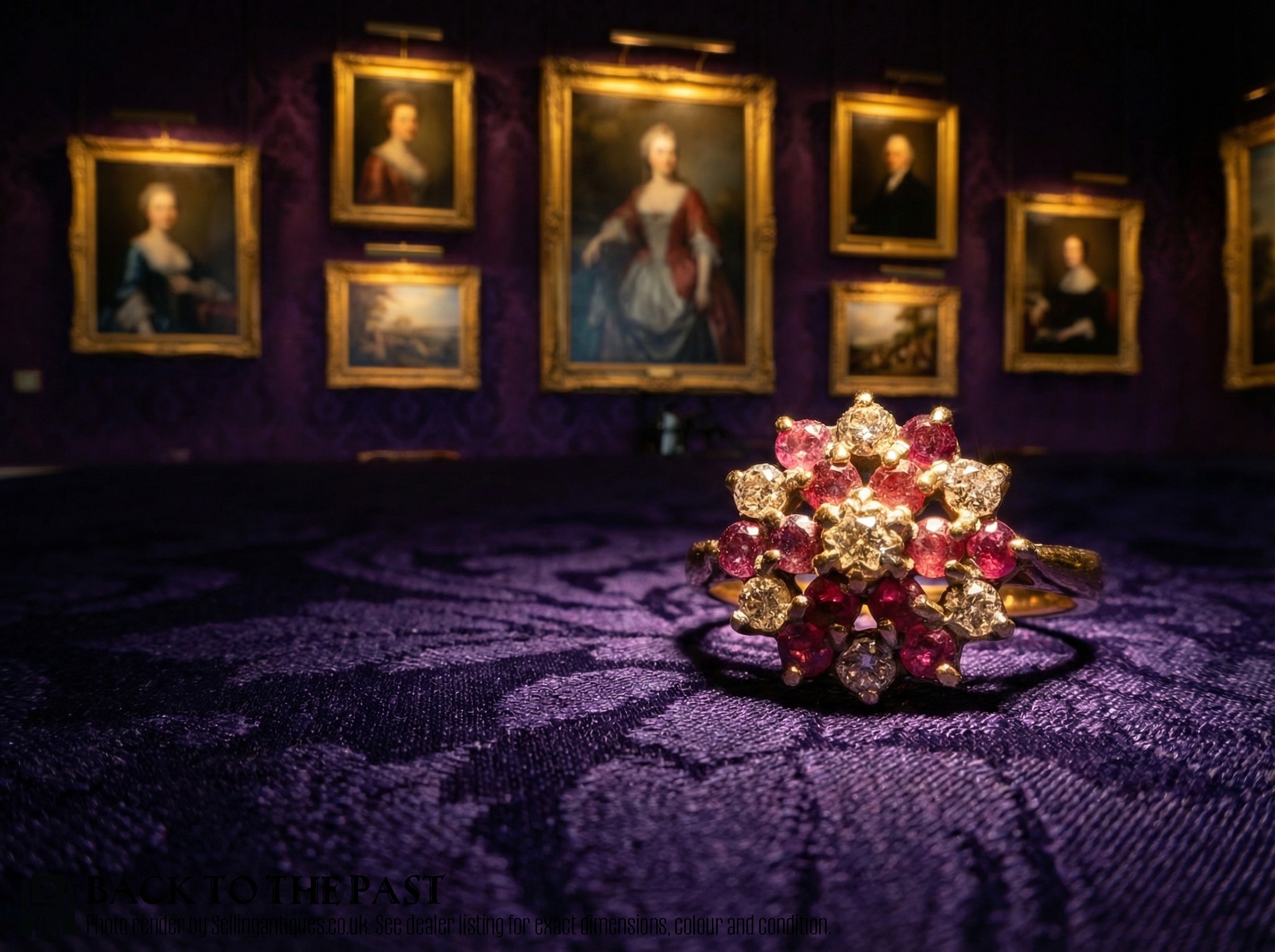
Garnet and Diamond Ring
A garnet and diamond ring combines the rich hues of garnets with the brilliance of diamonds, taking forms from simple cluster arrangements to elaborate cocktail pieces. These items appear in styles spanning the Victorian era, Edwardian period, Art Deco years and mid-century decades.
The pieces on this page include traditional cluster rings, trilogy settings and multi-gem designs, alongside yellow gold, white gold and platinum bands. Almandine garnets, demantoid garnets and orange garnets all feature alongside diamonds in various carat weights.
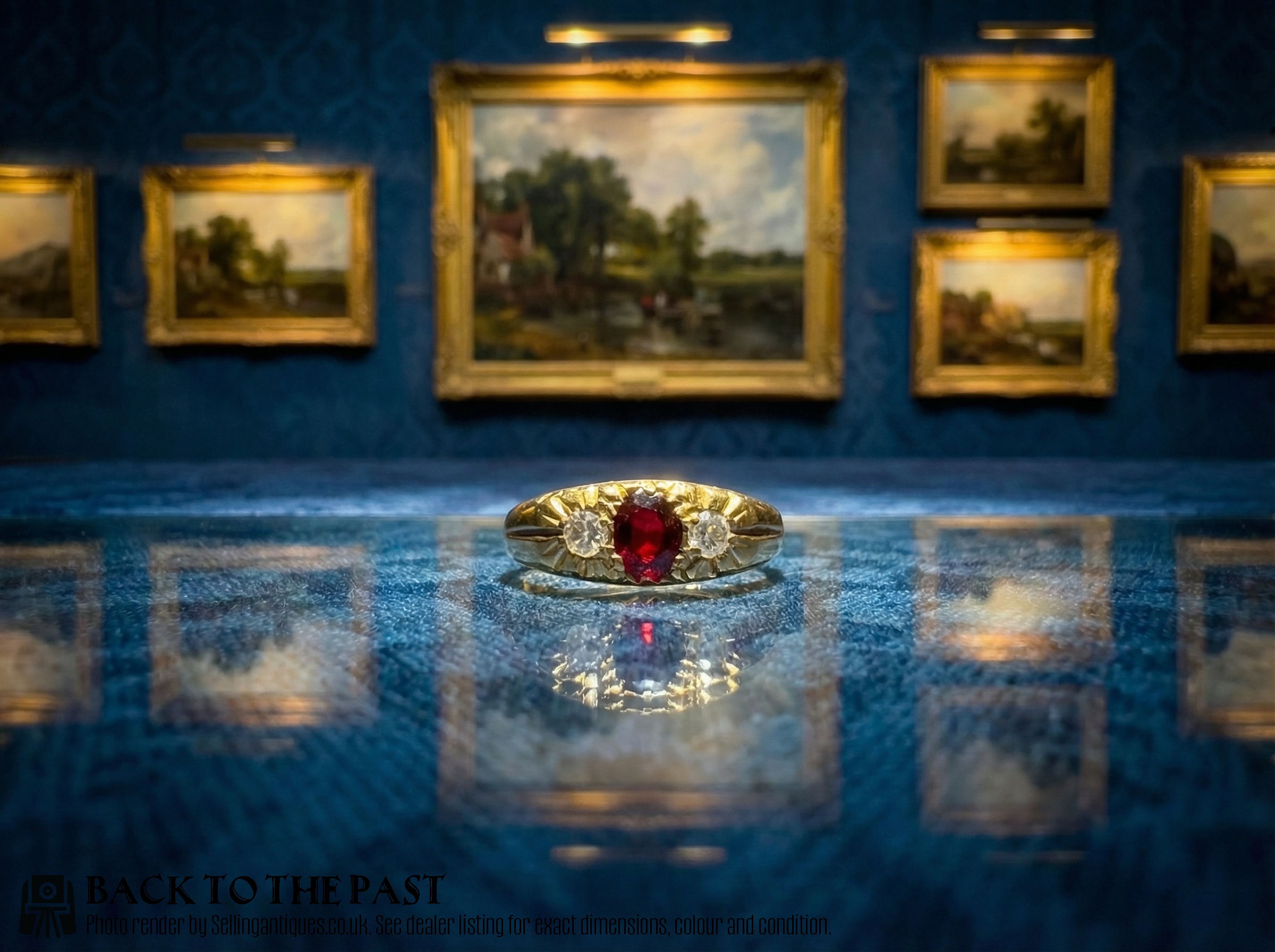
Materials and construction
Garnet and diamond rings are constructed using gold alloys ranging from nine carat up to twenty-two carat, alongside platinum and white gold. Stones are set into claws, bezels or flush mounts depending on the period and the shape of the gems.
Early examples utilise yellow gold backings with silver settings or solid gold claws, while later mid-century pieces often employ white gold or platinum to enhance the contrast between the diamonds and the coloured stones.
Periods represented span from the Georgian era and Victorian times through Edwardian, Art Deco and mid-century decades.
Quality variations
The weight and purity of the metal frame, whether fifteen carat yellow gold, eighteen carat gold or platinum, also shapes the overall standard of the piece, as does the precision of the stone setting.
The Garnet and Diamond Ring Glossary
- Almandine garnet
- A deep red variety of garnet commonly found in Victorian and Edwardian jewellery. It provides the dark crimson tones seen in many antique cluster rings.
- Cluster ring
- A ring setting where a central stone is surrounded by a group of smaller stones. This layout is typical for combining garnets and diamonds.
- Trilogy ring
- A ring featuring three main stones set in a row, representing the past, present and future. In this selection, garnets and diamonds share the setting.
- Rose cut
- An antique diamond cut featuring a flat base and a domed crown with triangular facets. This cut predates modern brilliant cutting techniques.
Garnet and Diamond Ring: Frequently Asked Questions
How do I clean a garnet and diamond ring?
Clean your ring using warm water, mild washing-up liquid and a soft brush to remove dirt from beneath the settings. Avoid harsh ultrasonic cleaners, particularly with antique pieces where stones may be foil-backed or held in delicate claws.
Dry the item thoroughly with a soft cloth before storing it separately to prevent the diamonds from scratching softer gemstones or other metals.
Can I wear a garnet and diamond ring daily?
Diamonds rank high on the hardness scale, but garnets are slightly softer and require some care during daily wear. Rings from the Victorian and Edwardian periods often feature delicate settings that benefit from being removed during heavy manual tasks.
Regular checks by a jeweller help ensure the claws holding the garnets and diamonds remain secure and tight.
How do I date a garnet and diamond ring?
Dating relies on the style of the setting, the gold purity marks, and the cut of the diamonds and garnets. Victorian pieces often use fifteen carat yellow gold and almandine stones, while Art Deco examples favour geometric cluster layouts in platinum or white gold.
Hallmarks stamped inside the band provide specific assay office marks and date letters where present.
What is the difference between almandine and demantoid garnets?
Almandine garnets display a deep, saturated red colour that is typical of nineteenth-century jewellery. Demantoid garnets show a vibrant green colour and possess a higher refractive index, creating exceptional fire.
Demantoid stones are scarcer and generally appear in specific high-end Edwardian designs alongside diamonds.