


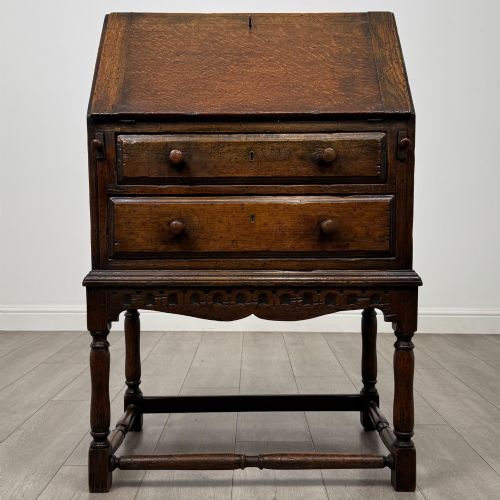
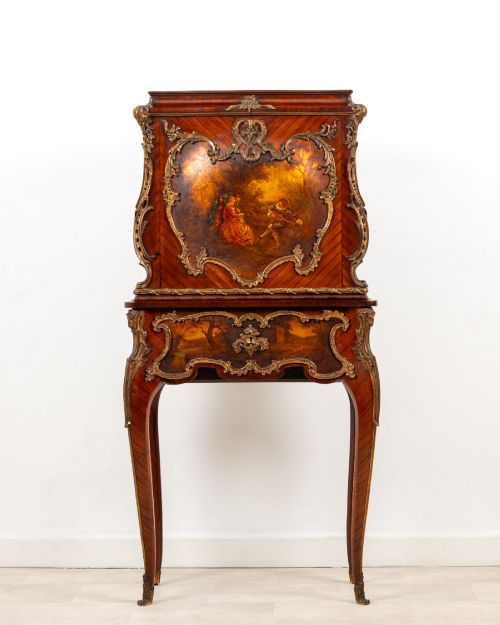
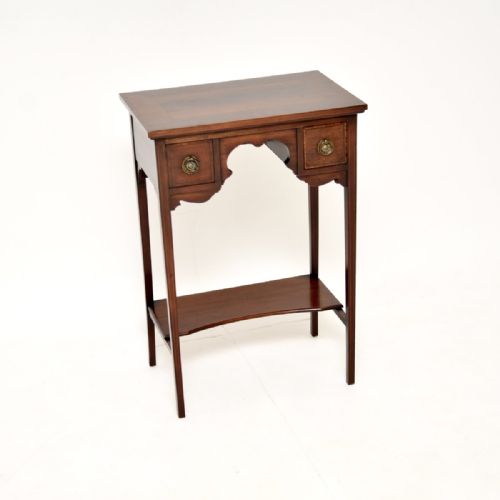
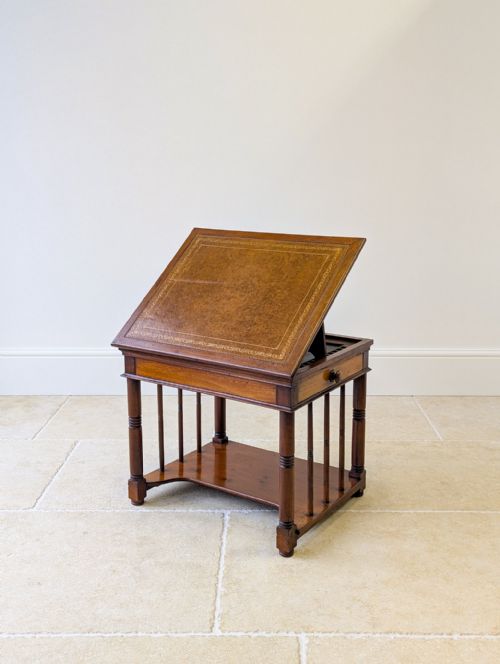
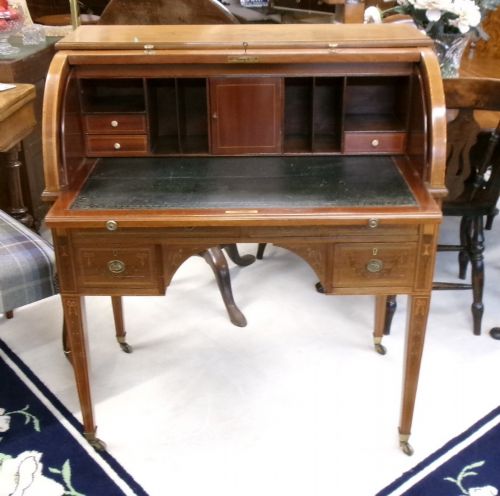
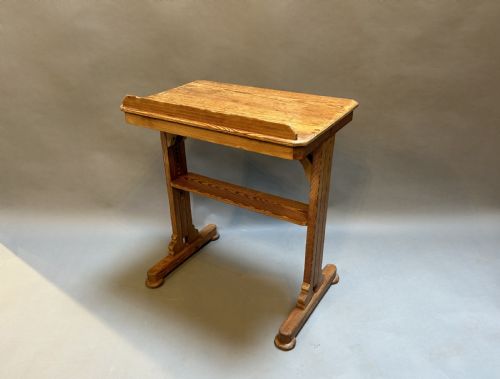
Standing Writing Table
A standing writing table offers the practical height and finished all-round design needed to work comfortably while anchoring the middle of a room.
Standing Writing Table
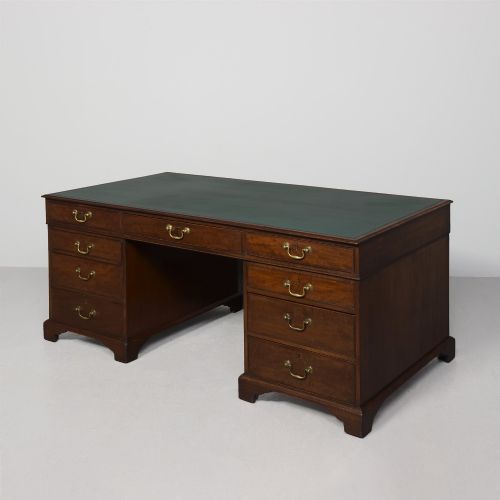
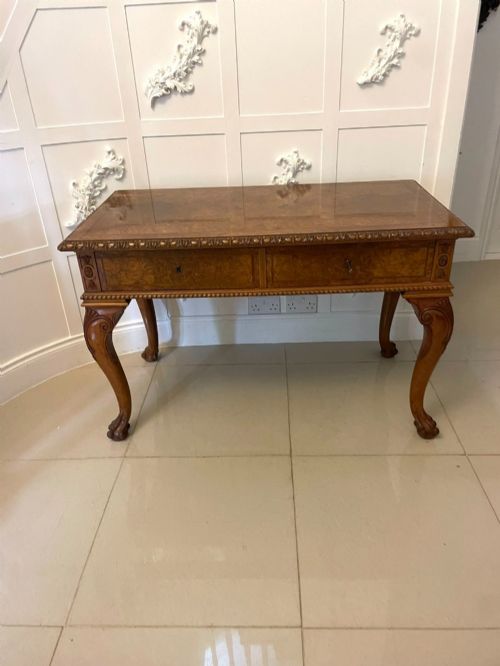
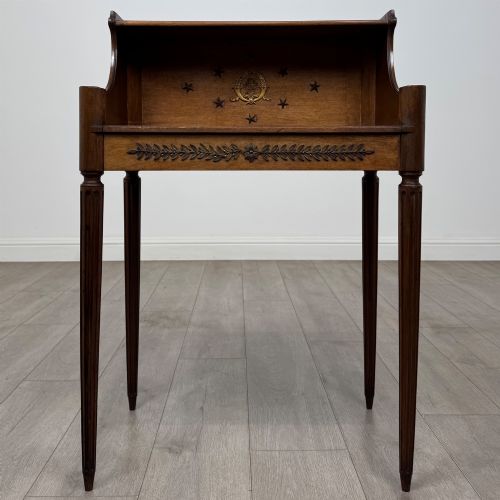
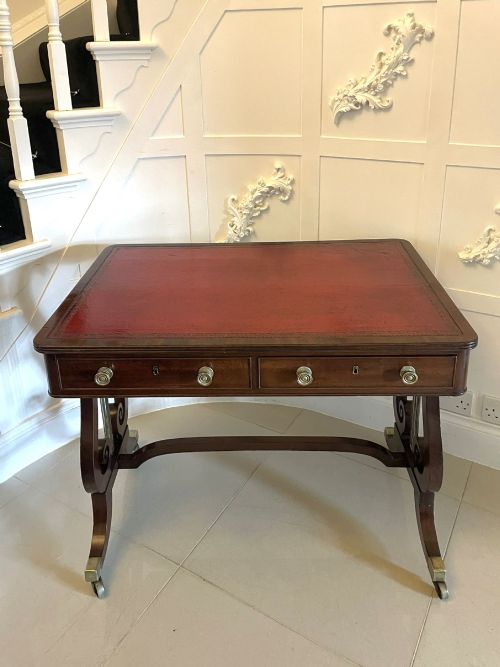
A standing writing table provides an elevated surface designed for drafting, reading, or correspondence without sitting. On this page, the form appears most frequently as robust mahogany or walnut pieces from the Georgian, Victorian, and Edwardian periods.
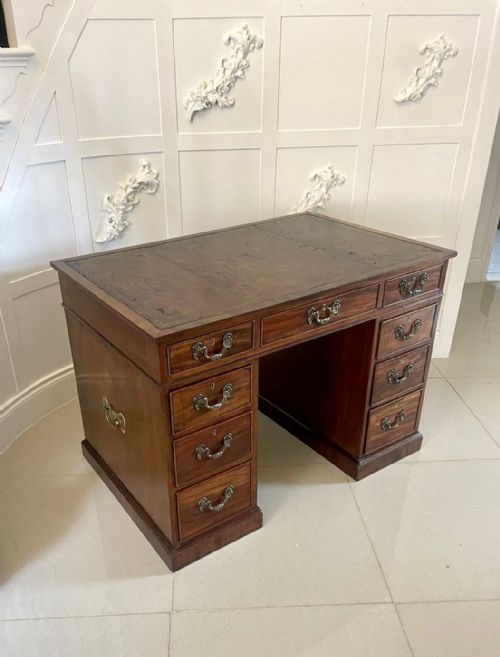
These pieces are distinct from standard desks because they are finished on all sides to stand freely in the centre of a room rather than pushed against a wall. The selection spans tall architect risers, clerks' desks, and reading tables built for specific study tasks.
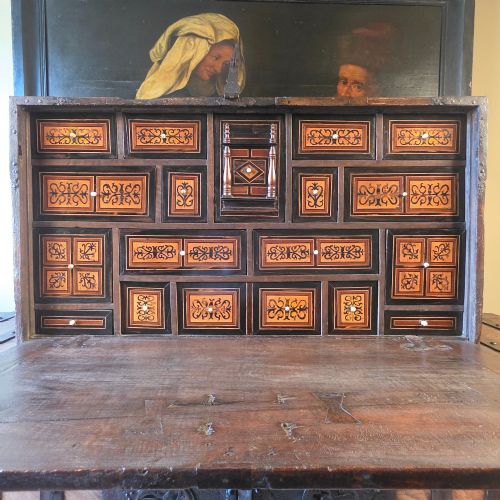
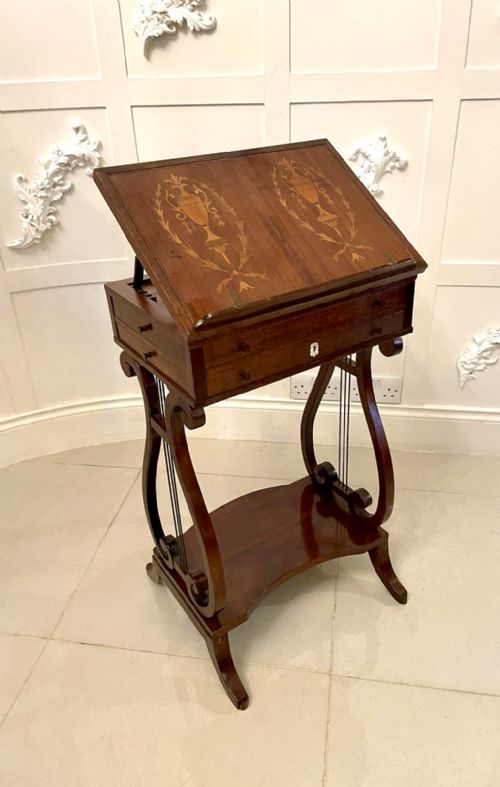
Makers often incorporated clever mechanical adjustments, leather inserts, and freestanding pedestals to balance utility with reception room elegance. Buyers encounter variations that range from utilitarian pine lecterns to heavily inlaid satinwood and rosewood examples.
Materials and Construction
Timbers such as mahogany, walnut, and oak form the structural carcasses, frequently enhanced with veneers of satinwood, kingwood, or burr walnut. Cabinetmakers utilised secondary woods like oak or pine for internal drawer linings and hidden framework.
Writing surfaces frequently feature inset tooled leather panels bordered with blind tooling or gold leaf decoration. Brass hinges, castors, and ormolu mounts provide both functional movement and decorative contrast to the dark hardwoods.
Listings feature woods spanning oak, mahogany, walnut, satinwood, and rosewood across Georgian to Edwardian periods.
Evaluating Craftsmanship
Quality rests in the treatment of the reverse side, as genuine freestanding tables demand finished panels and dummy drawers that match the primary facade. Superior examples exhibit tight dovetail joinery in the drawers and carefully selected, book-matched veneer grains.
The integrity of mechanical risers, original brass hardware, and intact leather writing surfaces separates utilitarian workshop pieces from high-status library furnishings. Finer execution shows in delicate boxwood stringing, hand-carved mouldings, and stable timber seasoning over centuries.
Edwards and Roberts·Gillows·Howard and Sons·Holland and Sons·T Winter
The Standing Writing Table Glossary
- Freestanding
- Finished on all four sides to allow placement in the middle of a room. This design ensures that the piece looks correct from any angle.
- Riser desk
- A tall writing surface featuring an adjustable mechanism to alter the height for standing work. Architects and cartographers relied heavily on these during the Georgian and Regency eras.
- Kneehole desk
- A bureau or writing table featuring a central recess for the user's legs, flanked by pedestals of drawers. They often incorporate finished backs for open-plan placement.
- Campaign table
- Portable furniture designed for travel, featuring folding stands or removable tops. Brass corners and recessed handles protect the edges during transit.
- Satinwood
- A pale, lustrous hardwood imported from the tropics and utilised extensively for fine stringing and veneers. It creates a striking contrast against darker timbers like mahogany.
Standing Writing Table: Frequently Asked Questions
What is a standing writing table?
A standing writing table is an elevated piece of furniture designed to let a person read, draft plans, or write letters while standing up.
Unlike standard wall-facing desks, these tables are finished on every side so they can sit proudly in the middle of a library or study.
How were these tables used?
Clerks, architects, and scholars utilised them throughout the eighteenth and nineteenth centuries for daily administrative tasks that required constant movement and standing posture.
The tall surfaces kept blueprints, ledgers, and heavy books at a comfortable viewing height without requiring a chair.
Where should I place one?
Because the back of a standing writing table is finished just as carefully as the front, it works best floating in the centre of a study or home office.
Ensure you measure the height carefully to match your own standing posture or pair it with an appropriate draughtsman's stool.
How do I date these pieces?
Dating relies on observing timber choices, construction methods like hand-cut dovetails, and stylistic markers such as Regency brass inlay or Edwardian satinwood banding.
Secondary woods and hardware styles also help narrow the decade of manufacture when maker stamps are absent.