


Standing Wooden Candlestick
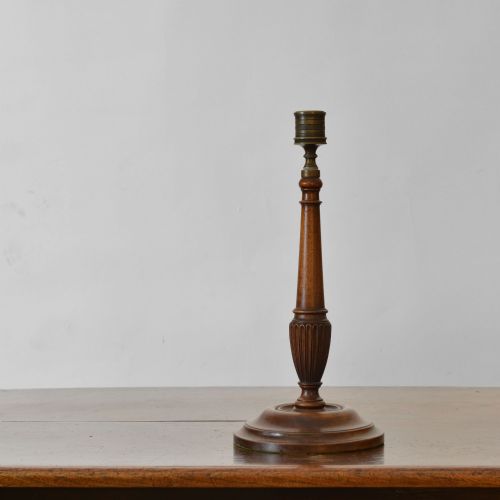
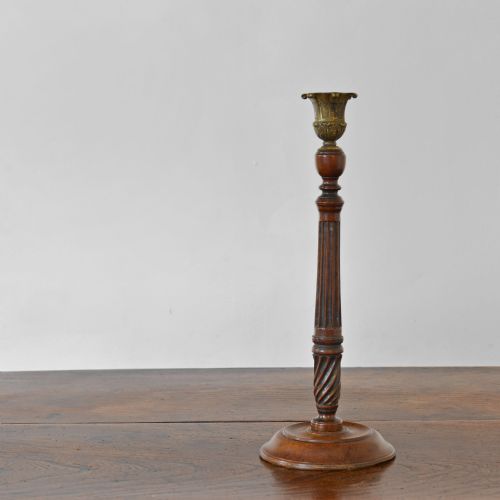
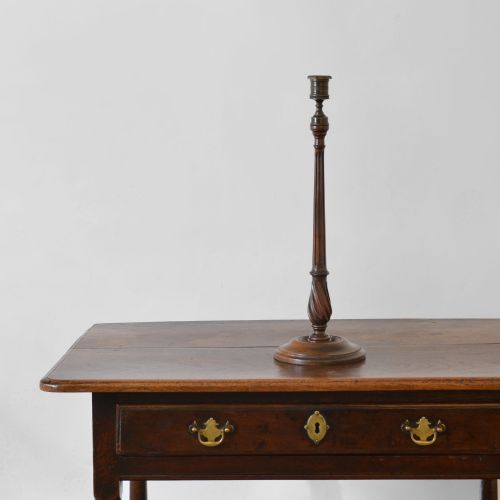
A standing wooden candlestick brings warmth and height to a room, offering sculptural form through turned timber and hand-carved detail.
Standing Wooden Candlestick
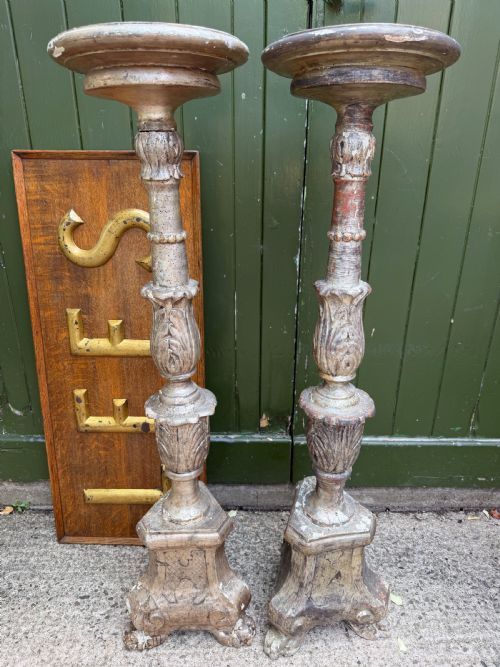
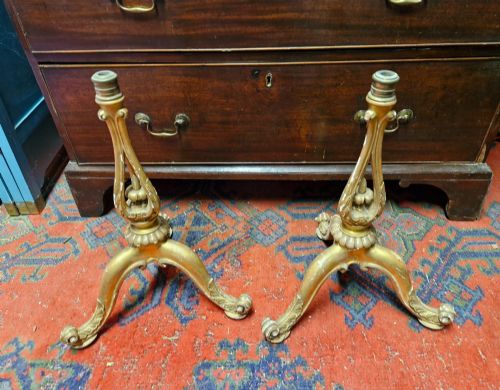
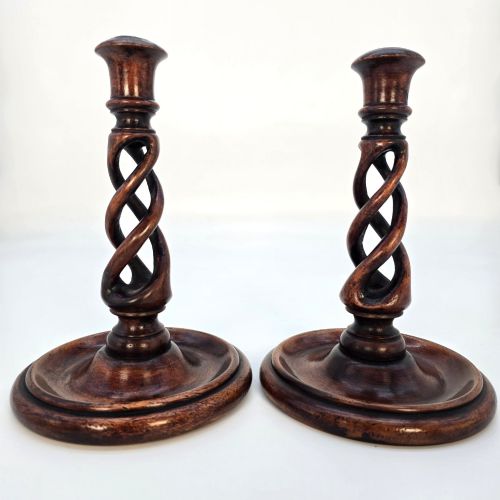
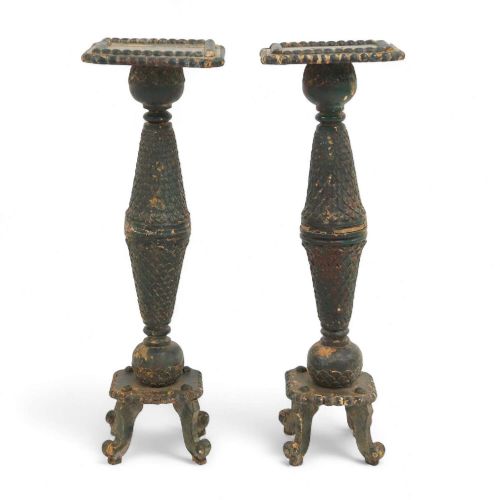
When you search for a standing wooden candlestick, you encounter items designed to elevate light, spanning compact table-top turned treen to tall architectural torcheres. The versions most commonly met on this page range from compact oak barley twists to nineteenth-century mahogany examples and carved Italian candle-stands.
The selection encompasses functional lighting and decorative supports originating from Georgian, Victorian, and Edwardian periods, alongside continental pieces in giltwood and fruitwood. These objects transition between table lamps, altar sticks, and floor-standing torcheres while retaining their core purpose as wooden candle holders.
Materials and Construction
The pieces rely on dense hardwoods such as mahogany, oak, walnut, lignum vitae, and fruitwood, often shaped on a lathe to create smooth tapered shafts and spiral twists. Many incorporate brass nozzles, drip pans, or weighted bases to secure the candles and provide stability.
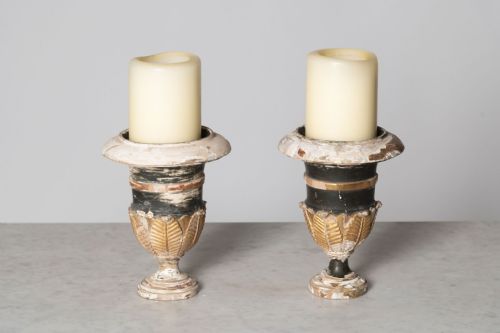
Surface finishes vary from polished timber and open grain to decorative paint, silver leaf, giltwood, and gesso. Carved elements demonstrate hand-chiselling in pine and fruitwood, ranging from folk-art figures to formal classical motifs.
The listings span the eighteenth, nineteenth, and early twentieth centuries, featuring materials from olive wood and giltwood to brass and iron.
Distinctions in Quality
Quality rests upon the crispness of the turning and the depth of the hand-carving, where sharp profiles on barley twists and detailed figural work indicate skilled execution. The choice of timber also dictates standard, with dense exotic hardwoods and well-figured mahogany holding greater distinction than simple utility softwoods.
Preservation of original surfaces - whether green paint, silver leaf, or patinated bare wood - defines the integrity of each piece. Integrated brass components and well-balanced proportions further separate standard domestic items from grander architectural torcheres.
The Standing Wooden Candlestick Glossary
- Torchere
- A tall ornamental stand for a candle or lamp, originating in the seventeenth century and frequently carved from wood or giltwood.
- Treen
- Small domestic wooden objects made by turning or carving, ranging from candlesticks to small boxes.
- Barley Twist
- A spiral turning resembling a stalk of barley, popular in furniture and candlesticks during the seventeenth and early twentieth centuries.
- Pricket
- A sharp metal spike on a candlestick designed to impale and hold a candle securely in place.
- Socle
- A short plain plinth or pedestal supporting a figure, vase, or candlestick base.
Standing Wooden Candlestick: Frequently Asked Questions
How do I date a wooden candlestick?
Dating relies upon timber selection, tool marks, and stylistic indicators such as the profile of a turned shaft or the presence of brass fitments. Georgian examples often show dense mahogany and restrained proportions, while later Edwardian and 1920s items frequently utilise oak with pronounced barley twists.
Examining the base and interior fittings reveals construction methods specific to different eras. Hand-cut screws, peg joins, and the wear patterns on the wood provide further clues to age.
What is the difference between a candlestick and a torchere?
A candlestick is typically smaller and designed for placement on a table, desk, or mantelpiece to hold a single taper. A torchere is substantially taller, functioning as a floor-standing column or pedestal to elevate a light source.
Torcheres often display more elaborate carved decoration, such as gilded surfaces, figural supports, or tripod bases. They served traditionally to illuminate corners of large rooms rather than immediate table settings.
How should I care for antique wooden candlesticks?
Maintenance requires keeping timber away from direct heat sources and dramatic humidity fluctuations to prevent splitting or warping. Dusting with a dry, soft cloth preserves the surface without stripping the historic patina.
Wax polish should be used sparingly and only on unfinished or waxed hardwoods, avoiding painted, silver-leafed, or gilded surfaces. Care must be taken around integrated brass elements during cleaning.
Can these candlesticks be used with modern candles?
Most antique candlesticks accommodate standard taper candles, though variations in nozzle widths may require minor adjustments or fitted adapters. Pricket candlesticks require candles with a pre-drilled base to sit safely upon the metal spike.
Measuring the aperture before purchasing ensures a secure fit for modern wax dimensions. Drip pans, where present, catch melting wax and protect the wooden shaft below.