




Carved Oak Candle Stands
Carved oak candle stands are sturdy timber holders designed to elevate a single light, bringing warmth and character to a room.
Carved Oak Candle Stands
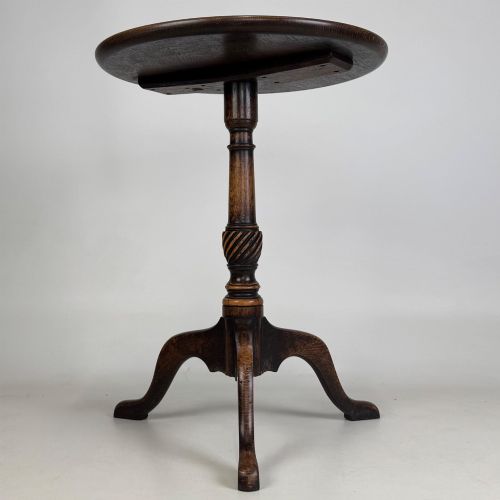
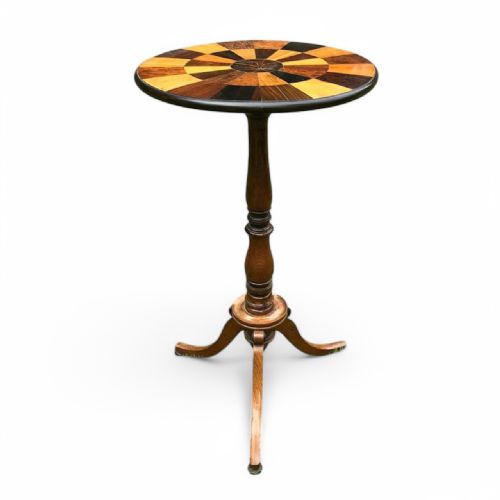
Carved oak candle stands take several distinct forms on this page, appearing as small table surfaces for lamps or direct holders for tapers. You encounter pieces shaped as torcheres, pedestals, wine tables, and occasional tables alongside dedicated upright candlesticks.
The periods represented span widely from the eighteenth century through the Victorian era and into the early twentieth century. Many examples channel earlier aesthetic movements, showing Georgian, Regency, Jacobean Revival, and Arts and Crafts influences.
Folk art pieces also appear, including notable figurative designs carved to resemble poachers carrying game. These items combine practical illumination with sculptural presence, shifting function between floor stands and tabletop display.
What varies in quality
The depth and execution of the hand-carving set finer examples apart from simpler turned production. Crisp relief work on tripod legs and pillar shafts indicates superior workshop skill.
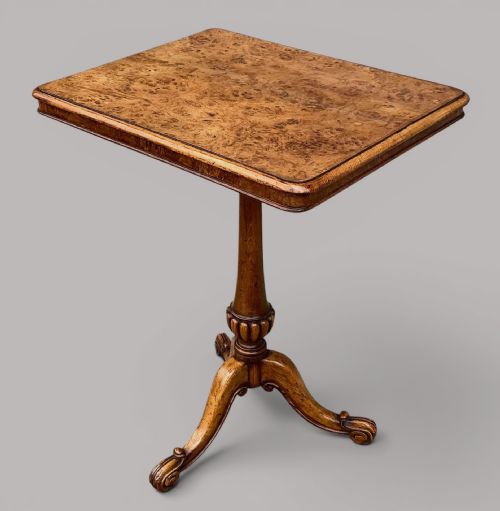
Timber selection governs visual richness, where striking burr figures or well-matched oak grains elevate an ordinary table or candlestick. Integrated brass elements and stable, balanced tripod structures demonstrate careful assembly and long-term durability.
Object types include torcheres, wine tables, side tables, and occasional tables alongside dedicated upright candlesticks.
Gillows
The Carved Oak Candle Stands Glossary
- Torchere
- A tall stand designed to support a lamp or candle. These tall pedestals lift light sources to eye level in a room.
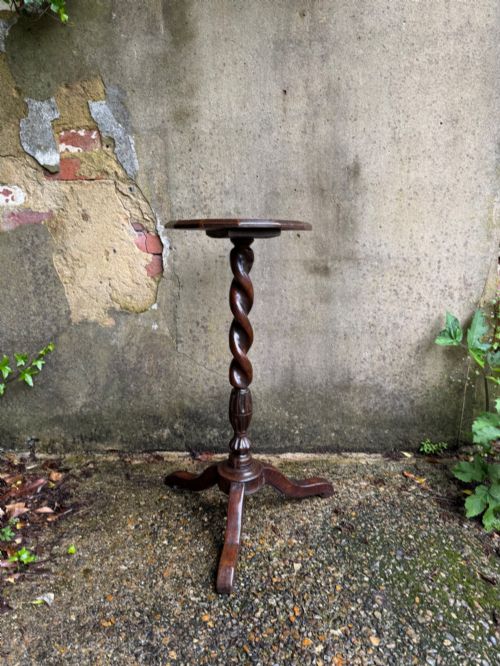
- Barley twist
- A spiral turning resembling a twisted rope. This ornamental woodworking technique appears frequently on nineteenth-century shafts and stems.
- Tripod table
- A small occasional table supported by three legs. This construction ensures stability on uneven older floors.
- Burr oak
- A timber growth showing distorted grain patterns that create intricate swirls. Cabinet makers prize this decorative wood for table tops.
Carved Oak Candle Stands: Frequently Asked Questions
Where should I place a torchere stand?
Position these tall stands in empty corners or beside seating areas where they can provide ambient lighting. Their narrow footprint allows them to occupy awkward spaces without cluttering a room.
Ensure the tripod base rests on level flooring to maintain stability. Keep them clear of heavy foot traffic to protect delicate turned shafts.
Are these stands suitable for daily use?
Solid oak construction makes these sturdy enough for regular placement of lamps and candles. Care must be taken with antique surfaces to avoid moisture rings and heat damage from wax.
Use protective pads beneath modern items placed on the timber tops. Regular waxing helps preserve the finish against dry indoor climates.
What is the difference between a torchere and a candlestick?
Torcheres function as tall floor-standing pedestals designed to elevate a light source or decorative object. Candlesticks are smaller items meant for tabletops, holding individual tapers directly.
Both forms utilise turned timber shafts, but their scale and placement within a room differ entirely. Candlesticks often incorporate brass cups to catch melting wax.