
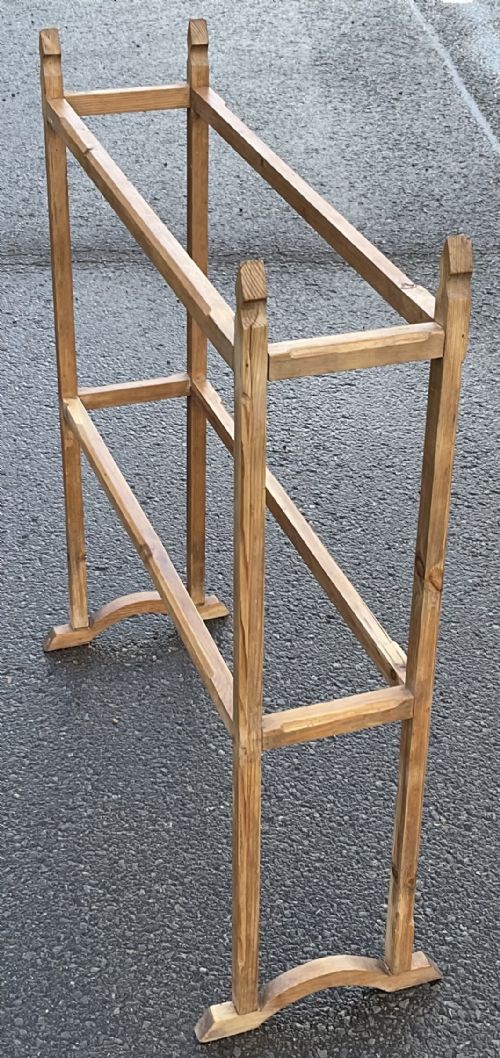


Standing Quilt Rack
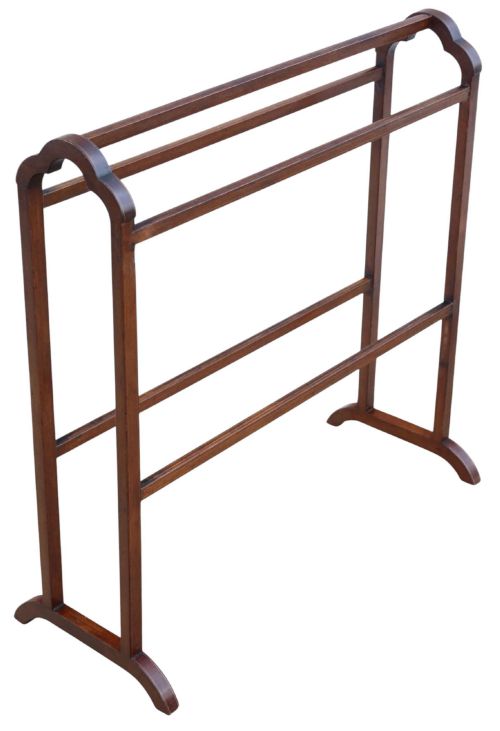
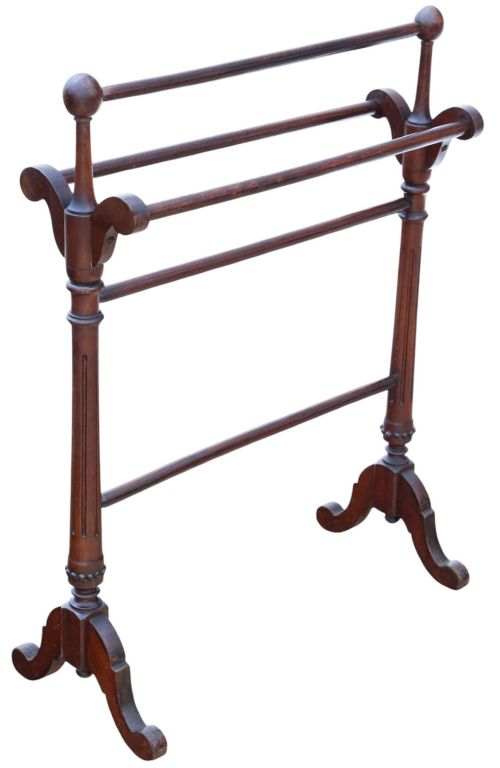
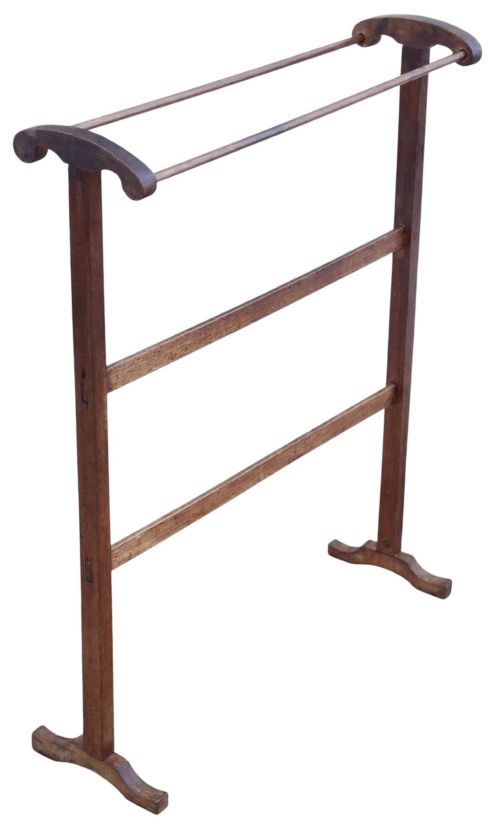
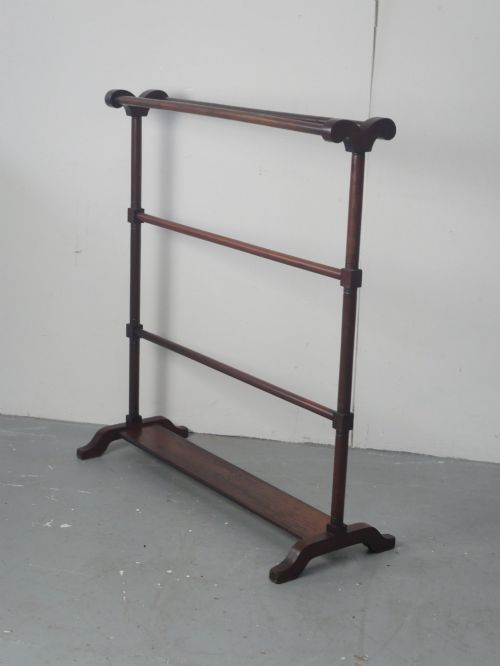
These standing quilt rack pieces are practical timber frames designed to hold textiles, drawing on Edwardian, Victorian, and Regency forms.
Standing Quilt Rack
A standing quilt rack serves as a functional wooden frame for airing and displaying fabrics within the home. When exploring this selection, buyers encounter formats primarily catalogued as towel rails, clothes racks, and robe stands.
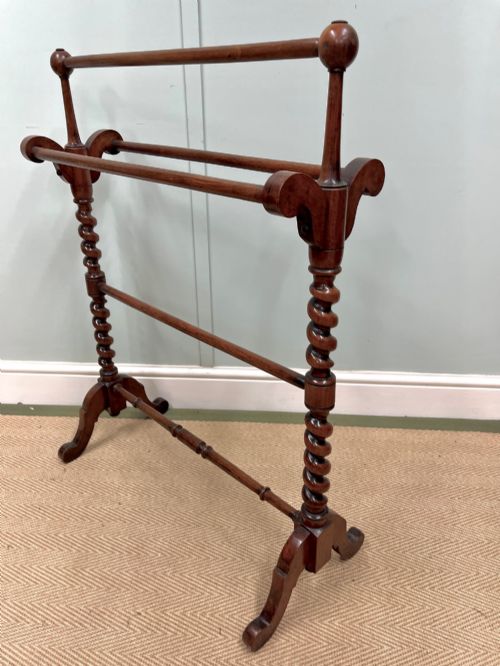
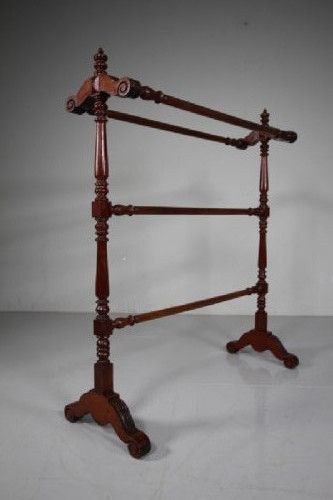
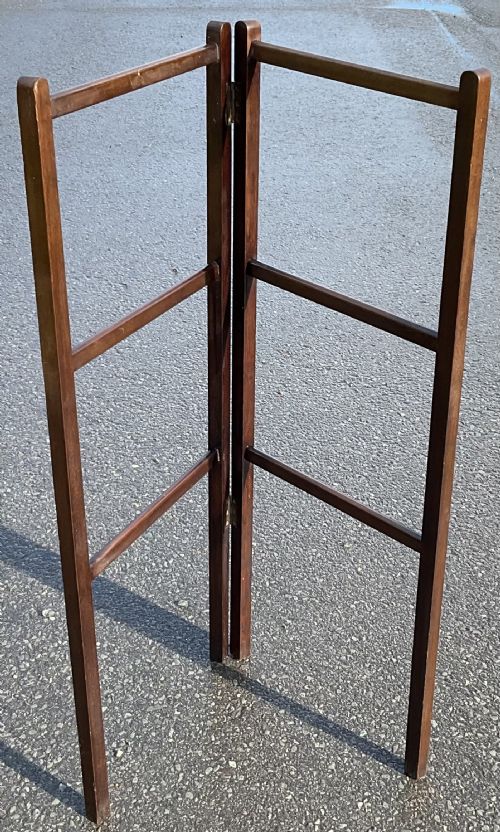
The prevailing examples on this page date from the Edwardian and Victorian eras, alongside nineteenth-century pieces and earlier Regency influences. Formats range from folding rails to large oversized models with multiple bars.
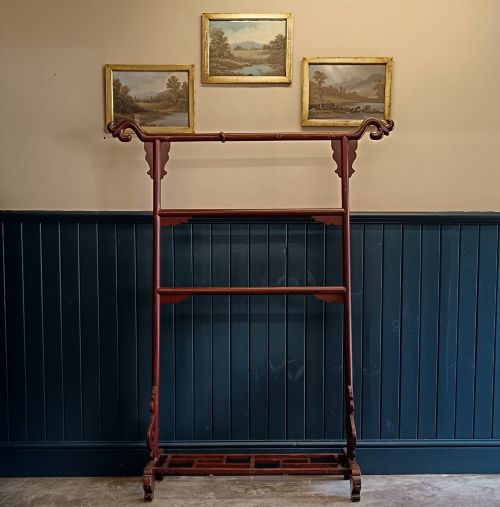
Makers adapted these frames for domestic use across several decades, resulting in varied configurations such as five-bar towel rails and silhouette designs. Chinese lacquered clothes stands also appear among the timber constructions.
How they were made
Makers utilised native and imported hardwoods, relying heavily on mahogany, oak, and pine for structural integrity. Selected pieces incorporate satinwood inlay and brass fittings to accent the timber surfaces.
Surface treatments involve applied pigment and lacquered wood finishes, particularly on imported robes stands from the Qing Dynasty. Construction techniques encompass folding mechanisms and multi-bar frames joined with traditional cabinetmaking methods.
Silhouette towel rails bring an unexpected profile to the laundry routine.
What varies in quality
The refinement of the timber and the complexity of the joinery set finer examples apart from utilitarian workshops. Rich grain selection in the mahogany and precise execution of satinwood inlay distinguish the upper tier of production.
Proportion and scale dictate the visual presence of a frame, with larger oversized models and multi-bar configurations requiring substantial framing to remain stable. The integration of brass hardware and decorative lacquering further denotes ambition in design.
The Standing Quilt Rack Glossary
- Edwardian
- Pertaining to the period from nineteen hundred to nineteen ten, characterised by lighter furniture forms and refined decorative inlay. Pieces from this era often feature slender mahogany rails.
- Mahogany
- A durable tropical hardwood prized for its deep reddish-brown tone and smooth grain. It forms the primary material for the majority of nineteenth-century frames here.
- Regency
- An English design style spanning the early nineteenth century, drawing inspiration from classical antiquity. Furniture from this period displays bold lines and substantial proportions.
- Satinwood inlay
- A decorative technique inserting contrasting pale timber into a darker surface to create geometric or floral patterns. This detail elevates the decorative finish of Edwardian rails.
- William IV
- A brief transitional design phase during the early nineteenth century bridging Regency and early Victorian tastes. Pieces from this era exhibit sturdy construction and classic proportions.
Standing Quilt Rack: Frequently Asked Questions
What is a standing quilt rack used for?
These frames serve primarily to air, dry, and display household textiles and garments in bedrooms or dressing areas. Their multiple horizontal rails allow fabrics to hang flat without creasing.
Historically, similar timber stands functioned as towel rails or robe stands within domestic interiors. Today, buyers utilise them in living spaces for practical storage and textile display.
How do I identify an Edwardian rail?
Edwardian examples typically date from around nineteen hundred to nineteen ten, featuring lighter construction and slender timber profiles. They frequently incorporate mahogany with subtle satinwood inlay work.
Victorian and earlier nineteenth-century pieces tend to display heavier proportions and simpler structural framing without decorative stringing. Comparing the timber weight and inlay details helps clarify the manufacturing era.
Are these racks folding or fixed?
The inventory includes both folding formats and rigid standing frames designed for permanent placement. Folding Edwardian examples allow for compact storage when not actively deployed in a room.
Larger Victorian and Regency pieces generally utilise fixed multi-bar arrangements to support heavier garments and quilts securely. Each configuration reflects the original domestic requirement for mobility versus stability.
What woods were commonly used?
Mahogany dominates the available selection, valued for its strength and rich grain across Victorian and Edwardian periods. Oak and pine also appear frequently in utility pieces and regional English workshops.
Specialist items incorporate contrasting satinwood for inlay work, alongside lacquered wood finishes on Chinese export pieces. Brass hardware often complements the primary timber structure.