


Wooden Blanket Rack
A wooden blanket rack offers a practical solution for airing linens, uniting utility and period character in the home.
Wooden Blanket Rack
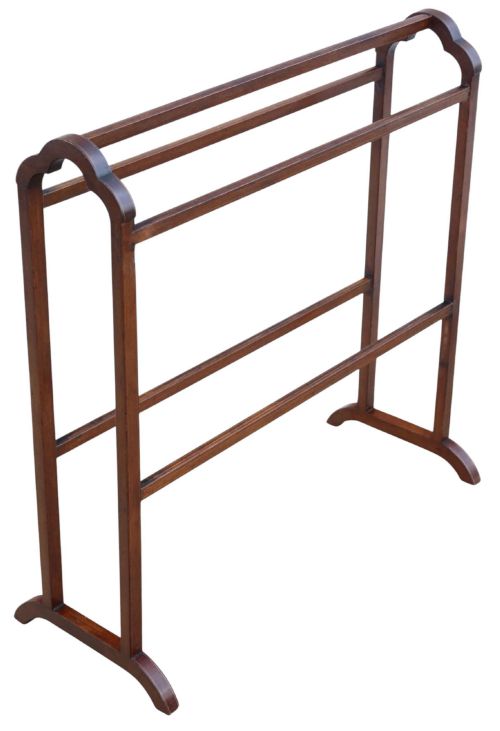
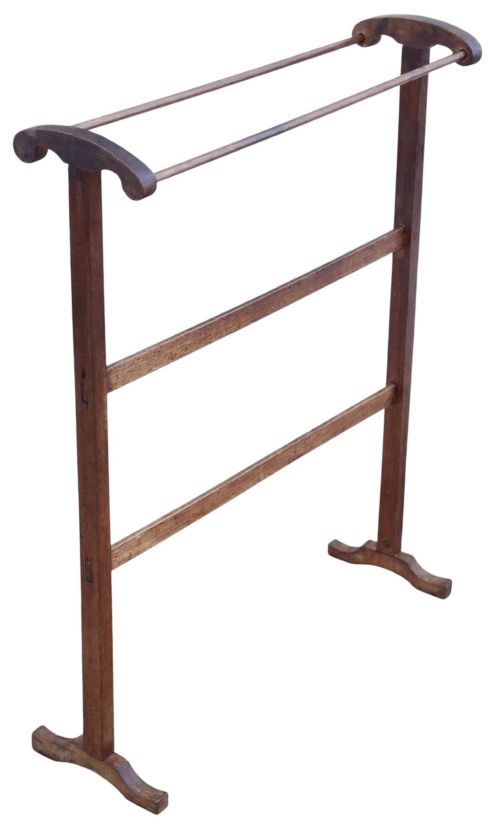
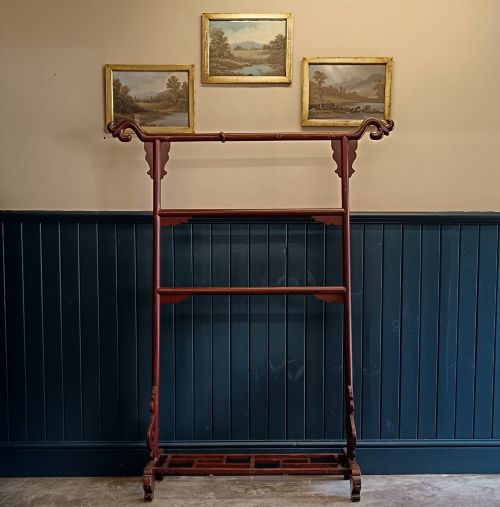
When you search for a wooden blanket rack, you are typically examining standing towel rails, clothes racks, and robe stands that serve the same textile-airing purpose. The listings here span diverse periods from the nineteenth century through the Edwardian era and Regency times, along with Chinese examples.
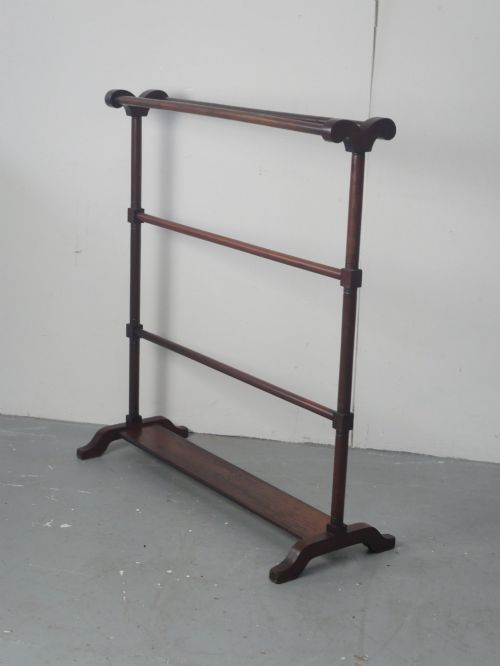
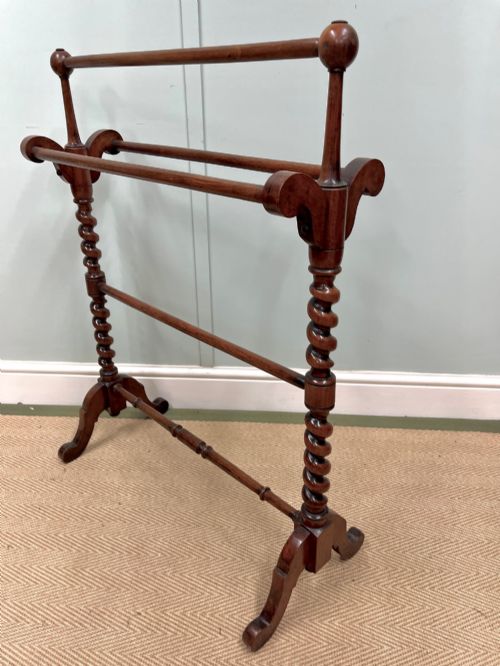
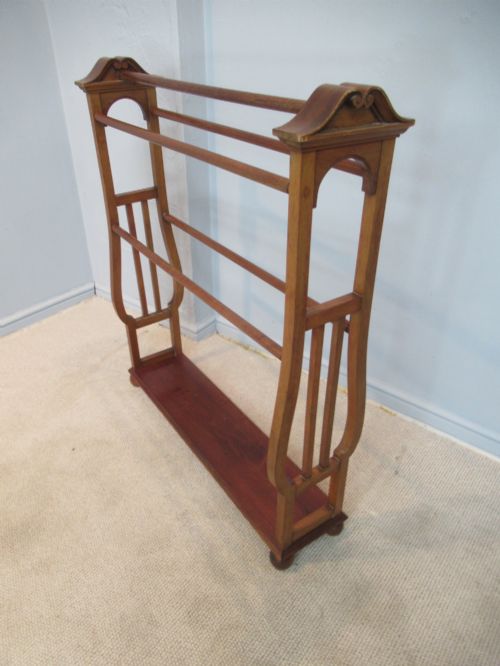
You are most likely to meet mahogany variants featuring multiple rails, often dating from around nineteen hundred. These pieces frequently appear in Edwardian and Victorian guises, constructed to hold several garments or blankets at once.
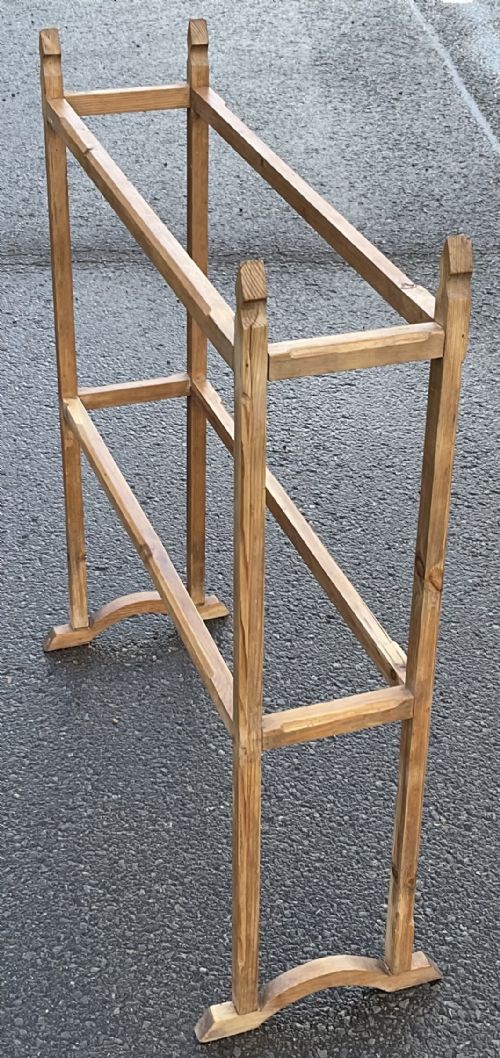
The form stretches from simple pine standing rails to large proportions in walnut and oak, including inlaid satinwood details and ebonised finishes. Occasional pieces bring distinct regional styles into the selection, such as lacquered robe stands from the Qing Dynasty.
Materials and construction
Makers relied primarily on solid hardwoods like mahogany, walnut, and oak to build structures capable of supporting heavy textiles without warping. Satinwood inlay and black ebonisation provided decorative contrast on finer Edwardian and Victorian items.
Simpler domestic pieces utilised pine and general hardwood, whilst specialised imports employed lacquered wood and pigment finishes. Joinery focused on stability, creating multi-bar frames designed for daily bedroom or bathroom use.
Listings feature mahogany, oak, walnut, and pine across Victorian, Edwardian, and Regency periods.
Assessing quality and craftsmanship
Quality rests upon the selection of timber and the sophistication of decorative detailing such as satinwood inlay. Finer examples display careful turning on the uprights and solid joints that maintain rigidity across multiple rails.
Proportion and scale separate standard utility pieces from grander items, particularly in generously proportioned Regency and Victorian works. The integration of fine veneers and polished mahogany finishes elevates the overall presence of the stand.
The Wooden Blanket Rack Glossary
- Edwardian
- Pertaining to the reign of King Edward VII, spanning from nineteen hundred to nineteen ten. Pieces from this era often feature lighter timbers and subtle inlay work.
- Regency
- An English design period associated with the early nineteenth century. Furniture from this style typically exhibits classic proportions and refined mahogany surfaces.
- Ebonised
- Wood treated with a dark stain or finish to imitate ebony. This technique was popular for achieving a striking black appearance on Victorian stands.
- Satinwood inlay
- A decorative technique using contrasting light satinwood inserted into a darker primary wood such as mahogany. It adds linear or floral ornamentation to the surface.
Wooden Blanket Rack: Frequently Asked Questions
What is a wooden blanket rack?
A wooden blanket rack is a freestanding frame designed for holding and airing blankets, towels, and garments. These pieces utilise multiple horizontal rails to keep textiles organised and accessible in bedrooms or bathrooms.
Historically constructed from timbers such as mahogany, oak, and pine, they combine domestic utility with period decorative styles ranging from Victorian to Edwardian.
How do I date a wooden blanket rack?
Dating relies on identifying the primary wood, construction techniques, and decorative style visible in the piece. Victorian and Edwardian examples often feature mahogany or pine with turned uprights, whilst earlier Regency items show distinct classic proportions.
Comparing the finish, such as ebonisation or satinwood inlay, against documented period styles helps narrow down the decade of manufacture.
Where were blanket racks used?
These items were primarily placed in bedrooms, dressing rooms, and bathrooms to air freshly washed linens and garments. Their freestanding design allowed them to be moved easily near heat sources or windows.
Larger variants served grander households for heavy quilts and multiple changes of clothing throughout the day.
How do I care for antique wood?
Preserving wooden frames involves keeping them away from direct heat sources and sudden humidity changes to prevent timber splitting. Regular dusting with a soft, dry cloth maintains the polished surface without damaging the finish.
Applying appropriate wax occasionally helps nourish hardwoods like mahogany and oak, protecting the grain over time.